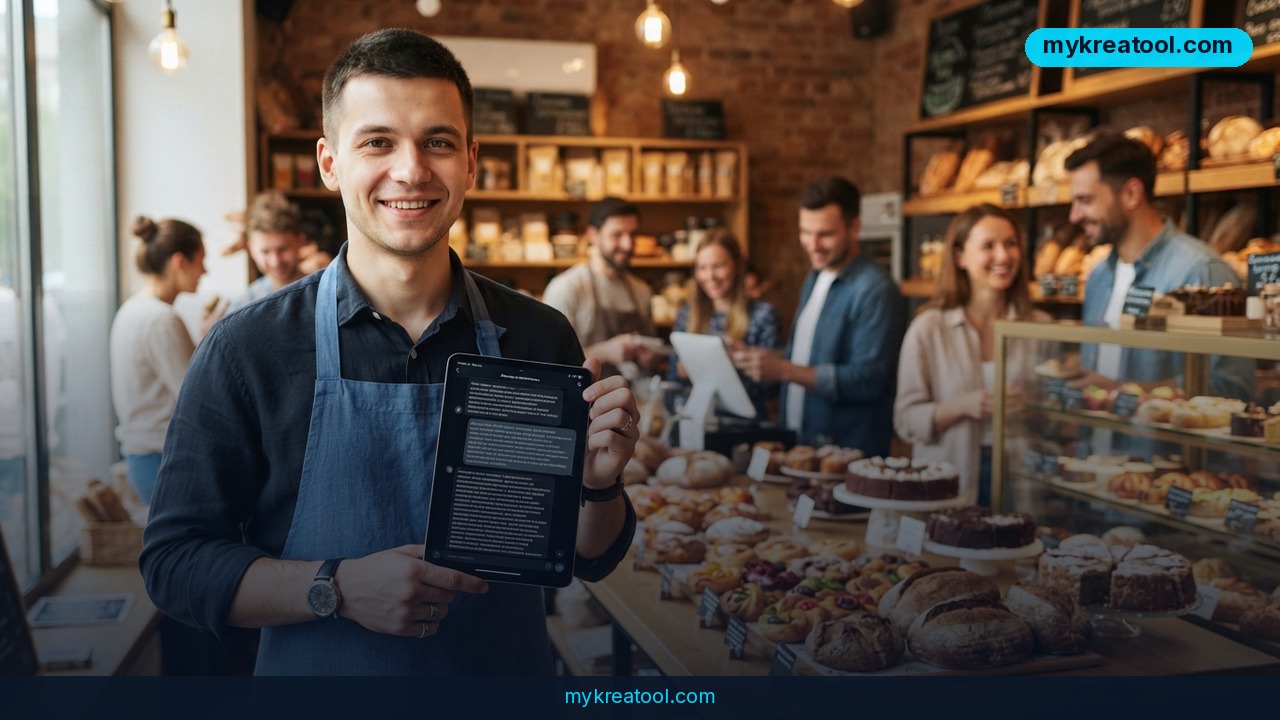
What happened
OpenAI has officially launched ChatGPT for Small Businesses, a dedicated program designed to help entrepreneurs build practical AI skills, automate everyday tasks, and scale their operations using ChatGPT Work. The announcement marks one of the clearest signals yet that OpenAI wants to move beyond individual users and large enterprises to capture the massive, underserved small-business market — a segment that includes over 33 million small businesses in the US alone, according to the Small Business Administration.
The program bundles training resources, workflow templates, and business-focused features under the ChatGPT Work umbrella. Instead of a generic chatbot, small business owners get guided onboarding aimed at specific use cases: customer service replies, marketing copy, inventory tracking, invoicing support, and basic financial planning. OpenAI positions this as a low-friction entry point for owners who have limited time, no dedicated IT staff, and often no formal training in software tools.
Why now
Small businesses have been slower to adopt generative AI than large corporations, largely due to cost, complexity, and lack of guidance. Surveys from groups like the US Chamber of Commerce have found that fewer than half of small business owners feel confident using AI tools, even though most believe AI will be important to their future. OpenAI's move directly targets that confidence gap.
Why it matters
This matters because small businesses generate roughly 44% of US GDP and employ nearly half the private workforce, yet they've historically had the least access to enterprise-grade automation tools. A structured, affordable AI onboarding path changes that math. When a five-person retail shop or a solo consultant can automate scheduling, draft marketing emails, and analyze sales data in minutes instead of hours, the competitive gap between small and large businesses starts to shrink.
The competitive angle
The framing in OpenAI's messaging is blunt: businesses that adopt AI now will move faster than those that wait. That's not just marketing language — early adopters of AI tools in customer service and content creation have reported measurable time savings, with some studies citing 20-30% reductions in time spent on repetitive administrative work. For a small business owner wearing five hats, that reclaimed time can go directly into sales, product development, or simply keeping the lights on.
How to use it today
Getting started doesn't require a technical background. Here's a practical path for business owners who want to act on this now:
1. Start with one workflow. Pick a single repetitive task — replying to common customer emails, writing product descriptions, or summarizing weekly sales — and use ChatGPT Work to build a repeatable prompt or template for it.
2. Use guided templates. The program's onboarding includes industry-specific templates (retail, services, food, freelance) so you're not starting from a blank page.
3. Layer in free tools. Not every task needs a paid enterprise tool. For quick logo mockups, image resizing, text-to-speech, or basic document conversion, a resource like mykreatool.com offers free AI tools that pair well with ChatGPT for day-to-day small business tasks without adding to your software budget.
4. Measure before scaling. Track how much time a workflow saves over two weeks before automating a second or third process. This keeps adoption grounded in real ROI rather than hype.
Common first use cases
Most small businesses starting with ChatGPT Work begin with customer support drafts, social media captions, and basic bookkeeping summaries — tasks that are repetitive, low-risk, and easy to review before publishing.
Who benefits
The clearest winners are solo entrepreneurs, service-based businesses, and small retail or hospitality operations that lack a marketing or IT department. Freelancers and consultants can use ChatGPT Work to draft proposals and client communications faster. Local shops can generate product listings and respond to reviews at scale. Agencies and small marketing teams can prototype campaign ideas without hiring additional staff.
Even businesses with fewer than 10 employees — which make up roughly 89% of all US small businesses — stand to gain, since AI automation tools typically deliver the biggest relative time savings to teams with no existing automation infrastructure.
Risks
The program isn't without caveats. AI-generated content still requires human review, especially for anything involving legal, financial, or medical claims, where errors can create real liability. Small businesses should also be cautious about feeding sensitive customer data into any AI tool without understanding the platform's data retention and privacy policies.
There's also a dependency risk: businesses that lean too heavily on AI-generated communication without a human check can end up with generic, off-brand messaging that undercuts the personal touch that often differentiates small businesses from larger competitors. Cost is another factor — while entry-level access may be affordable, scaling usage across a growing team can add up, so owners should track spend against actual time saved.
Conclusion
OpenAI's ChatGPT for Small Businesses program lowers the barrier for entrepreneurs to adopt AI without needing a technical team or a big budget. The opportunity is real: faster customer responses, less time on repetitive admin work, and a genuine chance to compete with larger rivals on speed and service quality. The risk is treating AI output as final rather than a draft. Businesses that start small, measure results, and keep a human in the loop will get the most value — and the ones that wait too long risk watching competitors move faster with the same tools now available to everyone.

Comments 0