What Happened
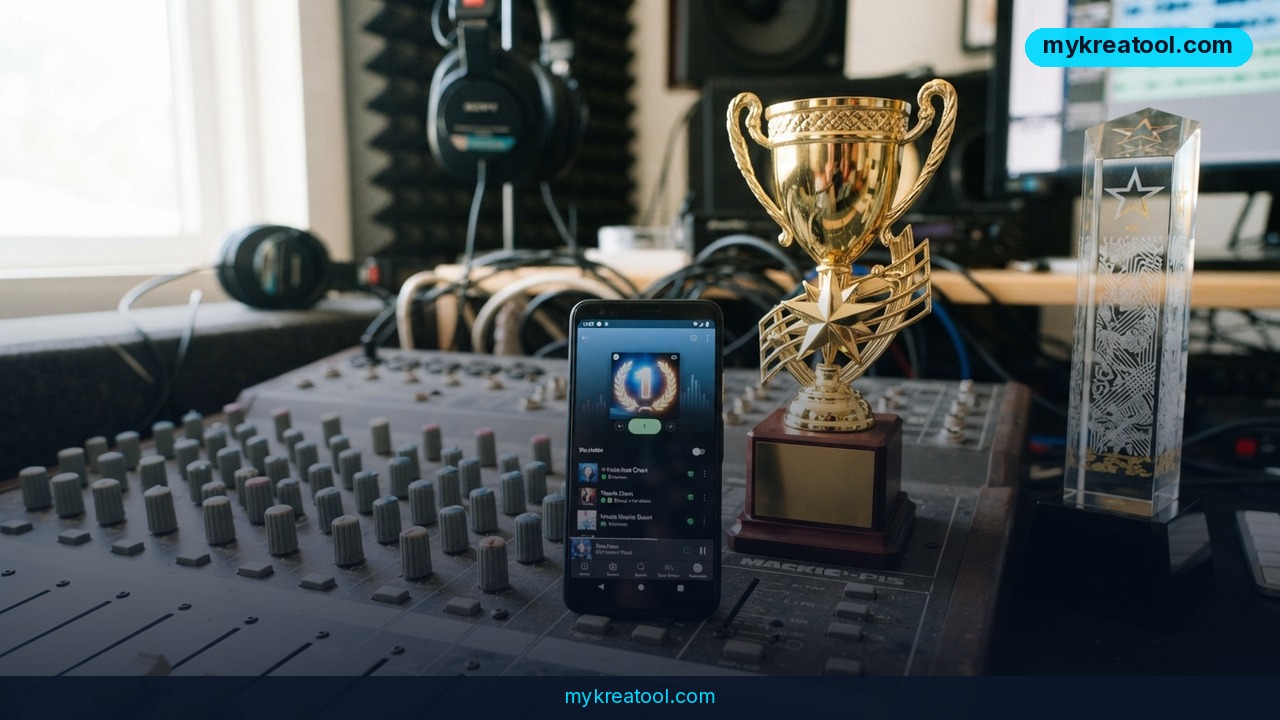
On November 13 at 5 p.m. Seoul time, the most-streamed song in South Korea was sung by nobody. It's the first time an AI music track has topped the country's main chart, and it got there without a label, a trainee system or an idol fandom waving light sticks.
"Did You Become the Adult You Once Dreamed Of?" — credited to MEOMURU — took No. 1 on Melon's Top 100, the chart that K-pop labels and their idol groups spend serious money trying to conquer. It pushed RESCENE's new single "With" into second place. Yonhap reported it's the first AI-made song ever to top that chart (Chosun Ilbo, Korea Daily).
No label audition. No trainee years. No fandom chanting in unison.
Who's actually behind the name
MEOMURU isn't a band, and it isn't a person. It's a project run by two human producers from a team called Glorywave. They wrote the lyrics and directed the production. The singing came from Suno, an AI music app that turns a written prompt into a finished track with vocals, instruments and all.
So the human contribution isn't zero. Somebody still had to write words worth singing and make the calls a producer makes — what stays in, what gets cut, when the chorus lands.
It wasn't a one-week viral fluke
The song is a rock ballad, and it came out back in June. It climbed for five months before it reached the top. That's the detail most people skip past: this wasn't a stunt that spiked for a weekend. It built an audience one listener at a time.
Melon's own listener data shows who showed up. About 36% of them are in their 30s and 30% are in their 40s (Star News). In other words, the song connected with people old enough to feel the sting of the question in its title — not with teenagers chasing a trend.
A No. 1 that doesn't get paid like a No. 1
Here's the awkward part. The team told Newsis that the track isn't registered with Korea's music copyright association yet, so they aren't collecting songwriting royalties the usual way. The song is sitting at the top of the country's main chart, and the money flowing to its makers doesn't look like the money that usually follows a No. 1.
That gap is worth remembering, because it's the same gap you'll run into the moment you try this yourself.
What It Means for You
You don't have to care about K-pop to care about this. What just happened is a proof of concept: a small team with a good idea and an AI vocalist cleared a bar that used to require a studio, a session singer and a marketing budget. Here's what that looks like in ordinary life.
At home: your family slideshow gets a soundtrack
You've got 40 photos from a trip and no idea what music to put under them. Instead of scrolling stock libraries for an hour, you describe the mood — warm, slow, a little nostalgic — and get a track that fits. Ten minutes, done, and nobody has to hear the same royalty-free ukulele song everyone else uses.
At work: presentations stop sounding generic
A team lead putting together a quarterly deck can ask for 30 seconds of calm, forward-moving background music and drop it behind the slides. No licensing email, no "please don't use copyrighted music in the all-hands." The rules get simpler when the music is made for your file.
In business: a jingle without booking a studio
A bakery, a gym, a two-person app startup — none of them can justify a studio day for a 20-second ad. Now they can generate five versions of a hook, test which one people actually remember, and keep the winner. This is the scenario where AI music pays for itself fastest: cheap experiments beat expensive guesses.
For students: you can hear your project before you build it
Say you're doing a history presentation and need something that sounds like the era you're covering, or a language project, or a short film for a media class. You can generate a period-flavored track and cut your edit to it, then hand in something that feels finished instead of something that feels like a PowerPoint with clip art.
For creators: you can finally hear the song in your head
This is the big one. Plenty of people have a melody in their head and no way to play it. Suno is the first tool that lets a non-musician skip the years of guitar lessons and hear the idea out loud. If you want to poke at other free AI tools before committing to one, mykreatool keeps a running list of them here: free AI tools.
As income: the question mark is the money
Notice what the MEOMURU story actually reveals. Getting to No. 1 wasn't the hard part — five months of patience got them there. Collecting royalties was the hard part, because the paperwork of music rights hasn't caught up with the technology. If you're thinking of selling AI-made music, treat rights and licensing as the real work, not the fun part.
How to Try It Right Now
You don't need an account on Melon or a distributor. You need an idea and about half an hour.
Step 1: Start on Suno's free tier
Use Suno — the same app that generated the vocals on the Korean No. 1. Start free and don't pay for anything until you've made at least three tracks and genuinely liked one. Free tier first, always; it tells you whether the tool fits your brain before it costs you anything.
Step 2: Write the words before you open the app
Glorywave's edge wasn't the software. It was a title that makes you stop scrolling: "Did You Become the Adult You Once Dreamed Of?" Write your lyric or your one-line concept first, on paper. A great prompt over a boring idea produces a boring song.
Step 3: Describe the sound like a human, not a search engine
Instead of "make it good," try "slow rock ballad, sad but not hopeless, piano intro, distorted guitar in the chorus, male vocal, full of longing." Genre, tempo feel, mood, the instrument you hear in your head. The more specific the picture, the closer the output gets.
Step 4: Generate five takes and audition them
Treat the first results like audition tapes, not final masters. Listen for the one chorus that gives you a small physical reaction — goosebumps, a smile, whatever it is. That's the take worth keeping.
Step 5: Test it on three real people
Play 20 seconds for a friend, a coworker, someone in your target audience. Don't tell them it's AI. Ask what they felt. If they shrug, the song isn't ready, no matter how clever the prompt was.
Step 6: Read the fine print before you publish
Before you post, sell or stream anything, read Suno's current terms on commercial use and check what your country's copyright body requires. This is exactly where the MEOMURU team hit a wall — they've got a No. 1 and an unregistered song.
Upsides and What Changes
The gate is gone. A studio session used to cost more than most people's monthly rent. Now the barrier is a decent idea, which means the people with the best ideas stop losing to the people with the biggest budgets.
Iteration gets fast. You can hear ten versions of a hook in the time it used to take to book one session. That's how good creative decisions actually get made — by comparing, not by guessing.
Small teams look bigger. Two producers reached No. 1 on the country's main chart. A solo founder can sound like a company. That's leverage, and it's now cheap.
Older audiences turn out to matter. Most of the song's listeners are in their 30s and 40s. AI tools aren't just for early adopters in their twenties — the mainstream showed up for this one, on a rock ballad, of all things.
Limitations
The honest version: the legal side is a mess, and nobody has cleaned it up yet. A No. 1 track in Korea still isn't registered with the music copyright association, which means its makers aren't collecting songwriting royalties the way a normal hit would. Registration rules, royalty splits and who counts as an "author" when a model sang the part are still being argued over by lawyers in every major market. On top of that, the technology narrows the gap but doesn't close it — the melody still has to be worth hearing, and the track that took five months to climb the chart had two experienced producers steering it the whole way. Voices also get cloned, which is a separate minefield you don't want to step in by accident. And charts aside, audiences are still split on whether they care — plenty of people will stream a song and feel differently the moment they learn a machine sang it.
Conclusion
A song with AI vocals just held the No. 1 spot on Korea's biggest music chart, ahead of a K-pop release, after a slow five-month climb — and the two producers behind it still can't collect royalties the standard way. That's the whole story in one line: the creative door is wide open, the business door is still jammed.
Your move today: open Suno, type the title of a song you wish existed, and generate three versions. Don't publish, don't polish, don't read a single tutorial. Just find out what the tool does when you give it a real idea instead of a test prompt. Thirty minutes from now you'll know more about this shift than most of the articles you'll read about it.
Comments 0