What happened
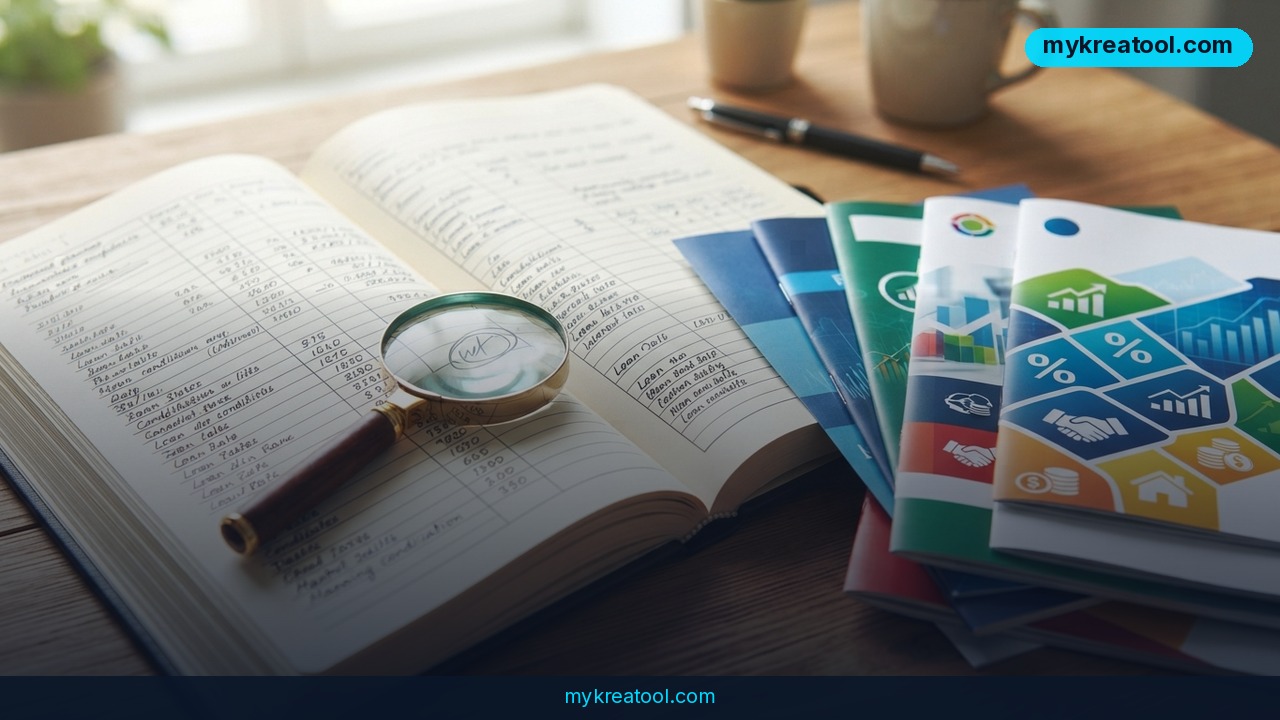
A developer built an AI-powered "credit radar" that automatically checks the loan terms of 12 banks every single morning — reading 34 different pages of interest rates, fees, and repayment terms — and publishes a plain-English summary of exactly what changed since yesterday, with a link back to the original bank page on every line. When a bank actually changes a price (not just rewords a page), the system writes a short breakdown with real numbers showing what that change costs a typical borrower. The whole thing runs on a large language model, or LLM — the same kind of AI behind tools like ChatGPT or Claude — for somewhere between 3 cents and 70 cents a day, depending on how much news and how many rate changes happen that day.
The interesting part isn't that AI can read fine print faster than a person. It's how the system is built to stop the AI from making things up. The AI only touches data at four narrow points in the process, and at each of those points it works from numbers a separate piece of ordinary code already pulled from the bank's page — not from its own memory or guesswork. Three separate AI "checker" passes then reread every draft, hunting for wrong facts, shaky reasoning, and unstated risks before anything goes out, and 14 automatic pass/fail checks run on each daily report before readers ever see it.
What it means for you
• At home: if you carry a credit card balance or you're shopping for a personal loan, a tool like this catches a rate hike, a shrinking grace period, or a promo offer that quietly disappeared — the day it happens, not three weeks later on your statement.
• At work: a mortgage broker, insurance agent, or financial advisor could run a scaled-down version of this to track rate moves across the lenders they deal with, instead of manually refreshing bank websites for an hour every morning.
• In business: a small business owner comparing business loan offers gets a daily heads-up on which lender just tightened or loosened terms — useful for timing an application for the cheapest window.
• In study: a finance or economics student can copy the same idea — code monitors public rate pages, AI just explains what changed — as a hands-on project for learning how banks quietly reprice products over time.
• In creativity: finance writers and bloggers can build a lighter version to auto-draft "what changed this week" content, then edit and publish it themselves instead of starting from a blank page.
• As income: the original creator turned this into a public Telegram channel and website — proof that a narrow, well-checked AI tool can become a small content product, with room for ads, sponsorships, or a paid tier.
How to try it right now
You don't need to build a 34-page scraper to get the benefit of this idea today. Start small and free, then scale up if it earns its keep.
1. Free option — use a free AI tool to summarize what you already have. Save the rates or terms page from two or three banks or lenders you're comparing (copy the text or take a screenshot). Paste it into a free AI tool for a quick comparison — the free tools at mykreatool.com let you summarize and compare pasted text without creating an account, so you can drop in two rate pages and ask for the differences side by side.
2. Set a recurring check. Once a week, revisit the same pages and paste the new version next to your saved copy, then ask the AI to list only what changed. That's the manual version of what the "radar" does automatically every morning.
3. Ask for the math, not just the words. Don't stop at "the grace period changed." Ask the AI to calculate what that change actually costs on a real balance — for example, "what does this cost on a $2,000 balance over 90 days at this rate?" That's the step that turns a vague update into something you can act on.
4. If you want real automation, the next step is connecting a spreadsheet or a simple script to check the pages daily and only calling an AI model when something has actually changed. That's the real trick behind why the original project costs pennies a day instead of dollars — it only pays the AI to write when there's real news, not every time it looks.
Upsides and what changes
The core shift here is cost and speed, not raw intelligence. Reading and comparing fine print across a dozen institutions used to take a trained analyst real hours every week; this setup does it for under a dollar a day and has results ready before 9 a.m. Because the system is built as a fixed "workflow" rather than a free-roaming "agent" — meaning ordinary code decides what happens next at every step, and the AI only fills in language and analysis inside a locked frame — it's far less likely to invent a number that was never on the page, which is the single biggest risk with AI-written financial content. Every claim carries a source link back to the bank's own page, and independent AI "reviewer" passes fact-check the draft before it's published, which is a meaningfully higher bar than most AI-generated content gets.
Limitations
This is still a narrow, well-defined job — reading published rate pages and spotting differences — not financial advice, and it can only report what banks choose to publish. It won't catch verbal promises, unpublished negotiated rates, or terms buried in a PDF the scraper doesn't reach, and a system like this needs regular upkeep as banks redesign pages or bury information in new places. The fact-checking layer catches numbers pulled wrong from the source text, but it can't tell you if a bank's public page itself is misleading or incomplete. Treat any summary like this, AI-generated or not, as a starting point for your own comparison, not a substitute for reading the actual loan agreement before you sign anything.
Conclusion
The real lesson here isn't "AI can now read bank websites" — it's that pairing AI with a strict, code-controlled process turns something error-prone into something you can actually trust with real numbers. For today: pick the one loan or credit card offer you've been meaning to compare, paste its terms into a free AI summarizer, and ask what's changed since you first looked. You'll likely find something the bank never put in bold.


Comments 0