What happened
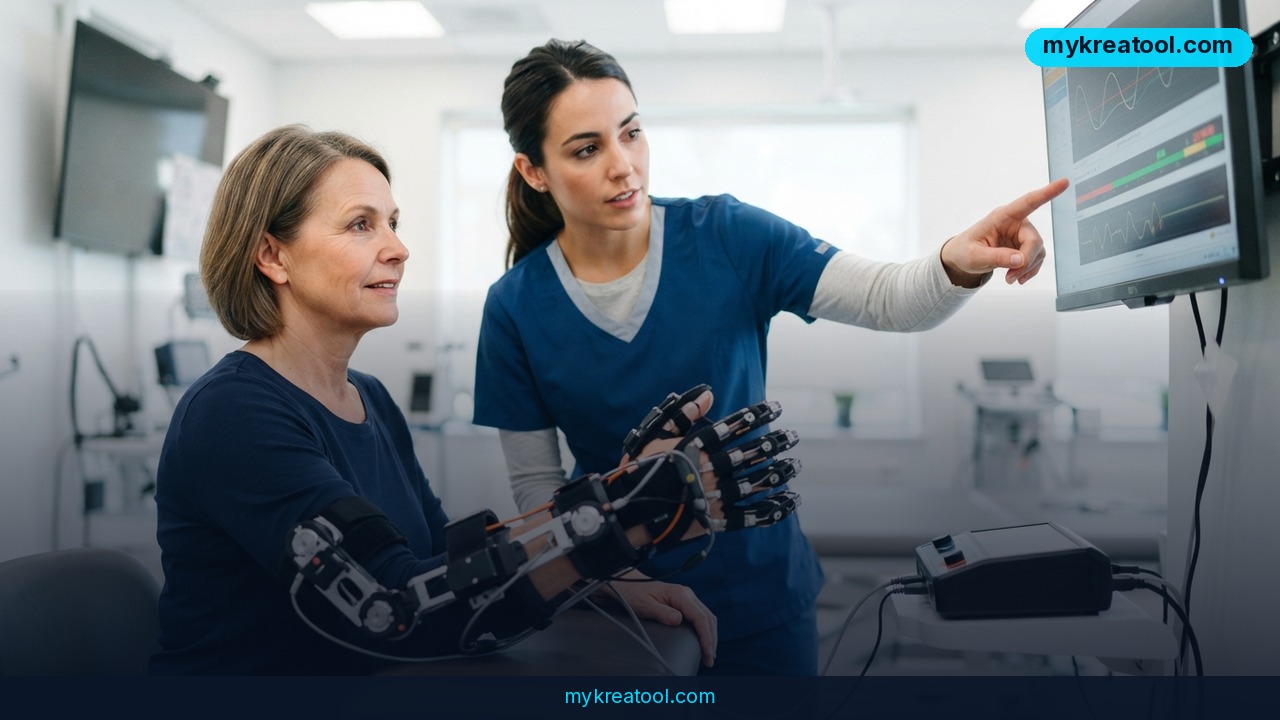
Strokes leave about 5 million people with long-term impairments every year, and there's a growing shortage of physical therapists to help them through the slow work of recovery. A new stroke rehabilitation robot from researchers at MIT and Purdue University is trying to close that gap. The system combines generative AI with real-time force feedback to learn from human therapists, then gives patients exactly the right amount of support during exercises like reaching, lifting an arm, or practising the small tasks of daily living.
Two researchers and one very specific goal
The project comes from Johannes Lachner, a former postdoc at MIT who's now an assistant professor at Purdue University, and Noah Geiger, a former visiting student at MIT. Neither of them frames this as a replacement story. The goal, Lachner says, is 'not to replace therapists, but to extend their reach.' That distinction is the whole point. A therapist can only be in one room at a time; a machine that has learned a therapist's instincts can keep a patient practising between sessions, or in a town where nobody has an opening until March.
What 'generative AI' and 'force feedback' actually mean
Strip out the jargon and it's simple. Generative AI here means a model that studies examples — in this case, real therapists guiding real patients — and learns the pattern of how much help to give and when to back off. Force feedback means the robot can feel. If you push against it, it senses how hard you're pushing and how much of the movement you're doing on your own, then adjusts in real time. Think of a driving instructor with a second steering wheel: it's there, but it only takes over when you actually need it.
Where the project stands today
Lachner reports that 'initial robotic experiments have already demonstrated the feasibility of this approach.' The next phase is where it gets interesting: the team wants to build therapist-specific models — versions of the system tuned to how an individual clinician works — and test them in a long-term clinical study with the same patients who previously received manual therapy. That's a rigorous setup, because it compares the robot-assisted version against each patient's own baseline instead of against strangers. Beyond rehab, Lachner sees possible applications in contact-rich industrial settings or collaborative workspaces, where machines and people work shoulder to shoulder.
What it means for you
You probably won't own one of these robots. But the pattern behind it — AI that learns from an expert, then hands back just enough assistance — is turning up everywhere, and it changes what one person can realistically get done. Here's what that looks like in ordinary life.
At home, if you're caring for someone
If you're helping a parent recover from a stroke, you already know the hardest part isn't the exercises. It's the repetition and the guesswork. Am I pushing too hard? Too little? A system that has absorbed a therapist's judgment gives you a second opinion at 9pm on a Sunday. The takeaway for now: ask your rehab team specifically whether robot-assisted training is available at their clinic, and whether the patient qualifies. Those questions cost nothing and often never get asked.
At work, when your time is the product
Anyone who sells hours — a coach, a tutor, a physio, a consultant — is running the same math as the therapist shortage. You can't clone yourself. The move this robot points to is to capture how you make decisions, then let software handle the routine stretch of the work so your hours go to the cases that genuinely need a human. That's the difference between selling time and selling judgment.
For a small clinic or business
A clinic that can't hire a second therapist can still extend the reach of the one it has. That's the business case in a sentence: more supervised practice hours per clinician, without pretending a machine replaces a person. If you run any service business, watch how this plays out — the pricing model that eventually emerges will be copied well beyond healthcare. The concept to steal today is 'capacity, not headcount.'
If you're studying to work in healthcare
Physical therapy and rehab programs are heading into a strange decade. The skills that matter most — reading a patient, adjusting resistance mid-movement, knowing when to stop — are exactly the skills these systems are learning from. That makes clinical judgment more valuable, not less. If you're a student, get comfortable being the person who supervises and corrects AI-assisted treatment rather than the person who only performs it.
As a way to earn
The realistic near-term money isn't in building robots. It's in the layer around them: helping clinics adopt tools, training staff, and managing the data. Every technology that extends expert reach creates a services business behind it, and those businesses tend to open up years before the hardware gets cheap.
How to try it right now
Honest answer first: you can't buy this system. It's a research project heading into a clinical study, not a product on a shelf. But you can do several useful things today, and the first one costs nothing.
Step 1: Read the original reporting
Go to MIT Technology Review and read the piece on robotic therapy for stroke patients. It's short, and it gives you the quotes and context straight from the source rather than secondhand.
Step 2: Ask your clinic the specific question
Call your rehab provider and ask, plainly: 'Do you offer any robot-assisted rehabilitation, and would I or my family member be a candidate?' If the answer is no, ask what supervised home exercises they recommend. Write the answers down — you'll forget them otherwise.
Step 3: Put a free AI tool to work on your recovery log
This is where you can act immediately. Use a free AI assistant to turn messy notes — 'arm felt stiff, did 20 reps, skipped Wednesday' — into a clean weekly summary you can hand to your therapist. Don't feed it medical records; just your own observations. You'll find a directory of free options at mykreatool.com, and the free tier of a general assistant like ChatGPT is more than enough for this. Ten minutes a week, and you'll walk into appointments with something far more useful than memory.
Step 4: If you're a researcher or clinician, reach out
The team is moving into therapist-specific models and a long-term clinical study. That means they need clinicians. If you work in rehab, a note to Lachner's group at Purdue is a cheap way to end up on the right side of this.
Upsides and what changes
The clearest win is access. Five million people a year with long-term impairments is a number no training pipeline is going to fix soon, and extending a therapist's reach is a realistic way to chip at it. Second, the design is respectful: learning from humans and staying under their supervision is a far better model than the 'AI replaces the expert' pitch you hear everywhere else. Third, the thinking transfers — the same approach is already being imagined for factories and shared workspaces, where a machine that senses force and adjusts in real time is genuinely useful.
Limitations
Be clear-eyed about what this isn't. It's a research system whose feasibility has been shown in initial experiments, not a proven treatment — the clinical study hasn't happened yet, so nobody can tell you how much better patients actually do with it. It won't suit everyone: strokes vary enormously, and a robot tuned to one therapist's style may fit one patient and frustrate another. The hardware will be expensive, which means the places that need it most — understaffed clinics and rural areas — may be last in line. And there's a quiet human cost to watch: 'extending reach' can slip into 'stretching a therapist thinner' if clinics use it to cut staffing instead of adding capacity.
Conclusion and one action for today
A machine that learns from a therapist and then hands back just enough help is one of the more encouraging uses of AI out there — it starts from human expertise instead of trying to erase it. You don't need to wait for the clinical trial to borrow the thinking. Today's action: open your notes app and write down three physical tasks that you or someone you care for struggles with, then take that list to your next appointment and ask what supervised practice is available between visits. It takes five minutes, and it turns a headline into something you can actually use.


Comments 0