What happened
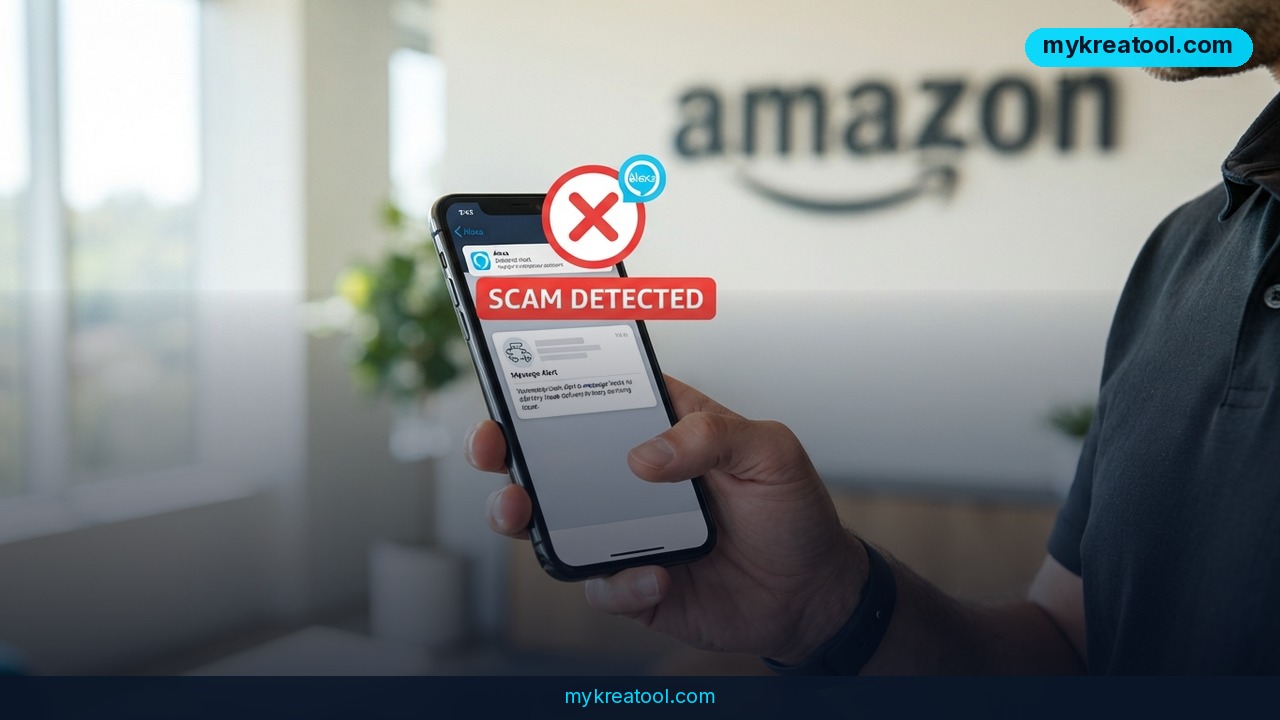
Amazon scam detection just got a major AI upgrade. On September 2, 2026, Amazon announced that its consumer AI assistant, Alexa for Shopping, can now tell customers whether a message claiming to be from Amazon is genuine or a phishing attempt. The company says roughly 360,000 customers contact its support team every year asking exactly that question, and the new feature is designed to answer it instantly, without a human agent.
Here's how the system works: Amazon's AI checks a suspicious message against the billions of communications the company has sent globally. It cross-references sender information, message content, timing patterns, and metadata to determine whether the communication actually originated from Amazon's own systems. According to the company, the AI can "definitively" confirm authenticity rather than offering a probabilistic guess.
The feature builds on groundwork Amazon laid earlier in 2026, when it launched a dedicated email address, [email protected], allowing anyone to forward a suspicious message and get a real/fake verdict back. An online form on Amazon's customer service site offers the same functionality. The Alexa for Shopping integration simply moves that verification into a conversational interface customers already use for other shopping tasks.
The scam types targeted
Amazon's fraud problem spans several well-known formats: fake order confirmations, fraudulent Prime membership renewal alerts, phony account suspension warnings, fake package delivery notifications, and job scams that impersonate Amazon recruiters. Each of these categories has grown as scammers get better at mimicking Amazon's branding, formatting, and tone.
Why it matters
Phishing built around trusted brands remains one of the most effective ways scammers extract money and personal data. Amazon is the world's most-impersonated retail brand precisely because nearly everyone has an account there, which makes a fake "your order has an issue" message plausible to almost any recipient.
The scale here is the real story: 360,000 support inquiries a year is not a fringe problem, it's a systemic one, and it's likely a fraction of the messages that never even get reported. By training its AI on billions of legitimate messages, Amazon has built a verification system that's hard for scammers to reverse-engineer, since matching real sender patterns, timing, and metadata at scale is far harder than copying a logo.
This also signals a broader shift in how big platforms handle trust and safety: instead of relying purely on user reports or spam filters, they're deploying AI as a first-line verification layer that customers can query directly, on demand, in natural language.
How to use it today
Using the new capability is straightforward. Alexa for Shopping is available through both the Amazon website and the Amazon mobile app. When a customer receives a message they're unsure about — a text, email, or push notification claiming to be from Amazon — they can ask the assistant directly whether it's legitimate, and the AI will analyze it against Amazon's message history.
For messages already in hand, the [email protected] forwarding option and the customer service web form remain available as alternatives, useful for anyone who prefers not to interact with the AI assistant directly.
Businesses building their own customer-facing verification or support flows can study this pattern closely: using historical, verified data as a reference set to authenticate new inputs in real time. It's a technique increasingly relevant well beyond e-commerce, and small teams experimenting with similar AI-driven verification or content workflows can prototype ideas quickly using free tools like the ones at mykreatool.com before investing in custom infrastructure.
Part of a larger Alexa shift
This scam-checking feature fits into Amazon's broader repositioning of Alexa away from a general-purpose voice assistant and toward a shopping-focused AI. Alexa for Shopping already sources personalized deals, builds shopping guides, helps customers reorder everyday items, generates AI product overviews, and transcribes handwritten shopping lists. Just a day before the scam-detection announcement, Amazon added an alert feature that notifies customers when something relevant happens, such as a favorite brand launching a new product or an author releasing a new book.
Who benefits
The most obvious winners are everyday Amazon customers who receive suspicious messages and want a fast, reliable answer without digging through support forums or waiting on hold. Older or less tech-savvy users, who are disproportionately targeted by phishing scams, stand to benefit the most from a simple, conversational verification tool.
Small businesses and sellers on Amazon's marketplace also gain indirectly: reduced scam activity around the Amazon brand protects buyer trust in the platform overall, which supports sales across the board. Amazon's own support operations benefit too, since automating a 360,000-inquiry-a-year workload frees agents to handle more complex issues.
Risks
No AI verification system is foolproof. Scammers adapt quickly, and if fraudulent messages start mimicking Amazon's timing and metadata patterns more closely, detection accuracy could degrade over time — which is why Amazon says the system will keep improving as customers report more suspicious messages.
There's also a dependency risk: customers who lean entirely on the AI's verdict may skip other basic precautions, like checking sender email domains or hovering over links before clicking. An AI tool that says a message is safe could create a false sense of security if the underlying model ever produces a wrong answer. And because the feature requires interacting with Alexa for Shopping through Amazon's own app or site, it doesn't help someone who receives a scam message but never opens Amazon's official channels to check it.
Conclusion
Amazon's decision to put AI-powered scam verification directly into Alexa for Shopping addresses a large, measurable problem — 360,000 annual support inquiries — with a scalable, self-improving solution. It reflects a wider trend of using AI not just to generate content or automate tasks, but to actively protect users from fraud in real time. For now, it's a genuinely useful new layer of defense, but it works best combined with basic scam-awareness habits, not as a replacement for them.



Comments 0