What happened
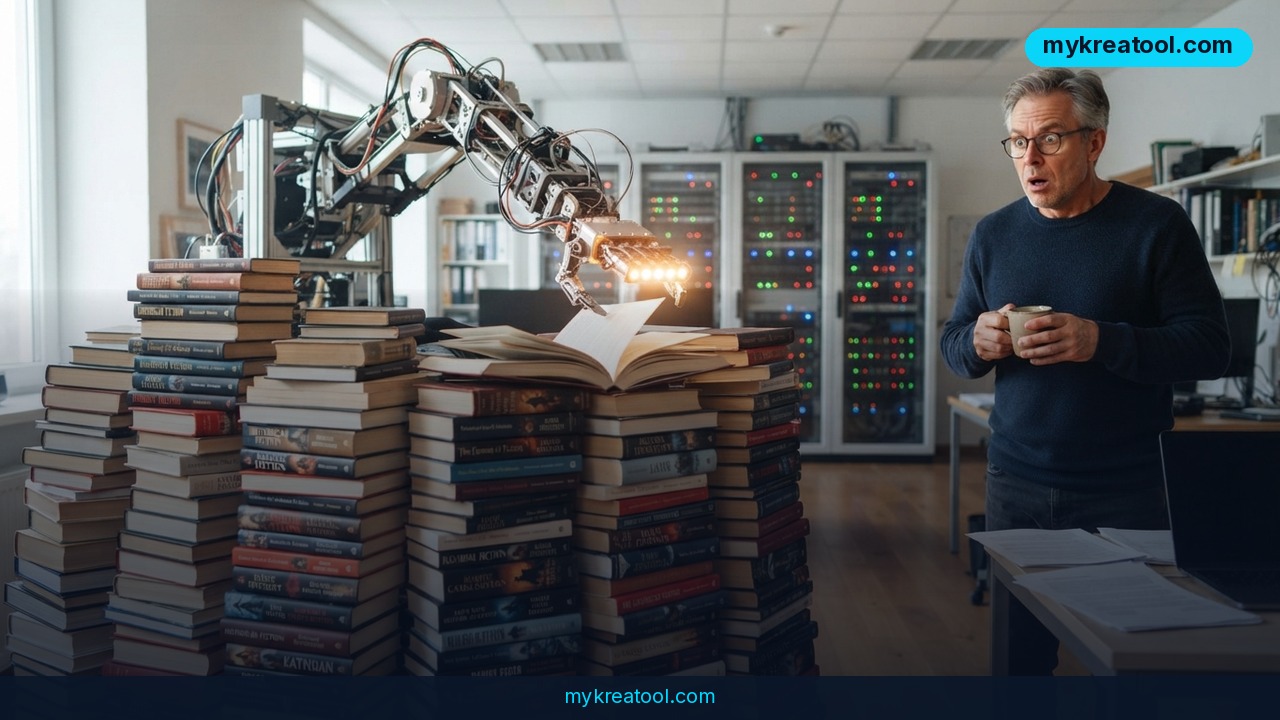
Is it legal to train AI models on copyrighted books? That question just got a real answer — and it's messier than a simple yes or no. In one of the first major rulings of its kind, Judge William Alsup ordered Anthropic to pay a $1.5 billion settlement to a group of authors whose books were used to train its AI models. On the surface, that looks like a clear win for writers. But the judge actually ruled that training an AI model on copyrighted books is lawful. What Anthropic got penalized for wasn't the training itself — it was pirating those books from illegal shadow libraries in the first place.
Judge Alsup compared the way large language models absorb text to how an aspiring writer studies literature: reading widely not to copy it, but to eventually produce something original. That analogy matters because U.S. copyright law hasn't been substantially rewritten since 1976 — decades before anyone imagined a chatbot trained on hundreds of millions of books, articles, and academic papers scraped from across the internet.
Why this ruling stands out
Most authors whose books ended up in AI training sets never consented and were never paid. Yet the court drew a sharp line: using a copyrighted work to train a model is different, legally, from copying and distributing it. Attorney Cathy Gellis, who specializes in IP and technology law, put it plainly: "Copyright law hinges on copying — it doesn't hinge on using the work, experiencing the work, reading the work." That distinction is now shaping how every major AI lab thinks about its training data pipeline.
Why it matters
For an industry projected to generate roughly $200 billion in annual revenue by 2028, a $1.5 billion fine is a rounding error, not a deterrent. Gellis argues the ruling is actually good news for AI companies overall, since it validates the core practice of training on copyrighted text as long as the source material was obtained legally.
That's the catch entrepreneurs and creators need to understand: the legal risk isn't in the training method, it's in the sourcing. Companies that scrape or download books from pirate sites are exposed. Companies that license or legitimately purchase their training data are on much firmer ground. Jason Henderson, Senior Attorney and founder of the IP & Media Practice at JWL International, described the current landscape bluntly: "Everybody is very worried right now because the law is all over the place... the AI model has been trained on so much stuff, and the law has not really caught up to that question."
The fair use factor
Most of these cases hinge on fair use — specifically, whether the use of a copyrighted work is "transformative" enough to be legally permissible. Courts weigh several factors: the purpose of the use, how much of the original was used, and whether it harms the market for the original work. Henderson's read on where courts are trending: if an AI tool is trained on someone's content specifically to compete directly with that content in the market, judges are far less sympathetic.
How to use it today
If you're a founder, marketer, or creator building with AI, this ruling gives you a practical checklist rather than a green light or a red light:
• Ask about data sourcing. Before adopting or building on any AI model, ask the vendor how training data was acquired — licensed content carries far less legal exposure than scraped or pirated material.
• Don't assume "AI-generated" means "copyright-free." Outputs that closely mirror a specific copyrighted work can still trigger claims, even if the underlying training was ruled lawful.
• Favor tools built on transparent or licensed datasets when copyright exposure matters for your business — publishing, education, and content licensing sectors especially.
• Keep your own content protections in mind. If you publish original writing, understand that broad training practices are currently permitted by courts, even without your consent, unless the source was pirated.
For everyday content and marketing work, you don't need a legal team to start experimenting safely — a good starting point is testing outputs with free, no-login AI tools like those on mykreatool.com before committing to a paid AI stack, so you can evaluate quality and originality risk with zero upfront cost.
Who benefits
AI companies are the clearest winners here. The ruling affirms that the core training process — ingesting massive datasets to build a model — is legally defensible as long as the data wasn't stolen. This gives labs like Anthropic, OpenAI, and Google a workable (if still evolving) legal framework instead of an existential threat hanging over every model release.
Authors and publishers get a narrower but real win: piracy-based sourcing is now expensive. The $1.5 billion settlement sets a financial precedent that could deter AI companies from cutting corners on data acquisition, and it opens the door to future licensing deals where publishers get paid for legitimate use of their catalogs.
Businesses building on AI tools benefit indirectly — clearer (if still incomplete) legal guardrails mean less risk of the ground shifting suddenly under products built on these models.
Risks
The biggest risk is that "the law is all over the place," as Henderson put it. Rulings so far apply to specific facts in specific cases; they aren't a blanket rule covering every AI company or every type of content. A model trained on pirated material faces real liability, but the line between "transformative use" and "direct market competition" is still being drawn case by case.
Creators face a subtler risk too: courts have so far prioritized the argument that training resembles reading, not copying — which means individual consent isn't currently required. Until Congress updates copyright law for the AI era, or higher courts weigh in more broadly, both AI companies and content creators are operating in a legal gray zone that could shift again with the next ruling.
Conclusion
Training AI models on copyrighted books is legal under current U.S. court rulings — but only when the training data was obtained legitimately, not pirated. The $1.5 billion Anthropic settlement didn't punish AI training itself; it punished piracy. For entrepreneurs, marketers, and creators working with AI, the practical takeaway is simple: prioritize tools built on transparent, licensed data, and don't assume the legal picture is settled — because with 50-year-old copyright law trying to govern trillion-parameter models, it isn't.
Comments 0