What happened
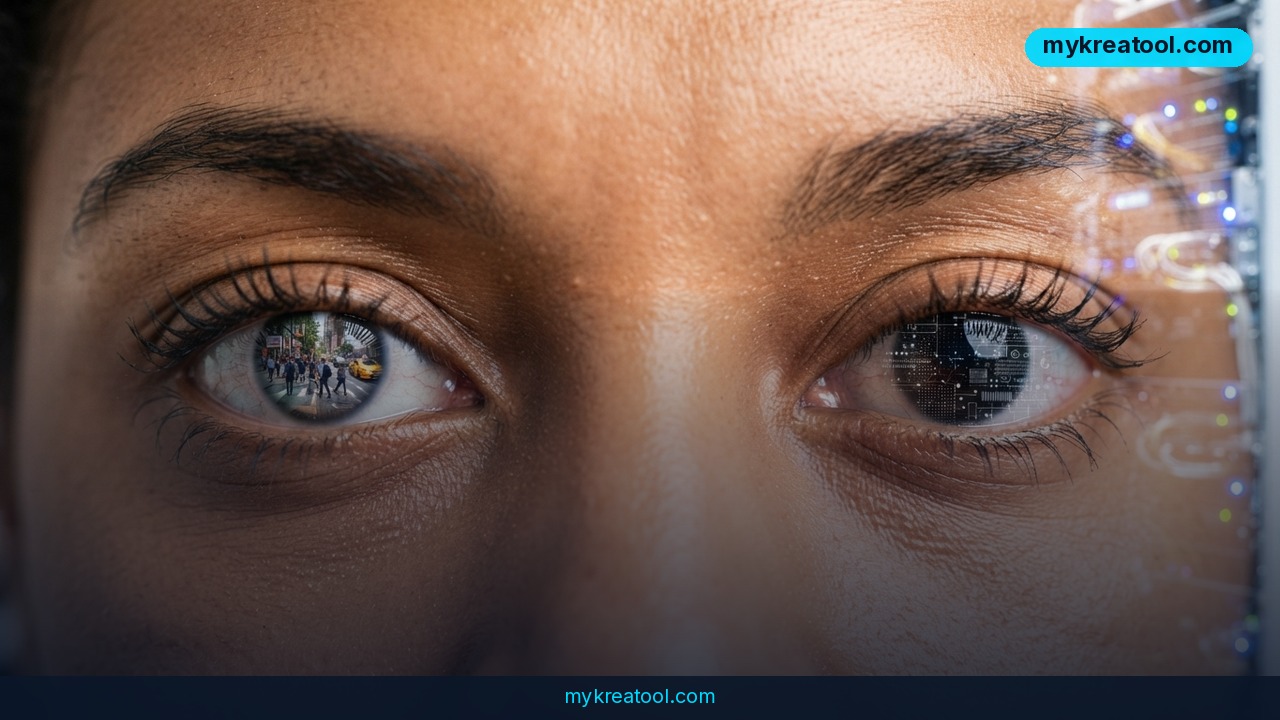
Deepseek's new vision AI model is closing the gap with premium competitors, and it's doing so at a fraction of the usual cost. On August 21, 2026, the Chinese AI company released Deepseek-V4-Flash-Vision-Exp, an experimental multimodal model that bolts image understanding onto its existing text-based Deepseek-V4-Flash. According to Deepseek's own internal benchmarks, the new vision variant scores close to Anthropic's Opus 4.8 on agent-based tasks, and in some cases it edges ahead.
The model keeps the reasoning and world-knowledge strength of the original V4-Flash text model while adding the ability to see. It can describe images, pull text out of screenshots, and interpret diagrams and charts. Supported formats include JPEG, PNG, GIF, and WebP, and Deepseek says the model identifies file type from the actual file content rather than trusting the filename or a declared MIME type — a small but meaningful detail for developers building agents that handle untrusted or messy image inputs.
Deepseek paired the release with version 0.1.1 of its Harness framework, which supports the new vision model right out of the box, and confirmed compatibility with both OpenAI's Chat Completions and Responses APIs as well as Anthropic's Messages endpoint.
Why it matters
A free or low-cost model approaching flagship-level agent performance changes the calculus for anyone building AI-powered products. Until now, teams that needed strong visual reasoning combined with tool use typically had to pay premium rates for models like Opus 4.8 or GPT-5-class systems. Deepseek-V4-Flash-Vision-Exp pricing follows the existing V4-Flash rate card, which has historically undercut Western competitors by a wide margin.
The benchmark results specifically target agent workflows — tasks where a model has to look at a screen, understand what it sees, decide on an action, and call a tool. That's a much harder test than static image captioning, and it's exactly the skillset needed for browser agents, computer-use assistants, and automated QA tools. If Deepseek's numbers hold up under independent testing, it signals that the vision-agent gap between Chinese and Western labs is narrowing faster than expected.
It also matters for cost-sensitive builders. Each image costs at most 384 tokens regardless of original resolution, since the model normalizes images to roughly 800 x 800 pixels before processing. That predictable, capped token cost makes budgeting for image-heavy workloads far easier than with models that scale token usage directly with resolution.
How to use it today
Developers can start testing Deepseek-V4-Flash-Vision-Exp through three image input methods:
• Base64 encoding — embed images directly in the request
• Public URLs — up to 32 MiB per image
• Files API — free to use, upload once and reference by ID across multiple requests, with a 64 MiB size limit
An optional "detail" field downscales images to 512 x 512 pixels when fine visual detail isn't necessary, trimming token usage further. A single request supports up to 600 images, with a maximum edge length of 8,192 pixels per image — though that limit drops to 4,096 pixels once a request includes 15 or more images. One constraint worth noting: images can only be placed in user messages, not system or assistant messages.
Because the model works with existing OpenAI and Anthropic API formats, most developers can plug it into current agent pipelines with minimal code changes. Teams experimenting with lightweight automation don't need heavy infrastructure to get started — for quick prototyping or testing image-based workflows without committing to paid API credits, a free AI tools hub like mykreatool.com is a practical way to try out multimodal AI use cases before scaling up to a full agent build.
Who benefits
Entrepreneurs and small teams building AI agents stand to gain the most from a capable, low-cost vision model. Startups building browser-automation tools, customer support bots that read screenshots, or QA systems that visually verify app states can now access near-flagship performance without flagship pricing.
Marketers and content creators also benefit. Automating tasks like extracting text from competitor ad screenshots, analyzing infographics, or batch-processing product images becomes far cheaper when each image costs at most 384 tokens. Agencies running high-volume creative or research workflows can process significantly more visual content per dollar.
Developers building on OpenAI or Anthropic-compatible stacks benefit from a near drop-in replacement option, since the model supports both API formats. That reduces switching costs and makes it easier to A/B test Deepseek's vision model against incumbent providers.
Risks
The model is explicitly labeled experimental, and Deepseek's benchmark numbers are self-reported rather than independently verified. Agent benchmarks in particular are notoriously easy to game with narrow test sets, so real-world performance on unfamiliar visual tasks may not match the headline comparisons to Opus 4.8.
There are also the usual considerations that come with any Chinese-developed AI model: data handling and privacy policies may differ from those of US or EU providers, and businesses in regulated industries should review terms of service carefully before routing sensitive visual data — screenshots of internal dashboards, customer documents, or proprietary designs — through the API.
Finally, as an experimental release, the model's behavior, pricing, and limits could change with little notice. Teams building production agents on top of it should plan for version drift and keep fallback options in place.
Conclusion
Deepseek-V4-Flash-Vision-Exp shows how fast the vision-agent race is moving: a free-tier-friendly, experimental model now claims performance near a flagship system like Opus 4.8 on agent benchmarks. For entrepreneurs, marketers, and developers watching AI costs closely, it's worth testing — but treat the benchmark claims as a starting point, not a guarantee, until independent evaluations catch up.


Comments 0