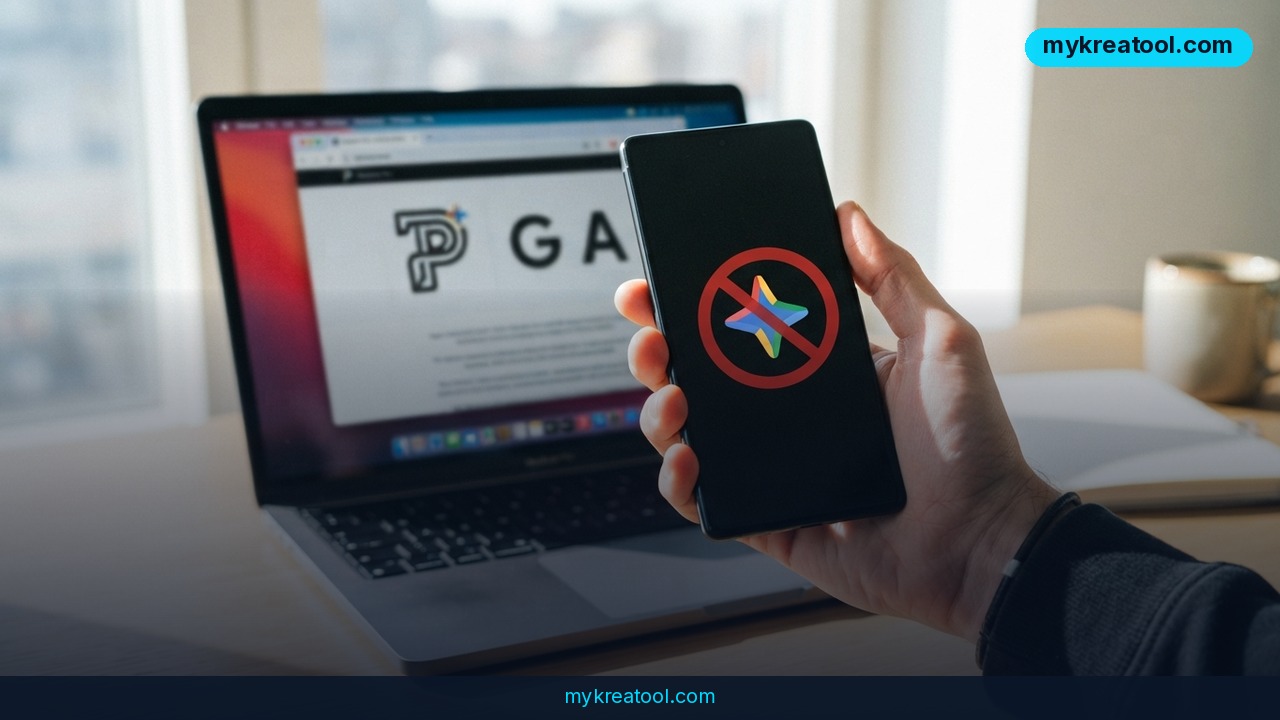
If you opened Gemini this morning and got an error page instead of a chatbot, you're not alone — and no, it's not your Wi-Fi. Free AI online just got a lot harder to reach for anyone browsing from Russia, because Google has cranked up the restrictions on Gemini and, this time, the old VPN trick isn't rescuing anybody.
What happened
Google has blocked access to Gemini for users in Russia, and the complaints started early. People are reporting that the service simply refuses to load, even with a VPN switched on. Other workarounds that used to do the job aren't helping either — and coverage that tracks Gemini access from outside the US tells the same story about how hard it's getting to reach the app from the wrong corner of the map.
This isn't a first offense. Gemini briefly opened up to Russian users back in August 2025 — one report at the time confirmed that Gemini was available to users in Russia — a short window when the chatbot loaded like it would anywhere else. Then the door slammed shut again. Read the write-up of that sudden opening today and it feels like a snapshot of a gap that closed fast. The fact-check notes attached to this story date the full block to August 2026, and this time it covers VPN traffic too, because Google tightened the technical restrictions rather than just flipping a regional switch.
How many people noticed? The Telegram channel @gptpublic, which tracks AI tools, logged 1,274 views, 24 reposts and 16 reactions on a single post about the block. Those aren't viral numbers, but they're a pretty good thermometer: a lot of people hit refresh, got nothing, and immediately went looking for a Plan B.
Why your VPN isn't the magic key anymore
A VPN is basically a forwarding address for your internet traffic. You tell the web, "I live over here now," and most sites shrug and play along.
The trouble is that a forwarding address only fools the bouncer if the bouncer checks nothing but the address. Once a service starts cross-checking your account, your device and your region at the same time, a fresh address by itself stops being enough. Think of it as a club that used to glance at your ID and now asks for ID, a membership card and a fingerprint. Same door, much better security.
What it means for you
Strip away the tech jargon and this is about one thing: a tool you may have been leaning on is suddenly behind a wall. Here's how that plays out in real life.
At home
Gemini has quietly become the household assistant — meal plans, a fridge-clearing recipe, a polite email to the landlord about the radiator. When it stops loading, those five-minute jobs turn into twenty-minute ones. Nobody's life falls apart, but the small conveniences you got used to vanish all at once.
At work
If you use Gemini to draft a summary of a long thread, tidy up a report or bang out a first version of a proposal, a block like this hits right in the middle of your afternoon. The bigger annoyance is the improvisation tax: you end up pasting the same prompt into three different tools and comparing the results, which eats the time the AI was supposed to save.
Running a small business
Small teams feel this the hardest because there's no IT department to call. If your product descriptions, customer replies or ad copy came out of Gemini, you now need a route back in before your next launch. And if you sell into markets outside your own country, a blocked tool is a blocked tool — the invoices don't care why.
Studying
Students are probably the heaviest users of all: explaining a concept five different ways until it clicks, quizzing yourself before an exam, turning messy lecture notes into something readable. A block doesn't just cost convenience — it costs the study habit you built around that specific tool. Switching mid-semester is genuinely irritating.
Creative projects
Writers, designers and video folks use chatbots as a sparring partner: twenty headline options, three plot twists, a caption that doesn't sound like everyone else's. Lose access and you don't lose your talent — you lose your momentum, which is the part that's actually hard to get back.
Side income
Plenty of people earn real money with a chatbot as their back office — freelance copy, translation cleanup, social media packages, small research gigs. For them, a block isn't an inconvenience, it's a work stoppage. Finding a second route to the same model is the difference between finishing the order and refunding the client.
If you like keeping a few backups in your bookmarks, mykreatool.com collects free AI tools you can try without paying up front — handy when your main one suddenly goes quiet.
How to try it right now
The most straightforward free route right now, according to the same report, is Pointgpt.ai — Gemini is still available there at no cost, and it doesn't require you to fight your way past a regional wall.
1. Open Pointgpt.ai in your browser. Phone, laptop, tablet — anything with a browser works. You don't need to install anything.
2. Create an account and sign in. Keep it simple: use an email you actually check, because that's how you'll get back in later.
3. Pick Gemini from the model list. Don't overthink it. Select Gemini and you're on the same family of models you were using before.
4. Start with a prompt you already know works. Grab something you ran last week — a summary, a rewrite, a plan — and paste it in. That gives you a fair side-by-side comparison instead of a vague first impression.
5. Keep the tab pinned for a few days. Free access can get busy at peak hours. If a response stalls, refresh and try again rather than assuming the whole thing is down.
6. Save your best prompts somewhere outside the tool. A plain notes file is enough. If access shifts again, you keep the valuable part — your carefully tuned instructions — and can drop them into any model in seconds.
Upsides and what changes
Here's the silver lining nobody mentions: a block is a forced audit of how dependent you are on one company's front door. People who get pushed off Gemini this week will end up with two or three tools they know how to drive, saved prompts they can reuse anywhere, and a much clearer idea of which tasks genuinely need a top-tier model and which ones a cheaper, smaller one handles fine.
That portability is worth more than any single subscription. Models change, access rules change, pricing changes. The skill that survives all of it is knowing how to ask a good question and how to judge a good answer.
Limitations
Let's be honest about what this fix is and isn't. Routing through a third-party platform means you're trusting someone else's servers with your prompts, so don't paste in contracts, medical details, client data or anything else you'd hesitate to email a stranger. Free tiers also come with the usual catches: rate limits during busy hours, occasional slower responses, and features that get added or pulled without a press release. It isn't a permanent guarantee of access either — the whole point of this story is that access rules can change overnight, in either direction. Treat any workaround as a bridge, not a foundation, and keep a plain-text copy of anything you'd hate to lose.
Conclusion
Google has locked the front door to Gemini for users in Russia, VPNs included, and that's a real annoyance for anyone who built a daily habit around it. But the model itself hasn't disappeared — it's just moved. Free access through Pointgpt.ai is still live, and setting it up takes about as long as making a cup of coffee.
One action for today: open the link, sign in, and run one prompt you'd normally have sent to Gemini. If the answer is good, save that prompt to a notes file — and you've turned a blocked tool into a two-minute detour instead of a bad week.

Comments 0