What happened
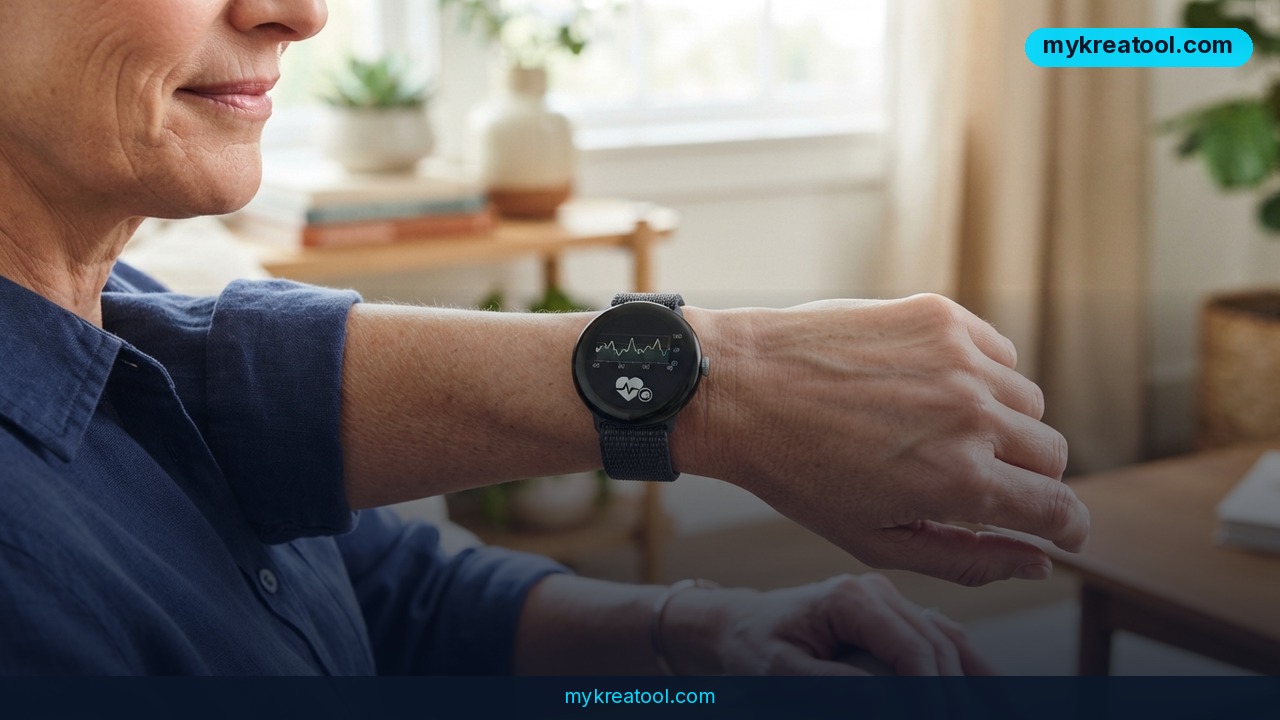
Google researchers have built an AI model that can flag high blood pressure using nothing more than the smartwatch already strapped to your wrist. No inflatable cuff. No calibration squeeze at the doctor's office. The study was published in Nature, the model came out of Google Research, and parts of the method are already being folded into the blood pressure trends feature inside the Google Health app.
The "no cuff" part is the real headline. Until now, cuffless blood pressure gadgets needed a cuff reading first — you'd take a measurement the old way so the software had something to anchor to. This system skips that step entirely.
Two sensors you already own
Modern watches carry two things that matter here. The pulse sensor is the little green light on the back that shines into your skin and watches how your blood volume shifts with every heartbeat. The motion sensor is the accelerometer that knows whether you're flat on the couch or running for a bus. That's the whole input list: a pulse signal and a movement signal.
A neural network — think of it as a pattern-spotting program loosely inspired by the brain — then turns those raw signals into something useful.
How it learned without being told the answers
Here's the clever bit. Nobody handed the model a stack of files labeled "hypertensive" and "healthy." Instead, it worked through nearly 500,000 hours of sensor data by comparing short snippets and figuring out which snippets belonged to the same person. It's a bit like recognizing a friend from across the street by the way they walk, before you can make out their face. In doing that matching, the network picked up the pulse and heartbeat patterns that make each person's signals distinctive.
The system then averages those patterns over several days and turns them into a probability of high blood pressure. A probability — not a verdict, and not a pair of systolic-over-diastolic numbers like the readout on a cuff machine.
What the study numbers actually show
The validation study followed 196 people across five US research sites. The watch-based system identified 65.8% of people who had high blood pressure. The standard in-office measurement caught 55.3%. A wrist-worn algorithm, in other words, beat a single clinic reading at spotting the condition.
That's less shocking than it sounds once you consider what a clinic reading really is: one snapshot, taken under some of the least relaxing conditions imaginable, often minutes after you rushed through traffic. Google also notes that more than half of people with high blood pressure don't know they have it. Those are the people this is aimed at — not patients managing a known diagnosis, but adults who've never been checked in their life.
Google says the method is still a research project and doesn't replace a diagnosis. The goal is to nudge people toward getting checked. There's a second health model in the mix too, called SensorFM, which also learns from smartwatch data.
What it means for you
At home: the relative who never checks
Every family has one. The dad who says he feels fine, the aunt who avoids doctors because the last visit was a hassle. A watch that quietly raises a hand after a few days of odd patterns is a much easier first step than booking an appointment out of nowhere. It gives you something to point at: "Your watch keeps flagging this. Let's get it looked at properly."
At work: the desk-job blind spot
Sitting eight hours, skipping lunch, mainlining coffee, answering email at 11 p.m. — none of that shows up in an annual physical until it does. A wearable that watches trends over several days rather than one tense moment at the clinic is exactly what a desk job needs, because the damage is cumulative, not dramatic.
In business: earlier conversations, less downtime
If you run a small team, this is a preview of cheap triage. A key employee out for weeks after a stroke costs far more than a conversation about blood pressure ever would. Note the limits, though: it's a nudge, not a medical clearance, so it can't replace occupational health checks or insurance requirements. If you want to experiment with AI on your own terms before it lands in your workflow, there's a free collection of free AI tools worth poking around — good way to get comfortable with what these models can and can't do.
For students: cheap early warning
Exam season is a pressure cooker — late nights, energy drinks, zero sleep hygiene. Most students aren't getting their blood pressure checked, and most wouldn't know what a normal reading looks like. A flag on a watch they already own costs nothing and starts a conversation with a campus clinic.
For creators and freelancers: irregular hours, irregular data
Freelancers live without the structure that forces a checkup — no HR department, no mandatory physical, no one noticing you've been running hot for a month. The appeal here is passive monitoring: your existing watch does the work while you chase deadlines, and the trend is there when you finally look.
How to try it right now
1. Open the Google Health app (free). Google says the findings have been folded into the blood pressure trends feature there. Look for it in your app; if it isn't showing yet, your device or region likely hasn't received the rollout — features like this appear in stages, so check back.
2. If it's not there yet, use what you already get free. Your watch's resting heart rate trend, sleep data and activity history won't give you a blood pressure number, but they'll show you a sudden shift worth asking about.
3. Get one real cuff reading as a reference point. A home monitor or the machine at your local pharmacy will do. Not because the AI needs calibration — it doesn't — but because you'll want a real number to compare against the trend.
4. Judge over a week, not an hour. The system averages patterns across several days, so don't panic over one weird afternoon of data. Look for a consistent direction.
5. Bring the trend to your doctor. Screenshots beat memory. "Here's what my watch has been showing for two weeks" is a far more useful opening than "I've been feeling off."
Upsides and what changes
• No new hardware. The sensors are already in the watch you bought for step counts.
• No calibration ritual. You don't need a cuff reading before the software works.
• Better than a single clinic reading — in this study. 65.8% versus 55.3% detection.
• A software update away from scale. No clinic visit required to get a first signal, which matters when more than half of hypertensive adults are undiagnosed.
• It nudges instead of diagnosing. Google frames it as a prompt to get checked, which is the right level of ambition for a wrist device.
Limitations
Be clear-eyed about this one. It was a 196-person study across five US research sites — solid enough to publish in Nature, but nowhere near the millions of people you'd want before trusting a flag on your wrist. The system outputs a probability, not a reading in millimetres of mercury, and it averages over several days, so it won't catch a spike that happens this afternoon. A 65.8% detection rate also means roughly one in three people with hypertension still slipped past it, which is a real miss rate and a reminder that "no alert" isn't "no problem." Optical sensors vary with how tight the band sits, skin tone and movement, and Google itself calls the method a research project that doesn't replace a diagnosis. Treat it as a smoke alarm, not a fire inspector.
Conclusion
What's genuinely new here isn't the accuracy figure — it's the fact that a cuffless, calibration-free hypertension check may soon be a free software feature on hardware people already own. That's a meaningful shift for anyone who's never had their blood pressure taken seriously, especially the millions who don't know they have a problem.
One action for today: open your watch's health app and find your resting heart rate trend. If you're over 40, have a family history, or can't remember your last blood pressure reading, book a real cuff measurement this week — and treat whatever your wrist tells you as the reason to go, not the answer itself.

Comments 0