
What happened
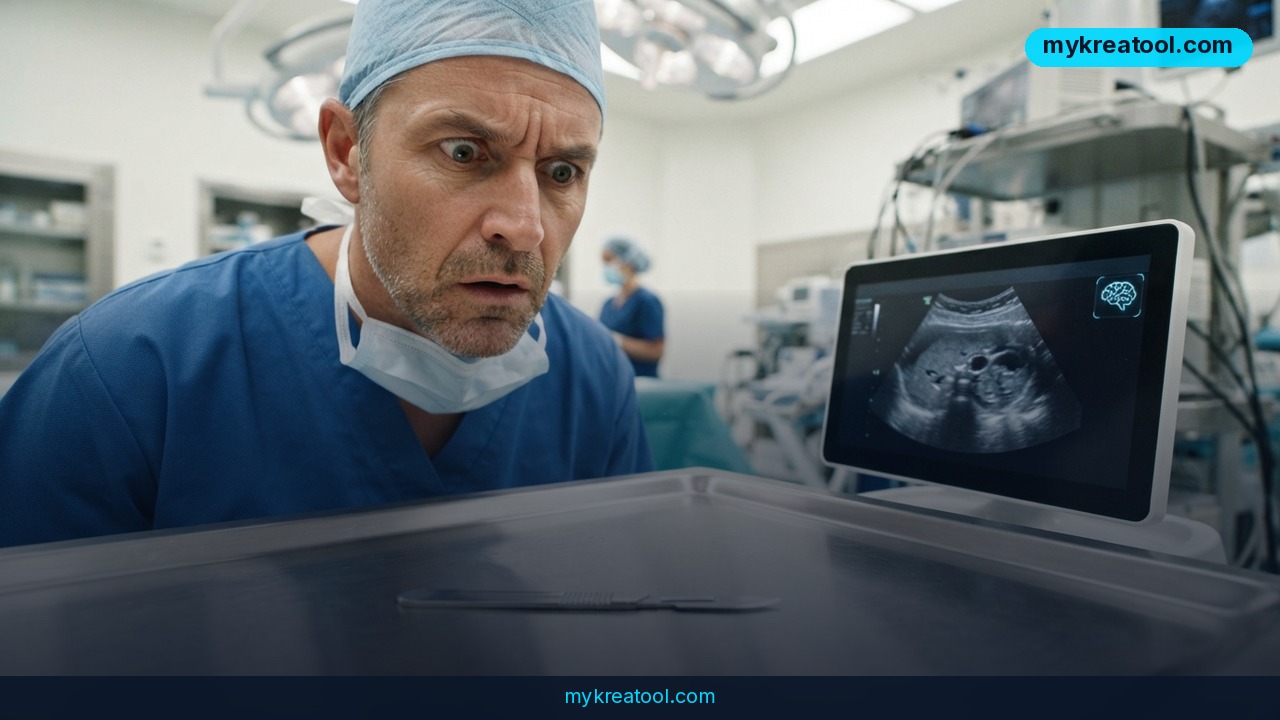
Google just pushed AI medical consultation technology further than most people expected. On August 11, 2026, Google Research and Google DeepMind announced that AMIE — their research medical AI system — can now conduct real-time clinical video consultations, not just text-based chats. This is a first-of-its-kind demonstration of an AI system reasoning through a live video visit the way a human physician would.
AMIE is built on Gemini and Project Astra, using a multi-agent architecture instead of a single model handling everything. That matters because a real consultation isn't just words on a screen. A doctor notices a patient's cough, watches how they walk into the room, or picks up on subtle signs of discomfort on their face. AMIE was designed to do the same: interpret visual and auditory cues, guide a patient through a virtual physical exam, and reason diagnostically in real time as new information appears.
Google tested this in a randomized study using simulated consultations. Patient actors worked through scripted medical scenarios with AMIE and with a group of real primary care physicians, and independent clinical evaluators scored both. The categories were the ones that actually define good medicine: thoroughness of history-taking, diagnostic accuracy, appropriateness of the recommended treatment or next steps, and quality of communication with the patient.
The headline result
Across those core clinical competencies, evaluators rated AMIE favorably — often on par with or ahead of the human physicians in the study. Just as notably, the patient actors said they preferred the video format over a text-based chat interface. That's a meaningful signal: it suggests people don't just want an accurate answer from an AI, they want an interaction that feels like being seen and heard.
Important: This article is provided for informational purposes only and does not constitute medical advice. Google AMIE is a research technology and is not publicly available. Do not use the information in this article for self-diagnosis or treatment — for any health concerns, consult a qualified physician.
Why it matters
Until now, most AI health tools have lived in one of two lanes: symptom checkers that spit out a list of possible conditions, or chatbots that answer questions in text. Neither replicates what actually happens in an exam room. AMIE's move to real-time video consultation is significant because it closes the gap between "AI that answers medical questions" and "AI that conducts something resembling an actual visit."
For an industry that has spent years trying to extend access to care — especially in regions with physician shortages — a system that can watch, listen, and reason simultaneously is a different category of tool than a chatbot. It also validates a broader trend: multimodal AI agents (models that combine vision, audio, and language) are moving from demos into domains with real stakes, healthcare being the highest-stakes of all.
There's a business angle too. Telehealth platforms, insurers, and health systems have been investing heavily in virtual care since the pandemic, but video consultations still require a licensed clinician on the other end, which limits scale. A research system that performs at a comparable level on core clinical competencies hints at where triage, pre-visit intake, and follow-up care could eventually head — even if full deployment is still a long way off.
How to use it today
Here's the important caveat: AMIE is a research system. It is not available as a consumer product, it hasn't been cleared for clinical use, and Google has been explicit that more research and safety validation are needed before any real-world deployment. So there's no app to download or API to call for medical consultations yet.
What entrepreneurs, marketers, and creators covering this space can do right now:
• Track the research, not the hype. The full study details are published on the Google Research blog — worth reading before writing coverage that overstates what AMIE can currently do.
• Watch for pilot partnerships. Google has a history of testing AMIE-style research inside partner health systems before any broader rollout, similar to how it approached earlier AI diagnostic tools.
• Experiment with adjacent, available AI tools. While AMIE itself is closed, plenty of general-purpose AI tools can already help you draft patient education content, summarize research papers, or prototype conversational interfaces for other industries. If you want to test multimodal or conversational AI concepts for your own project without building from scratch, a free AI tools hub like mykreatool.com is a practical starting point for experimenting with AI-assisted workflows.
• Reassess your content strategy if you cover healthtech or AI news — real-time multimodal medical AI is likely to be a recurring story for the next few years, not a one-off announcement.
Who benefits
Several groups stand to gain if systems like AMIE eventually reach deployment:
• Patients in underserved areas, where primary care access is limited or wait times stretch for weeks.
• Telehealth companies, which could use AI-assisted triage to route patients more efficiently to the right level of care.
• Health systems, which face persistent physician shortages and administrative overload, particularly in primary care.
• Researchers and developers, since Google's multi-agent architecture approach offers a template for building other real-time, multimodal reasoning systems beyond medicine — customer service, education, and coaching applications could borrow the same design principles.
• Content creators and marketers in the health and AI space, who now have a concrete, well-documented case study to reference when discussing where conversational AI is headed.
Risks
A favorable evaluator score in a controlled study with actors is not the same as safe performance with real patients carrying real conditions, comorbidities, and communication barriers. A few risks are worth flagging clearly:
• Simulated vs. real-world gap. Patient actors follow scripts; real patients are inconsistent, anxious, and sometimes withhold information. AI performance can degrade outside controlled conditions.
• Liability and regulation. No regulatory body has cleared an AI system to independently conduct diagnostic consultations. Any real deployment will need to navigate medical device regulation, malpractice frameworks, and clinical oversight requirements.
• Over-trust risk. If patients start treating a well-spoken AI video consultation as equivalent to a licensed physician's judgment, misdiagnosis or missed red flags could have serious consequences.
• Equity concerns. Video-based AI tools assume reliable internet access and camera-equipped devices — exactly the populations most likely to lack primary care access may also lack the infrastructure to benefit.
• Data privacy. Real-time video and audio processing of patients raises higher-stakes privacy questions than text-based chat, and Google hasn't detailed the long-term data handling model for a deployed version.
Conclusion
Google's AMIE update is a genuine milestone in AI medical consultation research: a system that watches, listens, and reasons through a live video visit, and holds up favorably against real primary care physicians on core clinical competencies. But it's still a research demonstration, not a product you or your doctor can use tomorrow. The realistic takeaway for entrepreneurs and creators covering AI is to watch this space closely — multimodal, real-time AI agents are clearly moving toward high-stakes, human-facing use cases, and healthcare is proving to be the proving ground.

Comments 1