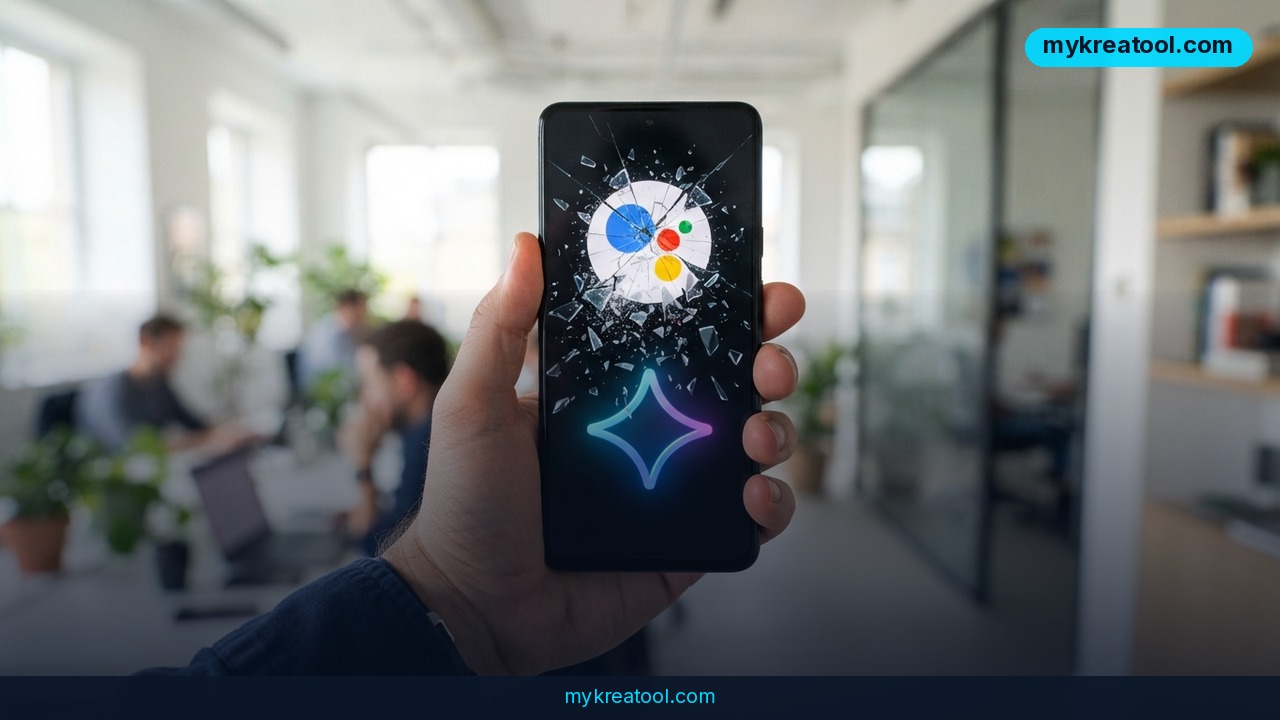
What happened
The Google Assistant shutdown is officially happening: Google has confirmed it will begin retiring Assistant on Android phones starting September 4, pushing every remaining user over to Gemini. The news arrived via an email Google is sending directly to Assistant users, and it settles a date that had been floating in limbo for months. The company originally planned to sunset Assistant in late 2025 but delayed the cutoff to give Gemini more time to match Assistant's reliability for everyday tasks.
According to Google's notice, the rollout won't be instant — the transition could take several weeks to fully complete, so some users may keep limited Assistant access into October even after the September 4 start date. If you already switched to Gemini voluntarily, nothing changes for you. Everyone else will be migrated automatically, whether they're ready or not.
The shutdown isn't limited to phones. Because Assistant on mobile also powers connected accessories, the change cascades to smartwatches, wireless earbuds, and cars running Android Auto. Most smart home devices — speakers, displays, thermostats — already made the jump to Gemini earlier this year, so this move closes one of the last remaining gaps.
Why it matters
This is the clearest signal yet that Google considers the pre-AI assistant era closed. Assistant, launched back in 2016, was built on scripted commands and predictable, narrow responses. Gemini is a generative AI model that reasons through requests and calls tools to complete them, which means it can handle far more open-ended conversations — but it can also misfire in ways Assistant never did, like losing track of a tool it has access to or wandering off-topic mid-request.
For an audience of entrepreneurs, marketers, and creators, the shift matters beyond convenience. It marks a broader pattern: legacy rule-based tools across the tech industry are being replaced by conversational AI layers, and the businesses that adapt their workflows early tend to capture the productivity gains first. Voice search behavior, smart home automation, and even how customers interact with branded voice assistants will all be shaped by how well Gemini performs compared to Assistant.
A predictable tool becomes an unpredictable one
The trade-off is real: Assistant was limited but consistent. Gemini is more capable but occasionally unpredictable, which matters for anyone who relies on quick, hands-free voice commands during work — setting reminders, checking a calendar, or controlling smart devices mid-task.
How to use it today
If you haven't already, expect Gemini to take over your "Hey Google" commands automatically once the rollout reaches your device. A few practical steps can smooth the transition:
• Update the Google app on Android to the latest version before September 4 so the switch happens cleanly.
• Re-test your routines. Smart home commands, reminders, and Android Auto voice controls may need to be re-confirmed once Gemini takes over.
• Check device compatibility. Older phones that don't meet Gemini's minimum hardware requirements — or accounts in regions where Gemini isn't yet supported — may retain Assistant a little longer.
• Explore Gemini's extensions in settings to reconnect apps and services that Assistant used to handle natively.
For creators and marketers experimenting with AI-driven workflows beyond voice assistants, it's worth testing how other free AI tools handle similar automation tasks — a resource like mykreatool.com offers free AI tools that can help you prototype content, automate repetitive tasks, and adapt to the same generative-AI shift happening across Google's ecosystem.
Who benefits
The biggest winners are power users who want richer, multi-step interactions instead of single-command replies. Gemini can hold a conversation, pull context from previous questions, and complete more complex requests in one go — useful for anyone managing a busy schedule or juggling multiple connected devices.
Google also benefits strategically. Consolidating everything onto Gemini simplifies its product line and puts its most advanced AI model directly in front of the roughly billions of Android users worldwide, accelerating adoption without requiring an opt-in.
Businesses building on Google's voice ecosystem — smart displays, in-car assistants, and third-party integrations — gain a more capable AI backend to build against, even if it means updating how their products interact with it.
Risks
Not everyone will have a smooth ride. Users on older, low-spec Android devices may lose voice assistant functionality altogether if their hardware doesn't meet Gemini's requirements. Some regions where Gemini hasn't fully launched will also see gaps in support.
There's also a real usability risk during the transition window. Gemini has a documented tendency to occasionally forget it has access to a specific tool or drift off-topic during what should be a fast, transactional voice command — frustrating for anyone used to Assistant's narrower but dependable behavior. Android TVs, set-top boxes, and vehicles with Google built-in aren't part of this September wave yet, so expect a second, unannounced transition later on those platforms.
Conclusion
The Google Assistant shutdown beginning September 4 marks the end of a nearly decade-old voice assistant and the start of an all-Gemini future across Android phones, wearables, and connected cars. The transition may take a few weeks to fully roll out, and there will be an adjustment period as Gemini's conversational style replaces Assistant's predictable commands. For entrepreneurs and creators already adapting workflows around generative AI, this is one more reminder that the shift from rule-based tools to AI assistants is no longer optional — it's arriving on a fixed deadline.


Comments 0