What happened
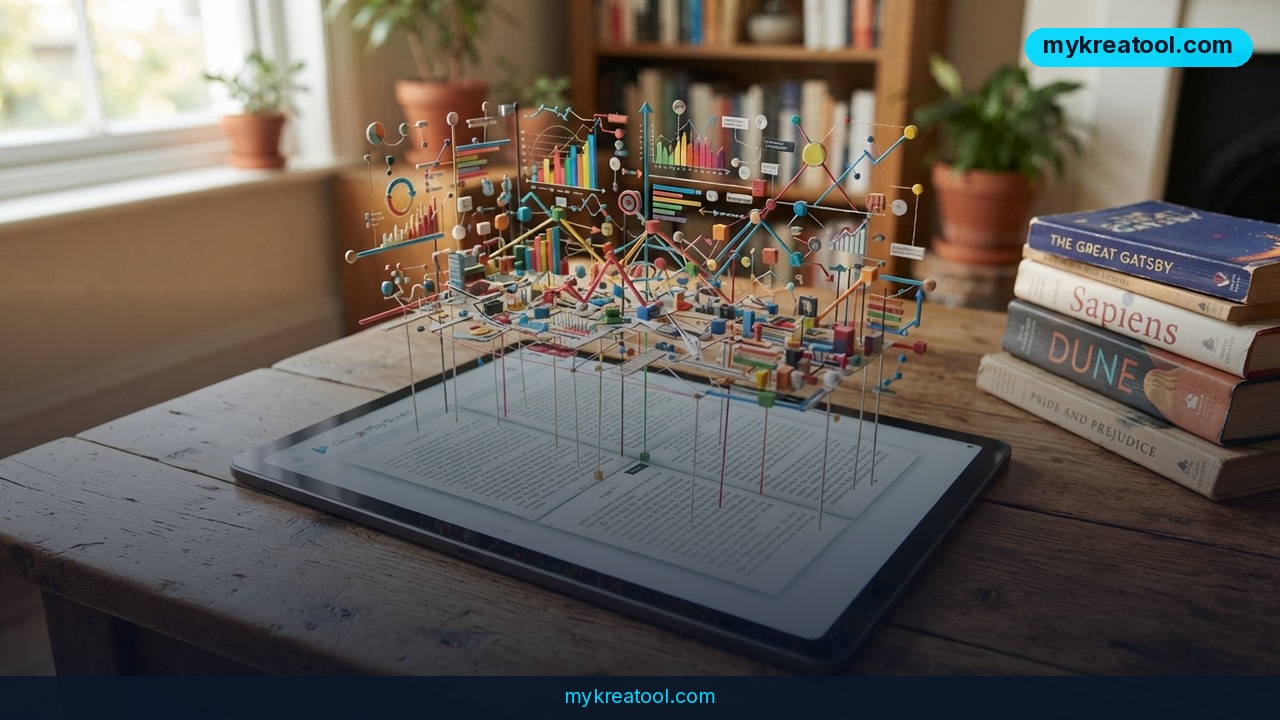
Google just turned its AI note-taking app into a full AI book assistant. On August 27, 2026, Google announced that Gemini Notebook — the tool formerly known as NotebookLM — now supports a feature called "Expert Intelligence," which lets you import books you've bought on Google Play Books directly into your notebooks and interact with them using AI. Instead of just skimming a summary, you can ask the book questions, generate step-by-step plans from its advice, build infographics, or turn its content into an AI-narrated podcast.
Google Labs editorial director Steven Johnson demoed the feature for The Verge using two real titles: Michael Pollan's Food Rules, which Gemini Notebook turned into a custom recipe collection, and Kim Scott's management book Radical Candor, which the AI used to answer a question about handling a tough conversation with an employee. More than 100,000 titles from publishers including Penguin Random House, Macmillan, O'Reilly Media, and Johns Hopkins University Press support the feature at launch, and 15 authors — including Pollan, Scott, Steven Pinker, and Jennifer Wallace — helped build curated "Featured Notebooks" with extra source material and personal intro letters.
Why it matters
This is a meaningful shift in how people are expected to consume nonfiction. Instead of reading — or even summarizing — an entire book, users can now query it like a database and pull out exactly the advice they need in seconds. For time-strapped entrepreneurs, marketers, and creators, that's the real headline: a business book that used to take six hours to read can now answer a specific question in six seconds.
It also signals where Google wants AI search to go next. The company confirmed Expert Intelligence will eventually reach AI Mode in Search and the Gemini app, both of which already pull from Gemini Notebook. Google also plans to expand the feature to scholarly papers, magazine articles, and newspapers — meaning the "ask an expert source directly" model won't stop at books. Competitors like OpenAI and Perplexity have been racing to add citation-backed, source-grounded answers, and Google's approach — tying AI directly to paid, licensed content — gives it a differentiated angle: publishers and authors get a new revenue stream instead of losing traffic to AI summaries.
How to use it today
Getting started is straightforward if you already buy ebooks through Google Play Books:
1. Buy or open a supported title in Google Play Books — look for the "Gemini Notebook" tag under the Tools badge.
2. Import the book into Gemini Notebook as a source.
3. Ask questions directly, request summaries, generate infographics, or create an AI podcast based on the content.
4. Browse "Featured Notebooks" curated by the original authors for bonus material not found in the book itself.
If you're experimenting with AI-assisted research or content workflows more broadly, it's worth pairing this kind of tool with lightweight utilities that speed up everyday tasks — for instance, you can run quick text, image, or content-generation jobs through free tools like mykreatool.com while you build out a full AI research stack.
Who benefits
Readers and researchers
Anyone who needs to extract practical advice fast — founders reading management books, marketers studying strategy guides, students working through textbooks — gets a shortcut to actionable answers instead of hours of reading.
Authors and publishers
Google built in protections so only people who've actually purchased a book can access its full content through Gemini Notebook. Share a notebook with someone who doesn't own the title, and they'll see it listed as a source but can't open the text — they're redirected to buy it on Google Play Books instead. That's designed to create a new monetization path rather than cannibalize book sales.
Businesses building AI workflows
Companies experimenting with AI-driven knowledge management can use Expert Intelligence to build internal "advisor" collections — Johnson described it as creating "your own dream team of advisors" from books you trust, available on demand.
Risks
There are real caveats. First, AI-generated answers pulled from a book are still summaries and interpretations — they can miss nuance, oversimplify complex arguments, or misattribute advice the author never quite gave. Second, this deepens a broader trend of readers skipping full texts in favor of AI-extracted takeaways, which risks shallow understanding of nuanced material. Third, the feature currently only works with Google Play Books purchases, so it locks users into Google's ecosystem rather than working across any ebook library. Finally, as Expert Intelligence expands to scholarly and news content, questions about licensing, attribution, and compensation for smaller publishers and independent writers will only get louder.
Conclusion
Google's Expert Intelligence feature turns Gemini Notebook into a genuine AI book assistant, letting users question, summarize, and repurpose more than 100,000 purchased titles instead of just reading them cover to cover. It's a clear signal that AI search is moving toward direct, licensed, source-grounded answers — and that publishers and authors are being pulled into the AI economy rather than left behind it. For entrepreneurs and creators, the practical takeaway is simple: the books sitting on your shelf can now work a lot harder for you.



Comments 0