What Happened
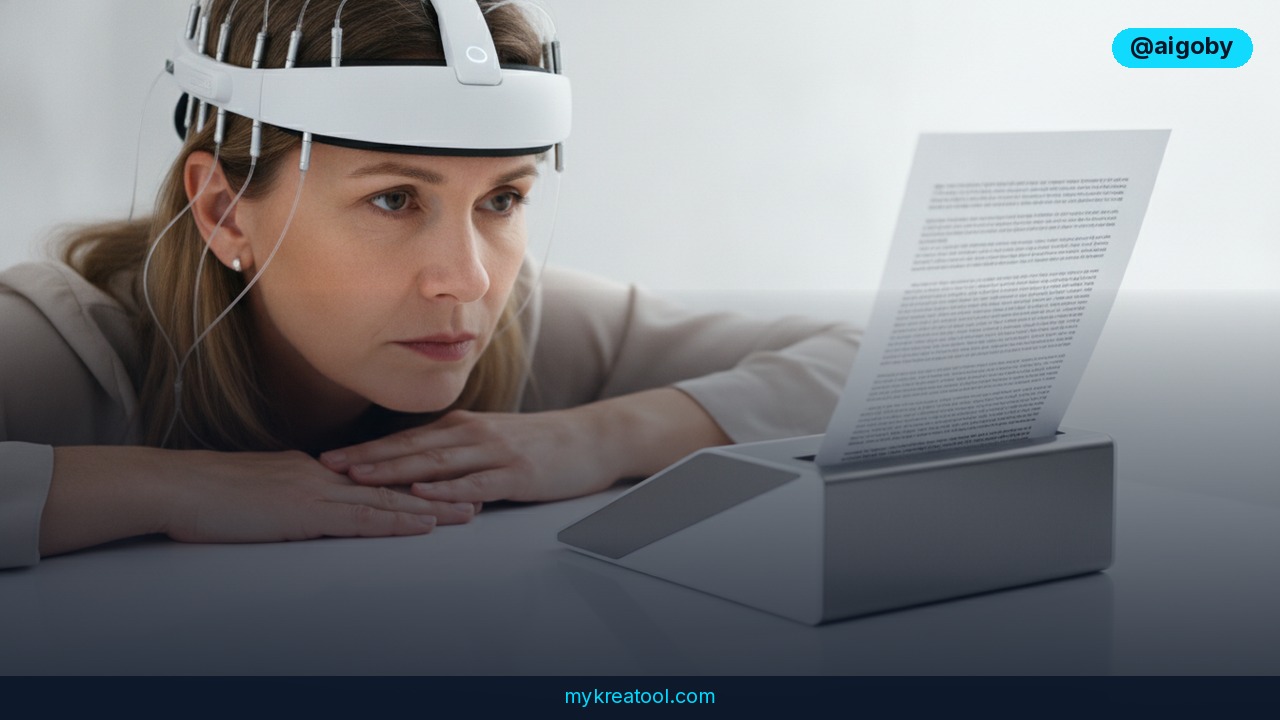
Meta has unveiled Brain2Qwerty, a non-invasive brain-computer interface powered by AI that can decode human thoughts into typed text — without a single incision. This breakthrough in brain-to-text AI technology was announced on Meta's official AI blog and quickly gained traction across the tech community, racking up 88 upvotes and 47 comments on Hacker News within hours of publication.
The system works by reading brain signals through external sensors — either EEG (electroencephalography) or MEG (magnetoencephalography) — while a person imagines typing on a keyboard. The AI model then interprets those neural patterns and reconstructs the intended text. No implants. No surgery. No electrodes drilled into your skull.
The Numbers Behind the Breakthrough
Meta reports that Brain2Qwerty achieves a character error rate low enough to make it genuinely useful — in controlled conditions, the model reaches up to 80% accuracy when decoding imagined keystrokes. That's a significant leap from earlier non-invasive attempts, which struggled to break 50–60% accuracy on similar tasks. The model was trained on data from participants wearing MEG helmets, which cost around $2–3 million per unit — so don't expect a consumer version tomorrow. But the research trajectory is unmistakable.
Why It Matters
For decades, brain-computer interfaces (BCIs) were the exclusive domain of medical research — tools designed to help paralyzed patients communicate. Elon Musk's Neuralink grabbed headlines by implanting chips into human brains. But Meta is betting on a different path: making BCIs accessible without surgery.
Brain2Qwerty represents a philosophical shift. Instead of invasive hardware, Meta is leaning into software intelligence — training AI models to become better interpreters of messy, noisy brain signals that external sensors pick up. The challenge is enormous because non-invasive sensors capture far weaker and more diffuse signals than implanted electrodes. The fact that Meta has pushed accuracy this high using only external sensors is what makes the research genuinely notable.
Why the AI Community Is Paying Attention
The Hacker News discussion highlighted a key tension: the same technology that could liberate people with ALS or locked-in syndrome could theoretically be used to read thoughts without consent. Commenters debated whether future, cheaper versions of this hardware could be embedded in everyday devices — headphones, VR headsets, smart glasses. Meta, of course, makes all three categories of hardware. That context is not lost on observers.
How to Use It Today
Brain2Qwerty is not a consumer product yet — it's a research milestone. But the underlying principles are already shaping tools that entrepreneurs, marketers, and creators can think about strategically right now.
First, understand that the AI interpretation layer is the real innovation here. Meta's model learns to map noisy, ambiguous input data onto meaningful output — a challenge that's directly analogous to what modern AI writing assistants, transcription tools, and intent-prediction engines do every day. If you're building products or workflows around AI, this research signals that AI's ability to infer intent from incomplete signals is advancing faster than most people expect.
Practical Steps for Forward-Thinking Creators
If you want to stay ahead of the curve, start experimenting with AI tools that already interpret human intent from minimal input — voice memos, rough drafts, even fragmented notes. Platforms like MyKreatool offer free AI-powered tools that help creators and marketers turn raw ideas into polished content, which is conceptually the same pipeline Brain2Qwerty is pushing toward: raw signal in, refined output out. Getting comfortable with AI-assisted creation now positions you well for a future where the interface between human thought and digital output keeps shrinking.
Second, watch Meta's hardware roadmap. Ray-Ban Meta smart glasses already have microphones and cameras. Adding biosensors is a logical next step. Entrepreneurs building on Meta's platforms should factor this into their 3–5 year product thinking.
Who Benefits
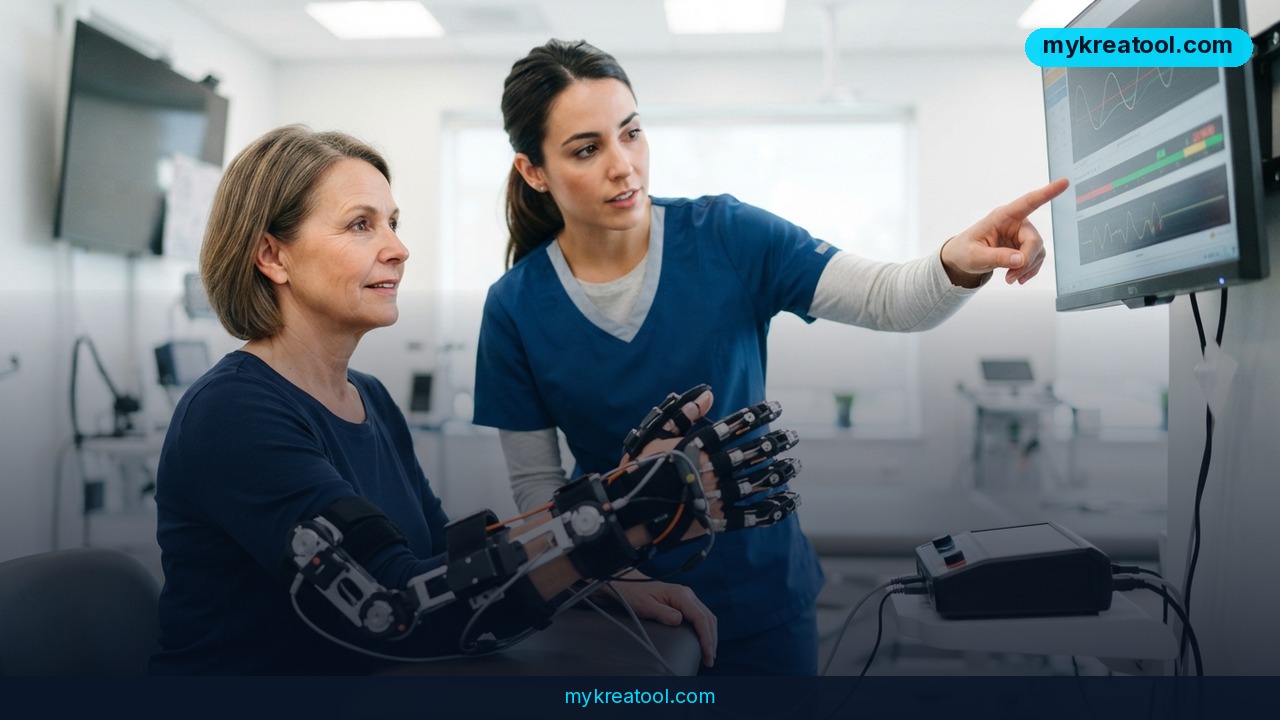
The most immediate beneficiaries are people with severe physical disabilities. Patients with ALS, locked-in syndrome, or spinal cord injuries who have lost the ability to speak or type could use a mature version of this technology to communicate at near-normal speed. That alone justifies the research.
Broader Applications Across Industries
Beyond medical use, the industries watching this most closely include:
• Gaming and VR: Thought-based controls could replace hand controllers entirely, creating more immersive experiences.
• Military and defense: Hands-free, silent communication for operators in high-stress environments.
• Productivity software: Imagine dictating a document or email simply by thinking through it — no voice, no keyboard.
• Market research: Brands could theoretically measure genuine emotional and cognitive responses to ads or products, bypassing self-reported survey bias.
For marketers, that last point is particularly significant. Neuromarketing already exists as a field, but it's expensive and lab-bound. Cheaper, non-invasive BCI sensors could democratize access to real cognitive feedback at scale.
Risks
The risks here are real and deserve serious attention — not as science fiction, but as near-term policy questions.
Privacy Is the Central Concern
If a device can read the brain signals associated with typing, what else can it read? Emotional states? Political opinions? Sexual preferences? The line between assistive technology and surveillance technology is thin, and it depends entirely on who controls the hardware, the data, and the AI model interpreting the signals.
Regulators in the EU have already begun discussing "neurorights" — legal protections for mental privacy. Chile became the first country to enshrine neurorights in its constitution in 2021. The United States has no equivalent framework yet. As Meta and other tech giants accelerate BCI research, the regulatory gap is widening.
Consent and the Workplace
Imagine an employer offering employees a "productivity headset" that also happens to monitor cognitive load or attention. The power imbalance in that scenario is obvious. Entrepreneurs and HR leaders should start thinking about internal policies now, before the hardware arrives.
There's also the question of data security. Brain signal data is arguably more sensitive than biometric data like fingerprints — you can change a password, but you can't change your neural patterns. A breach of this data would be unlike any privacy violation we've seen before.
Conclusion
Meta's Brain2Qwerty is not a product launch — it's a signal. It tells us that non-invasive, AI-powered brain-computer interfaces are advancing faster than the public conversation around them. The accuracy benchmarks are real, the hardware is getting cheaper, and the companies building the next generation of wearables are the same ones funding this research.
For entrepreneurs, the strategic takeaway is clear: AI's ability to infer intent from ambiguous input is the defining capability of the next decade. Whether that input comes from a keyboard, a voice prompt, or eventually a brain signal, the businesses that win will be those that build the best interpretation layers between human thought and digital action. Start building that muscle now — the interface is about to get a lot more intimate.


Comments 0