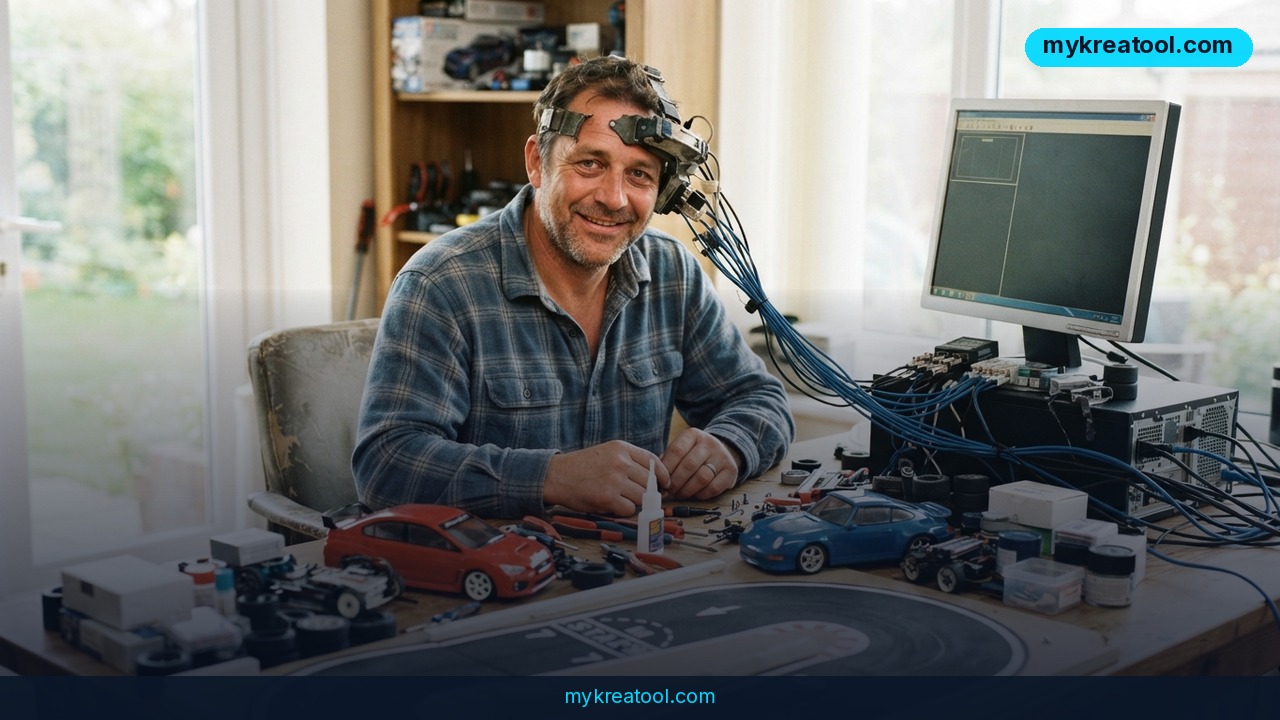
AI game development has been mostly demos and promises so far. This one's different, because you can actually play the result. A solo developer just launched Voltane, an online RC-car racing game that runs in your browser — built with Opus for the code and a handful of AI tools for the art and audio. It's in open beta and it's free. No studio, no team, no publisher. Just one person and a stack of models.
What happened
The developer — posting as MacXou34 on Reddit — describes building the whole thing alone: the racing, the tracks, the menus, the online multiplayer. RC cars, in case that's new, are those remote-control toy cars you steer with a little controller. Voltane puts that experience in a browser tab, so there's nothing to download and nothing to install.
That last part matters more than it sounds. Browser games used to mean simple 2D puzzles, because pushing real-time graphics and live multiplayer through a web page was painful. Doing it solo is a different level of ambition entirely.
The AI stack, in plain English
Four tools did the heavy lifting, and each one got a clear job:
• Opus — the coder. It wrote and debugged a large codebase: rendering (drawing the cars and tracks on screen), physics (how the cars grip, slide and bump into each other), netcode (the plumbing that keeps two players' games in sync over the internet), and the UI (buttons, menus, scoreboards).
• Tripo — the model maker. It turned concept sheets — rough sketches of what something should look like — into usable models.
• ElevenLabs — the sound guy. It produced dozens of sound effects.
• Suno — the composer. It generated a music track for each level.
None of these are exotic tools locked behind a studio door. They're the kind of thing anyone can sign up for on a Tuesday afternoon.
What AI did well
According to the developer, AI was strongest at the unglamorous grind: writing and debugging a big codebase, then doing performance work so the game actually runs smoothly in a browser. It also handled volume — dozens of sound effects, a music track per level, models built from sketches. That's the work that normally eats months of a solo developer's life.
What it couldn't do
Here's the honest bit. AI didn't decide what's fun. Game feel, level pacing, and which features to cut all came from playing the game hundreds of times and from player feedback. No model told him the corner was too tight or the tutorial was too slow. That judgment stayed human — and it's exactly the part that makes or breaks a game.
What it means for you
You're probably not shipping a racing game next month. But the pattern here — one person, AI for the grunt work, human taste for the decisions — shows up everywhere. A few real-life examples:
At home
Think of a weekend project you've shelved because it felt too big: a family recipe site, a photo gallery, a little tool that splits chores. AI can now handle the parts you don't enjoy doing. You still decide what it should do and whether it's any good — same as the developer deciding what's fun.
At work
If you write reports, build slides or maintain a spreadsheet nobody else understands, you've got a codebase of your own. AI is good at the tidying: renaming things, fixing errors, speeding up slow parts. It's bad at knowing which report actually matters to your boss. Do the thinking first, hand over the typing second.
In business
A small business can now test an idea for the price of a weekend. A browser-based product demo or a simple internal tool used to mean hiring someone; now one motivated person plus AI tools can get to a rough version and see whether customers care. Rough is the key word — Voltane is in open beta, not finished.
When you're studying
This is the clearest lesson for students: AI is a tutor that never gets bored, and also a cheat sheet that doesn't understand the exam. The developer learned by playing his own game hundreds of times. If you use AI to skip the repetition, you skip the learning too. Use it to explain, then do the reps yourself.
For creative projects
Music, sound design and models are the three areas where AI output is genuinely usable today — Suno, ElevenLabs and Tripo are the proof. But notice what happened along the way: the sounds needed sorting and many takes got thrown away. AI hands you a hundred rough drafts. You're still the editor.
For extra income
The obvious play is that solo development just got cheaper. One person can build a playable product and put it in front of an audience — a free browser game, a niche tool, a template pack. The catch is that 'shipped' is the only proof that counts. Open beta, free access, real players. That's Voltane's strategy, and it's a template you can copy.
How to try it right now
Start with the free option, because the whole point is judging the result yourself.
1. Play the game. Open Voltane in your browser. It's free, there's nothing to install, and it's in open beta — so treat it as a work in progress, not a finished product.
2. Race a few laps and take notes. Two lists: what feels good, and what feels off. That second list is the human work AI couldn't do for him.
3. Pick one tiny project of your own. Not a racing game. A one-page site, a simple calculator, a script that renames files. Small enough to finish in a weekend.
4. Grab free tools first. There's a pile of them at MyKreaTool before you pay for anything. Free tools are perfect for the 'does this even work' stage.
5. Match the tool to the job. Code goes to a coding model like Opus. Models go to Tripo. Sound effects go to ElevenLabs. Music goes to Suno. Don't ask one tool to do all four.
6. Budget cleanup time. Expect to open generated models in Blender and fix them. That's normal, not failure.
Upsides and what changes
The team of one gets a lot bigger
A solo developer used to mean a solo skill set. Now one person can cover code, art and audio at a passable level. That's a genuine shift in who gets to ship something.
Speed moves to the front
Writing and debugging a large codebase is normally the slow part. When that compresses, the bottleneck moves to taste — knowing what to build and what to throw away. That's a better problem to have, but it's still a problem, and it's still yours.
Free and in the browser wins
Voltane is free and runs in a tab. For anyone testing an idea, that combination — zero install, zero cost to try — removes the biggest reason people say no.
Limitations
Let's not oversell this. The developer is upfront about the seams: AI-generated models still need cleanup in Blender, generated sounds need sorting because many takes get thrown away, and the code still needs someone who understands what's going on. That last point is the one to sit with. AI can write code faster than you can read it, which means you can end up with a game — or a business tool — that nobody on the team can fix. Volume isn't quality, and a hundred rough drafts still need an editor with taste and a spare weekend.
Conclusion
The headline isn't 'AI builds games now.' It's 'one person can now get all the way to a playable beta.' The code, the models, the sound effects and the music are all within reach; what's left is the part that was always human — deciding what's fun.
One thing to do today: open Voltane, race one track, and write down one thing AI nailed and one thing only a person could have fixed. That two-line list is the most useful AI game development lesson you'll get this week.



Comments 0