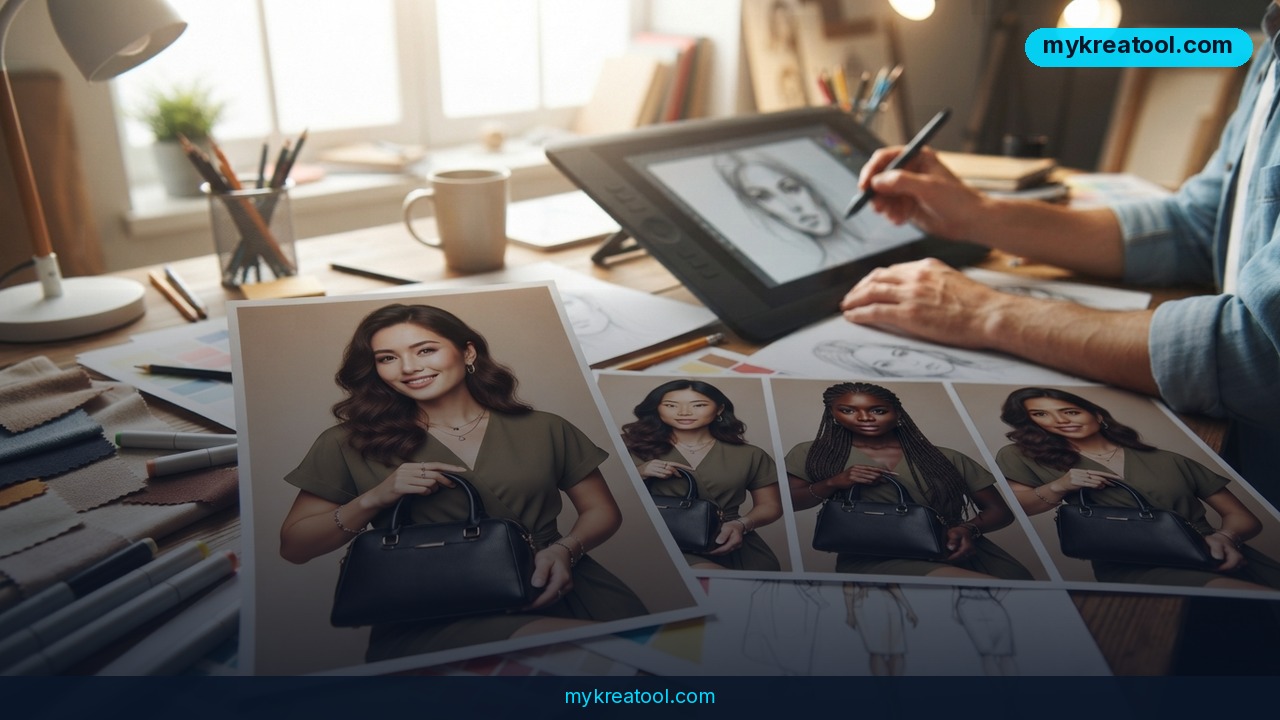
AI face swap has quietly turned ad production into a copy-and-paste job — in the best possible way. Instead of booking a fresh shoot every time a new market opens up, you take one approved image and swap the face to fit a different audience, while the pose, the lighting, the framing and the product placement all stay exactly as signed off. That's the whole promise in a sentence: the model changes, the ad doesn't.
What happened
Luma has put face swapping where creative teams actually live — on still images from campaigns that are already approved. You feed it a source face and a target shot, and it drops the new face into the existing picture without disturbing anything else. No re-lighting. No re-compositing. No calling the photographer back on a Sunday.
The pitch is blunt, and it goes after the thing that really slows campaigns down. It usually isn't budget and it isn't headcount — it's how fast you can bend approved assets to fit a new audience. One hero shot can feed a whole library of A/B test options. One market-ready image can become five regional versions.
One shoot, five regional versions
Picture the brief: five markets — US General, US Hispanic, Western Europe, East Asia and the Middle East. The old way, that's five casting conversations, five schedules, five rounds of approvals and five invoices. With face swap in the workflow, your team pours every ounce of attention into a single shoot. The lighting, the styling, the product position, the background environment — all of it gets the full treatment. Once that master image is approved, localization becomes an afternoon instead of a quarter.
And when a client asks for a Southeast Asian variant two days before launch? You don't reopen the production schedule. You make the variant.
How the swap works, in plain English
Strip out the jargon and the trick is easy to follow. The software first finds the landmarks on both faces — eye corners, nose, jawline — the same way you'd line up two photos by the eyes before taping them together. Then it matches skin tone and lighting so the new face doesn't look pasted on. Then it blends the expression so a smile still reads as a real smile and not a grimace.
The processing runs in 10–20 seconds per image, and Luma puts the output at 100–250x faster than doing the same job by hand in a photo editor. That speed is the difference between a technique you use for one hero image and a technique you use across an entire product catalog.
What it means for you
At work: the two-days-before-launch scramble
If you're in marketing, you already know the feeling: the campaign is locked, the media is booked, and then someone realizes one market needs a different face on the key visual. Traditionally that's a crisis meeting. With face swap it's a 20-minute task that doesn't touch the production calendar. You look like the person who solved it, because you did.
For a small business: a catalog without the casting bill
A clothing brand doesn't need five models to test five audiences — it needs one great shot and a way to vary who's in it. Regional variants get built from approved imagery, so repeat production costs drop instead of multiplying by the number of markets. For a lean team, that's the difference between localizing two markets and localizing all of them.
For creators and side income: variant packs
Freelancers and small studios can now deliver what used to be agency-only work: the same ad in three or four demographic flavors, ready for split testing. Clients pay for options, and options just got cheap to produce. That's a new line on your invoice, not a threat to it.
At home and in study: fixing the photo nobody wants to retake
Not every use is commercial. The group photo where one person blinked, the family portrait where a cousin moved countries — swapping a face in a few seconds beats rebooking a photographer. Students presenting a mock campaign can show how the same ad shifts across markets without building five separate decks.
How to try it right now
Here's the practical route, in order, with the free step first.
1. Get consent sorted before you touch anything. A signed release from the person whose face you're using, plus an internal note on how the synthetic image will be labeled. This takes ten minutes and saves you a very bad week.
2. Pick your master image. Choose the shot with clean lighting, a front-facing or three-quarter angle, and no heavy shadows across the face.
3. Prep it for free. Run your master through the free AI tools at MyKreato Tool — crop, upscale, tidy the background — so you're not burning paid credits on an image that isn't ready.
4. Grab a clean source face. Even daylight, no sunglasses, no hat brim, roughly the same head angle as your target. Mismatched angles are the number-one cause of uncanny results.
5. Run the swap in Luma's Face Swap. Upload the target image, upload the source face, hit go. You'll have a result in 10–20 seconds. Luma's "Try Luma" button sits right on the Face Swap page.
6. Zoom in and check the seams. Hairline, ears, glasses, jewelry, teeth. Faces are the easy part — the giveaway usually hides at the edges.
7. Save each variant with a clear filename. Market, audience, version number. Future you will be grateful.
8. Need motion? Ray 3.2 covers AI video generation with multi-keyframe sequencing and cinematic camera control, so you can push the same creative direction into video. And Layers, powered by Uni-1, lets you change the face inside an approved layout while the headline, the product shot and the background stay put.
Upsides and what changes
• Hours instead of months. Localization stops being a production project and becomes an editing task.
• Consistency you can't fake. Because the original shot is untouched, the lighting and composition stay identical across every market version — something a rescheduled shoot can never guarantee.
• Real A/B testing. One hero image becomes a library of options, so you're testing audience fit instead of testing which shoot happened to look better.
• Better returns on personalization. The figures cited alongside this launch put personalized campaigns at 2X higher ROAS when AI-based contextual targeting is doing the matching — sharper variants mean sharper targeting.
• Catalog-scale output. Ads, product pages, social cuts — the same approved asset reshapes itself for each channel.
What really changes is where creativity goes. Teams stop spending their energy on logistics and start spending it on the one shoot that matters.
Limitations
Be honest with yourself about the edges. Face swap works best on clean, well-lit, front-facing photography; throw in a sharp profile, thick glasses, a beard that crosses the jawline, or dramatic side lighting and you'll get artifacts you'll need to clean up manually. It swaps a face, not a body, a wardrobe or a brand message — if a market needs different styling or different cultural cues, you still need a real shoot. Consent and disclosure aren't optional: regulations around synthetic media are moving fast, and an undisclosed AI-generated model in a commercial ad is a legal and reputational risk, not a clever shortcut. And the person whose face you're using has rights over their own likeness regardless of who owns the photo.
Conclusion
Face swap doesn't replace your photographer or your creative director. It replaces the second, third and fourth shoot you used to book just to put a different face in the same frame. The teams that win with it will be the ones that treat the master asset as the product and the variants as packaging.
One thing to do today: open your most recent approved campaign image, write down the five markets it could serve, and run one swap on a single variant — just to see how close it gets. Twenty seconds of work will tell you more than any pitch deck.
Comments 0