What happened
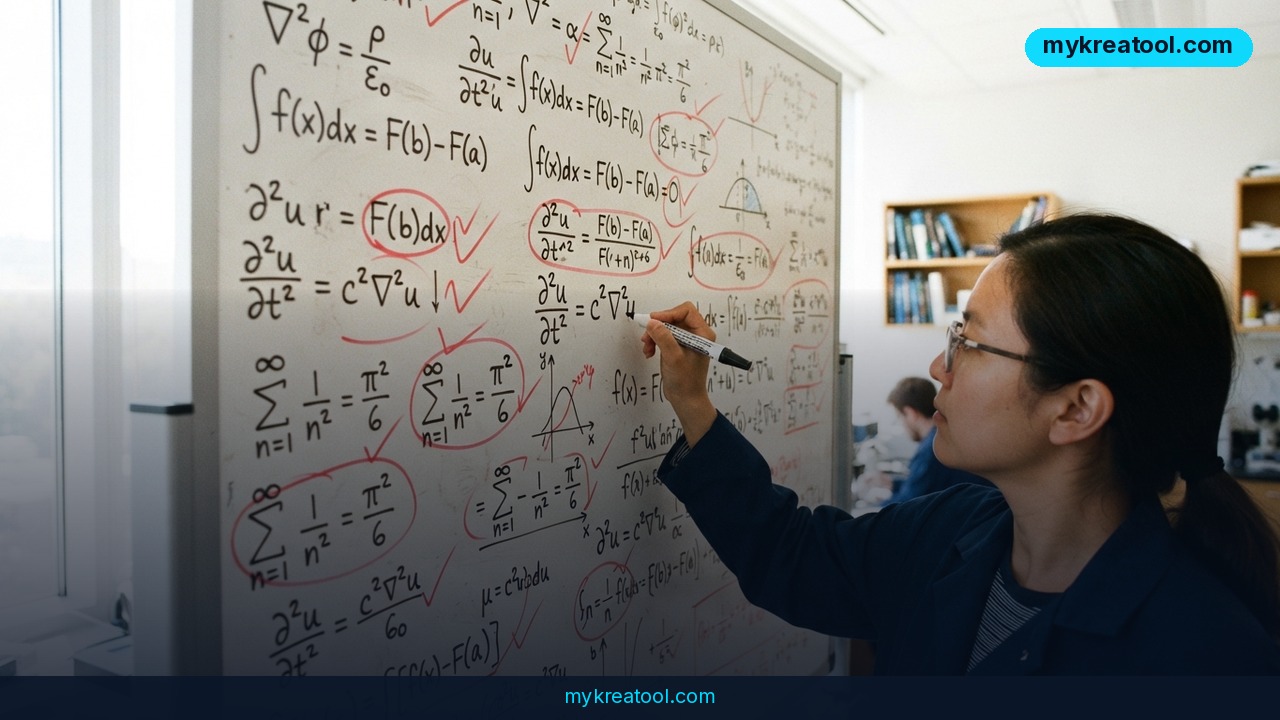
OpenAI's new Astra AI model just did something no algorithm has done before: it solved ten open problems in mathematics and theoretical computer science that had stumped human researchers for at least a decade — in some cases much longer. OpenAI confirmed the Astra name on August 1, 2026, in a math report describing an internal version of the model as its "next major model family." The results span high-dimensional geometry, coding theory, group theory, quantum complexity, lattice cryptography, and extremal combinatorics.
One standout result proves the existence of non-sofic groups, closing a long-standing question in group theory. CEO Sam Altman had already previewed Astra in Washington, D.C., and the model is now going through a planned U.S. government review process — a first for OpenAI — before any public release. Astra is built specifically to coordinate multiple agents on long-running tasks, working continuously for hours or even days rather than answering single prompts.
According to OpenAI, generating the reasoning behind all ten solutions would cost roughly $2,000 at API rates for its Sol model. Humans then worked with the same model to translate the raw arguments into formal research papers, and the model formalized each proof in Lean, producing machine-checkable certificates of correctness. OpenAI also published a full walkthrough of the model's reasoning for each problem.
Independent reaction from mathematicians
Thomas Bloom, a University of Manchester mathematician who runs erdosproblems.com, called the results "big news," ranking them above the recent counterexample to the unit distance conjecture in terms of construction difficulty. Noam Brown, one of the researchers behind Astra's test-time reasoning approach, noted the model failed to crack any Millennium Prize Problems — the seven $1 million questions from the Clay Mathematics Institute — but pointed out that OpenAI hadn't yet pushed compute very far on any single one.
Why it matters
The headline number — $2,000 for ten previously unsolved problems — is what makes this moment different from prior AI-in-math milestones. It's not that Astra is smarter than every mathematician alive; it's that a system can now generate genuinely novel mathematical arguments at a cost and speed no research group can match. Bloom pushed back hard on the narrative that AI is "replacing mathematicians," arguing the claim is incoherent given that Astra draws on more than a century of accumulated mathematical theory, was built by mathematicians, and was trained on everything mathematicians have ever written.
That framing matters for anyone running a business or team: Astra isn't a replacement for expertise, it's a force multiplier that turns existing domain knowledge into faster output. OpenAI itself has been careful about credit, citing the Leiden Declaration on AI and Mathematics to argue that claiming full human authorship for AI-generated proofs would misrepresent both the system's contribution and the nature of real human intellectual work.
For entrepreneurs and marketers watching the AI space, the real signal is architectural: Astra is designed around multi-agent coordination on long-horizon tasks, not one-shot chat responses. That's the same pattern showing up across serious AI tooling in 2026 — agents that plan, check their own work, and run for hours unsupervised.
How to use it today
Astra itself is still in restricted testing and pending government review, so it isn't available to the public yet. But the underlying pattern — long-running, multi-step agentic reasoning — is already accessible through consumer-facing AI tools, and business owners don't need a research lab to benefit from it.
Practical starting points right now:
• Use current-generation reasoning models for multi-step research, drafting, and data analysis tasks rather than single quick questions.
• Break complex projects into agent-style checkpoints: draft, verify, formalize — mirroring how Astra's proofs were checked in Lean before publication.
• Experiment with free tools to prototype AI-assisted workflows before committing budget to enterprise API usage. For quick, no-cost experimentation with AI-powered writing, image, and productivity tools, resources like mykreatool.com let creators and small teams test ideas without upfront investment.
• Track official OpenAI announcements for Astra's public release timeline, since government review could affect availability for commercial use.
What to watch next
Keep an eye on whether OpenAI pushes test-time compute further toward a Millennium Prize Problem, as Brown suggested is technically possible. That would be a much louder signal of capability than the current results, which — while historically significant — were achieved with comparatively modest spend.
Who benefits
Researchers and academic institutions stand to gain the most in the near term: Astra-style systems can compress years of exploratory proof-search into days, freeing mathematicians to focus on framing questions and validating results rather than grinding through dead ends. Cryptography and security teams should pay attention too, given Astra's results touch lattice cryptography — a field directly relevant to post-quantum security standards.
Business builders and entrepreneurs benefit indirectly but meaningfully. As multi-agent, long-running reasoning becomes standard in flagship models, the same capability will trickle down into coding assistants, analytics tools, and research copilots that small teams already use daily. Content creators and marketers benefit from the broader trend: AI systems that can sustain complex, multi-step work unsupervised will eventually power better long-form content research, competitive analysis, and automated reporting.
Risks
The most immediate risk is overreading the announcement. Astra solved ten hard problems, not all open problems — it explicitly failed on every Millennium Prize Problem attempted so far, according to Noam Brown. Treating this as proof that AI now "does math better than humans" misses the nuance that mathematicians shaped the training data, the problem selection, and the verification process.
There's also a governance risk worth noting: Astra is the first OpenAI model to go through a mandated U.S. government review before public release, which signals regulators are treating frontier reasoning models as a distinct risk category. Businesses planning to build on Astra-class models should expect slower rollout timelines and potential access restrictions compared to earlier OpenAI releases.
Finally, attribution and authorship remain unsettled. OpenAI's own reliance on the Leiden Declaration shows even the company generating these results is still figuring out how to credit AI-derived work fairly — a question that will matter for any business using AI output in client deliverables or published research.
Conclusion
OpenAI's Astra model turned ten decades-old open math problems into solved ones for about $2,000 in compute — a concrete, verifiable demonstration of what long-running, multi-agent AI reasoning can now do. It's not a replacement for mathematicians or domain experts, but it is a preview of the reasoning architecture that will increasingly power business tools, research assistants, and creative workflows. The practical move for entrepreneurs and creators isn't to wait for Astra's public release — it's to start experimenting now with the multi-step, agentic reasoning tools already available, so the workflow habits are in place when more powerful models arrive.


Comments 0