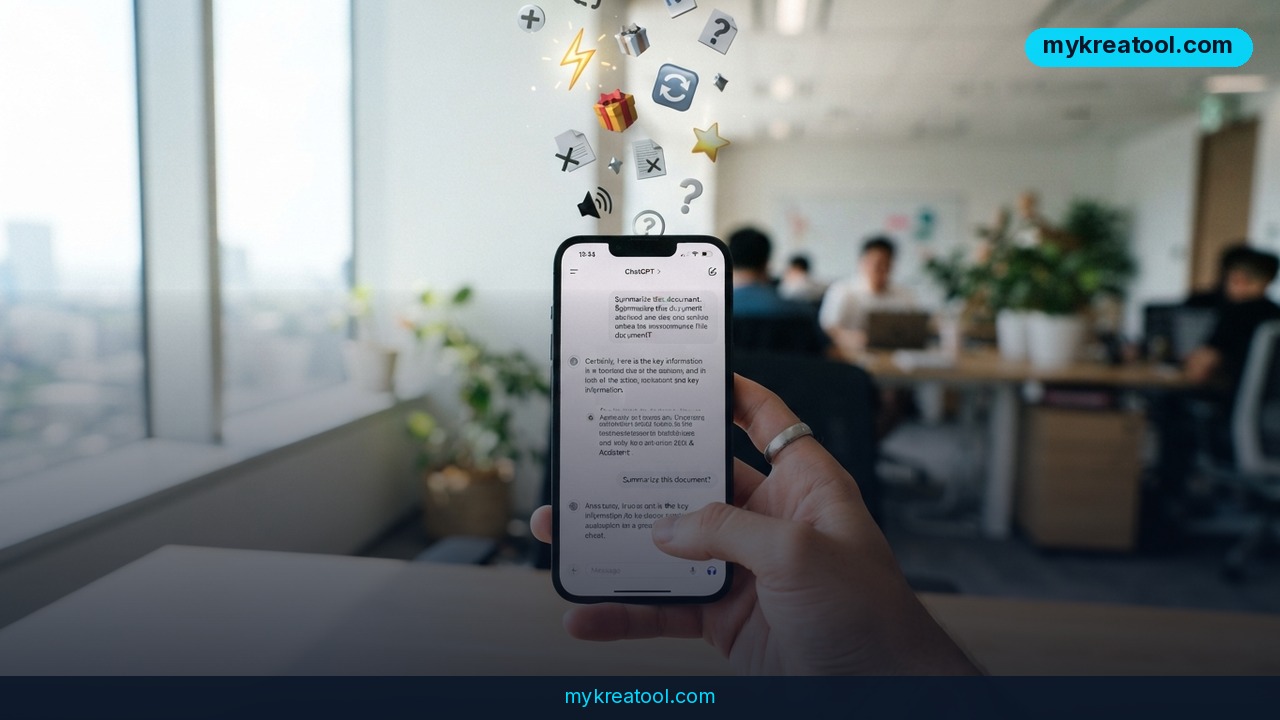
OpenAI is giving away free features and resetting usage limits every single day for 28 days — and this one's aimed at regular people, not just coders. The short version: for roughly a month, each day brings either a brand-new capability or a full reset of usage limits for most users on Codex or ChatGPT Work.
Picture a bakery that promises a free pastry every morning for a month. You don't get to choose what's in the bag, and some mornings are better than others — but you show up, because there's always something in there. That's the deal OpenAI has set up. Every 24 hours, you either get a new toy or a refilled tank.
The company's own bar for the program is that each improvement has to matter to most users, not a narrow slice of power users. And a fact-check of the claim confirms the 28-day initiative is real, not a rumor bouncing around messaging apps (source).
Why a "limit reset" matters more than it sounds
If you've ever hit the wall mid-task — "you've reached your limit, try again later" — you know the feeling. It's like renting a car with a fuel gauge that kills the engine at half a tank. You had plans. Now you're parked on the shoulder.
A full reset hands the keys back. For heavy users of Codex (the AI that writes and fixes code for you) or ChatGPT Work (the version tuned for business tasks), it means more messages, more tasks, more finished work in a single day — at no extra cost. And there's nothing to claim or redeem. When the reset lands, it's just there.
Half new features, half fresh fuel
The other half of the marathon is features. OpenAI hasn't published a calendar, and that's clearly on purpose — the surprise is part of the appeal. Some days it'll be a small quality-of-life tweak. On others, something that changes how you get work done. Either way, it shows up inside the products you're already using.
What it means for you
You don't need a computer science degree to cash in. Here's what a daily upgrade or a wiped limit looks like in ordinary life. And if you'd like to stack these wins with other no-cost options while you're at it, there's a genuinely useful list of free AI tools worth bookmarking.
At home
Think budgets, meal plans, birthday-party logistics, decoding a confusing insurance letter, or figuring out what that weird noise in the car might be. With limits reset, you stop rationing questions. You can ask follow-ups, push back, and say "no, explain it simpler" as many times as it takes.
At work
The daily grind is full of text. Summarize a 40-page report before a 9 a.m. meeting. Turn a messy voice-note transcript into a clean action list. Rewrite a tense email so it doesn't read like a threat. Every reset buys you more of that in a single sitting instead of waiting until tomorrow.
For business owners
Small teams feel limits the hardest, because there's no one else to hand the task to. A reset day is a good moment to batch product descriptions, work through a backlog of customer emails, brainstorm ad angles, or pull apart a competitor's landing page. Feature drops tend to land in the chat and business tools first, so keep an eye out.
For studying
This is where the free version shines. Ask for an explanation "like I'm 12", then ask for the same thing with a worked example, then ask it to quiz you and grade your answers. Students burn through messages fast — a reset is the difference between studying for one hour and studying until you actually understand it.
For creative projects
Twenty headline options. The same paragraph in five different tones. A story outline that doesn't collapse in chapter three. Album-art prompts. The bottleneck in creative work is almost never ideas — it's how many you can generate before you run out of tries. More tries, better odds.
For extra income
Freelancers live and die on turnaround time. Proofreading, product copy, transcripts, YouTube descriptions, thumbnail ideas — the person who delivers in two hours beats the person who delivers tomorrow, even at identical quality. A limit reset is effectively free extra capacity you can bill for.
How to try it right now
Free option first, always.
1. Open ChatGPT on the free tier. Sign in to your existing account or create one. You'll get the core model, which is plenty to see whether daily resets and new features actually change your workflow.
2. Find out where your limits live. In your account settings, look for your plan and usage information. Knowing exactly what you're working with beats guessing when you'll get cut off.
3. If you're on a plan that includes Codex or ChatGPT Work, that's where the biggest wins land — those are the two products named in the reports. Watch for the reset, and treat that day like a sprint.
4. Bank the heavy tasks. When a reset or a new feature shows up, don't poke at it for two minutes. Load up the long stuff: the report, the backlog, the project you've been putting off.
5. Follow the announcements, not the rumors. OpenAI publishes what it ships. Official posts and changelogs are the fastest way to know what today's drop actually was.
6. Keep a running "ask AI this" list on your phone. The moment the reset hits, you've got a to-do list ready instead of a blank chat box.
Upsides and what changes
More output for the same money is the headline. If resets are landing daily for most users, a working day stops being a budget you ration and starts being a runway you use. That's a real shift, especially for solo operators and students.
Who gains the most
Freelancers, small business owners, students, and anyone whose work is mostly words. People already on a paid plan get the most direct benefit, because a reset restores capacity they've presumably been using. Free-tier users gain in a different way: they get to sample new features early, which makes it easier to judge whether a paid plan is worth it for them.
What it does to the market
A month of daily drops is also a message to competitors. It's hard to match a rival that's shipping something new every morning and handing users back their quota at the same time. Expect that pressure to show up on other AI products' roadmaps.
Limitations
Be clear-eyed about this. There's no published calendar, so you can't plan a launch around a feature that hasn't dropped yet. "Most users" is doing real work in that sentence — some accounts will see resets and some won't, and if you're in the second group, a refund of your patience isn't coming. A reset also isn't unlimited access: once you're back at zero, the same ceiling still applies, you just get to climb again. And a steady stream of small improvements isn't the same as one big leap — plenty of days will be minor tweaks you barely notice. If your business depends on guaranteed capacity, treat this month as a bonus on top of what you already pay for, not a replacement for it.
Conclusion
OpenAI's 28-day run is simple to understand and easy to ignore — which is exactly why you shouldn't. Every day you skip is a day you left free capacity sitting on the table.
Here's your one action for today: open ChatGPT, ask it to handle the most annoying task on your list from start to finish, and see how far it gets. If a reset is live on your account, keep going until the job's done. That's the whole point of the marathon.



Comments 0