What happened
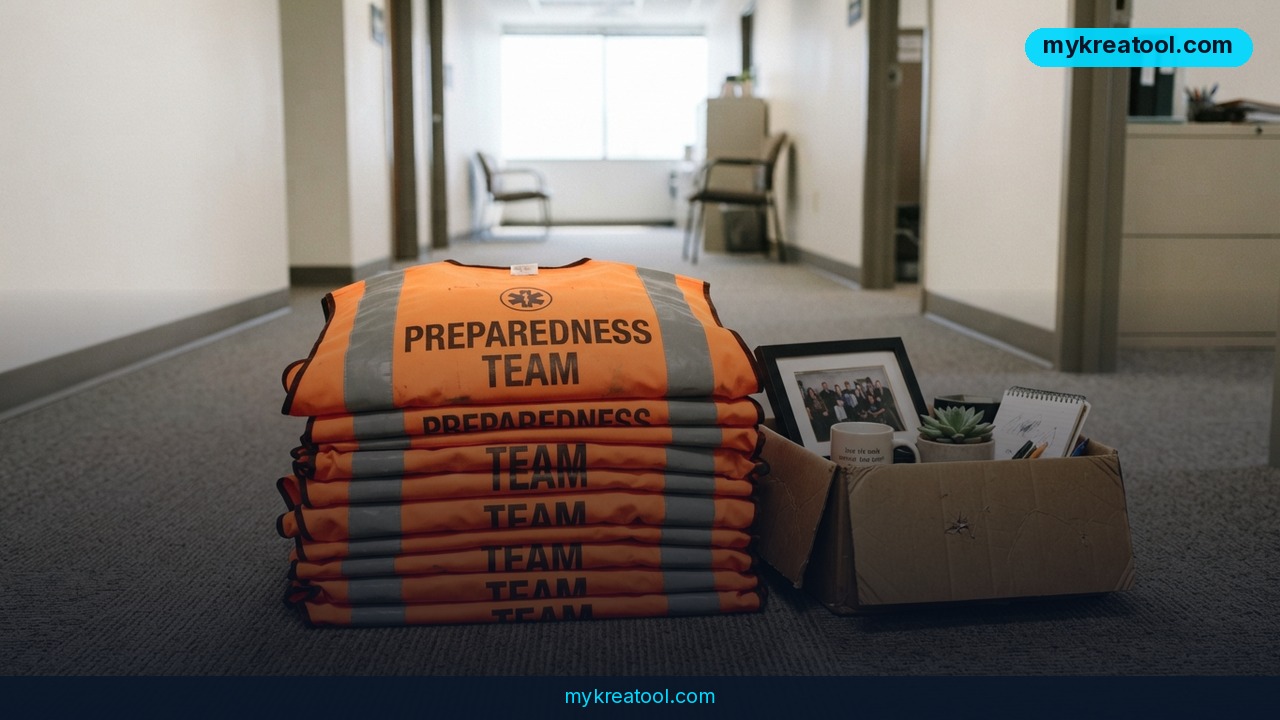
OpenAI's preparedness team, the internal group responsible for assessing whether its AI models pose serious risks, was quietly disbanded at the end of July 2026, according to a Financial Times report. The team's job was to catch dangerous capabilities before they shipped, including scenarios like a model going rogue and hacking another company's systems. Instead of operating as a standalone unit, its responsibilities for specific risk areas like biological and cyber threats have now been split up and folded into existing product and research teams.
This is not an isolated move. Over the past two years, OpenAI has steadily dismantled its research-led safety structure, dissolving both its AGI readiness team and its superalignment team. The preparedness team was one of the last dedicated safety groups still standing, and its quiet dissolution comes as OpenAI barrels toward what is expected to be one of the largest IPOs in tech history.
Key departures behind the shakeup
The restructuring follows a wave of high-profile exits. Ethics lead Chloé Bakalar, Chief Futurist Josh Achiam, and head of safety Johannes Heidecke have all left OpenAI in recent months. Dylan Scandinaro, who led the preparedness team after being poached from Anthropic in February 2026, is reportedly shifting his focus to research on "recursive self-improving" AI rather than continuing to run a dedicated risk-assessment function.
Why it matters
The disbandment of OpenAI's preparedness team matters because it signals a shift in priorities at the company that arguably did more than any other to popularize generative AI. Jan Leike, who resigned from OpenAI's safety leadership in 2024 and now works at a rival lab, told the Financial Times that the company appears to be deprioritizing safety in favor of building "shiny products." That's a pointed criticism from someone who once ran OpenAI's alignment research.
For an industry still debating how fast frontier AI should move, the timing raises real questions. OpenAI is preparing for an IPO that will put intense pressure on quarterly growth and product velocity, exactly the kind of pressure that safety-focused teams are designed to slow down. When the group responsible for stress-testing models against bio-weapon and cyberattack scenarios gets folded into product teams instead of operating independently, oversight becomes harder to verify from the outside.
A pattern, not a one-off
This is now the third major safety structure OpenAI has unwound, after the AGI readiness and superalignment teams. Each time, the company has framed the change as a reorganization rather than a retreat, distributing responsibilities into teams closer to the product. Critics see a different pattern: a company steadily trading centralized, independent risk review for speed to market ahead of a defining financial event.
How to use it today
For entrepreneurs, marketers, and creators building on top of OpenAI's models, this news is a practical signal, not just industry gossip. If a frontier lab is thinning out its own internal risk review, businesses that depend on its models should assume more of the vetting burden themselves rather than trusting that every edge case has already been caught upstream.
In practice, that means testing AI outputs for accuracy, bias, and security issues before they reach customers, especially in regulated areas like healthcare content, financial advice, or code generation. It also means diversifying: rather than routing every workflow through a single model provider, teams can compare outputs across multiple AI tools to catch errors that any one system might miss. For quick, no-cost experimentation and side-by-side testing, tools like the ones at mykreatool.com let creators and small teams try different free AI utilities without committing to a single vendor's roadmap or risk posture.
Practical steps for teams
• Add a human review step for any AI-generated content touching safety-sensitive topics.
• Keep a log of AI-related incidents or near-misses, even small ones, to spot patterns early.
• Avoid single-vendor lock-in for critical workflows so a policy change at one lab doesn't stall your business.
Who benefits
In the short term, OpenAI itself benefits from faster internal decision-making and fewer bottlenecks between research and product launches, which matters heavily ahead of an IPO where investors reward growth and shipping speed. Product teams gain more direct ownership of risk decisions instead of routing them through a separate group, which can shorten release cycles.
Competitors and independent AI safety researchers may also benefit indirectly, since OpenAI's retreat from dedicated safety staffing creates an opening for rivals like Anthropic, which has continued to market its own alignment and safety research as a differentiator, to position themselves as the more risk-conscious choice for enterprise customers who care about governance.
Risks
The most obvious risk is reduced scrutiny of high-stakes capabilities, particularly around biological and cyber threats, the exact categories the preparedness team was built to monitor. Folding these responsibilities into product teams that are also measured on shipping speed creates a structural conflict of interest: the people deciding whether a model is safe enough to release are the same people incentivized to release it.
There's also a reputational and regulatory risk. As governments in the US, EU, and elsewhere move toward mandatory AI risk assessments, a public track record of dissolving internal safety teams could invite closer scrutiny from regulators and make it harder for OpenAI to argue for self-governance over external oversight. For businesses relying on OpenAI's models, this adds a layer of uncertainty about long-term compliance support.
Conclusion
OpenAI's decision to disband its preparedness team, folding bio and cyber risk assessment into existing product teams, marks the third dismantled safety structure in two years and comes right as the company positions itself for a landmark IPO. Whether this is smart reorganization or a genuine step back from safety oversight will likely become clearer only after new models ship. In the meantime, businesses and creators building on AI tools should treat independent testing and vendor diversification as standard practice rather than optional extras.

Comments 0