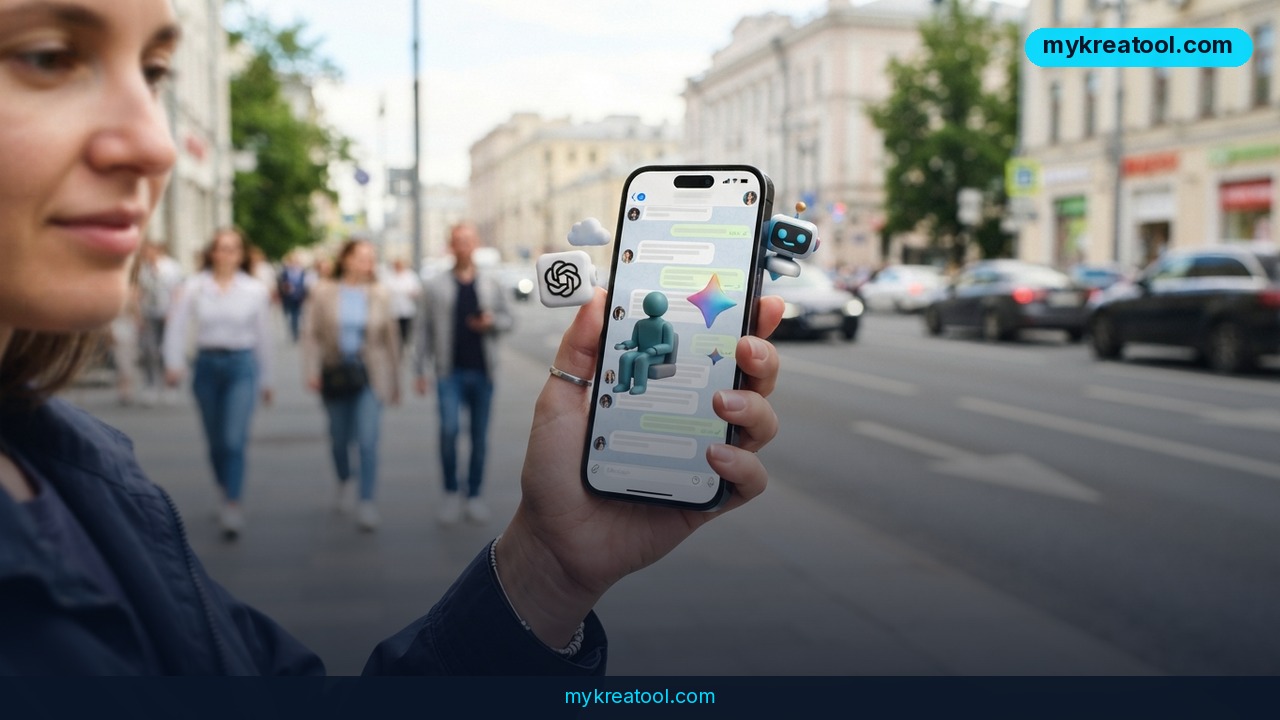
Telegram may be quietly turning itself into an AI hub — a single chat window where you pick which model answers you, instead of bouncing between five apps and a dozen browser tabs.
The leak, circulating on the @aipost channel, says the feature showed up in the beta build of Telegram for macOS 13.1.0. The mechanics are refreshingly simple: you paste in your own API key for each AI provider you want, connect as many as you like, and then switch between them just by sending a message. No menus, no app-hopping, no re-typing your prompt into a different window.
The providers listed in the beta are OpenAI, Anthropic, Google, xAI and OpenRouter. In plain English, that's ChatGPT, Claude, Gemini and Grok — plus an aggregator that routes your request to a long list of other models behind one key.
And if "API key" sounds like engineer-speak, it isn't. An API key is basically a membership card for software. It's the string of characters that tells a provider "this request is coming from my account, bill me for it." You grab one from the provider's dashboard, you keep it private, and you paste it wherever an app asks for it.
The catch you should read first
Here's the part the hype usually skips. At the time of writing, there's no independent confirmation from official Telegram channels or major news outlets that this native feature really exists in the macOS beta. What is well documented: Telegram has its own built-in AI touches (proofreading, translation) and runs an open platform where third-party bots can plug in whatever model they like. The "several models in one chat" experience people describe today is built with bots, connectors and self-hosted setups — not with a switch inside the app.
So treat this as a leak. Plausible, interesting, unconfirmed.
What it means for you
Even as a rumor, the direction is worth understanding, because the "bring your own key, pick your model" pattern already exists. And it quietly changes how you'll use AI day to day: models stop being destinations you visit and become tools you reach for.
At home
Think of it as a kitchen with several appliances on one counter. You ask Gemini to summarize a rental contract, didn't love the answer, and flip to ChatGPT with the same text — no copying, no second app, no lost tab. Same for planning a trip, decoding a medical letter, or settling an argument about a recipe.
At work
Drafting, meeting notes, that tricky Slack reply. Models genuinely behave differently: one is blunter, one handles tables better, one nails tone. One inbox for all of them means you stop losing the thread somewhere between windows.
For business owners
Small teams already live in Telegram. If support replies, product descriptions and localization can run from the same place your team chats, you cut a whole category of tool-switching — and you stop paying for seats in three separate AI apps.
For students
Explain, then check. Ask one model to teach you a concept, then ask a different one to poke holes in that explanation. Two independent answers are a much better study habit than one confident one.
For creators
Hooks, headlines, alt text, a caption for the fifth carousel of the week. When your own voice starts going stale, flipping to a model with a different rhythm is the fastest reset there is. If you'd rather test models before you commit to any keys, MyKreaTool collects free AI tools worth bookmarking.
For side income
If you sell writing, design briefs or translations, turnaround is the product. Running one brief through several models from the same chat means faster comparisons and fewer "which app was that in?" moments.
How to try it right now
You don't need to wait for a beta that may never ship. Multi-model AI inside Telegram already works — it just arrives through a bot instead of a settings menu.
Option 1: self-host a bot (free to download, your own key)
1. Create an account with a model provider and generate an API key. OpenRouter is the easiest starting point because one key gives you access to many models.
2. Grab the Telegram-OpenRouter-AI-BOT repo from GitHub.
3. Follow the readme: drop in your bot token and your API key, then run it. You'll need somewhere to host it — a spare machine or a small server — and you pay the model provider directly for whatever you use, so check current rates before you hammer it.
4. Open your bot in Telegram, send a message, and switch models as you go.
Option 2: no-code connectors (no server required)
If running code isn't your idea of fun, connect the two with a visual builder. Albato, Bit Flows and Zapier all offer Telegram-to-OpenRouter connections you can set up by clicking. Each has its own plans and trial terms, so read them before you commit.
Option 3: watch the beta
If you're on macOS and you run beta builds, keep half an eye on settings — beta features come and go without warning, and a leaked screenshot is not a launch date.
Upsides and what changes
The appeal isn't novelty, it's friction. Right now, comparing two AI answers costs you a copy-paste, a tab switch and often a re-uploaded file. Put the models in one chat and the comparison becomes a two-second reflex, which is exactly the habit that makes AI genuinely useful: ask, cross-check, move on.
There's a second upside for privacy-minded people. Bring-your-own-key means you deal with the model provider directly instead of routing everything through a middleman who stores your history on their servers. And a third: your workflow lives where your conversations already live, so nothing gets abandoned in a folder you'll never open again.
The bigger shift is psychological. When ChatGPT, Claude, Gemini and Grok sit behind one box, none of them feels like "your" AI anymore. You start choosing by task, the way you choose between a calculator and a spreadsheet.
Limitations
Be honest with yourself about what a leak is worth. Nothing here is confirmed by Telegram, the version number comes from a single beta sighting, and the final feature may ship with fewer providers, different limits or not at all — plenty of beta experiments die quietly. It's macOS-only in this report, so Windows, Android and iPhone users are spectators for now. Your API keys are real credentials, which means real bills if a loop goes wrong and real risk if one leaks, so never paste a key into a bot you don't trust. And every message you send still travels to whichever provider you picked, so your data policy follows the model, not the messenger.
Conclusion
If this ships, Telegram stops being just a place where you chat and becomes the place where you choose who's doing the thinking — and even if it doesn't ship, that "pick your model, keep one window" habit is worth building today.
One action for today: create a single API key with OpenRouter, wire it into Telegram using one of the routes above, and send the same question to two different models. That one side-by-side comparison will teach you more about which AI you actually need than any leak ever will.


Comments 0