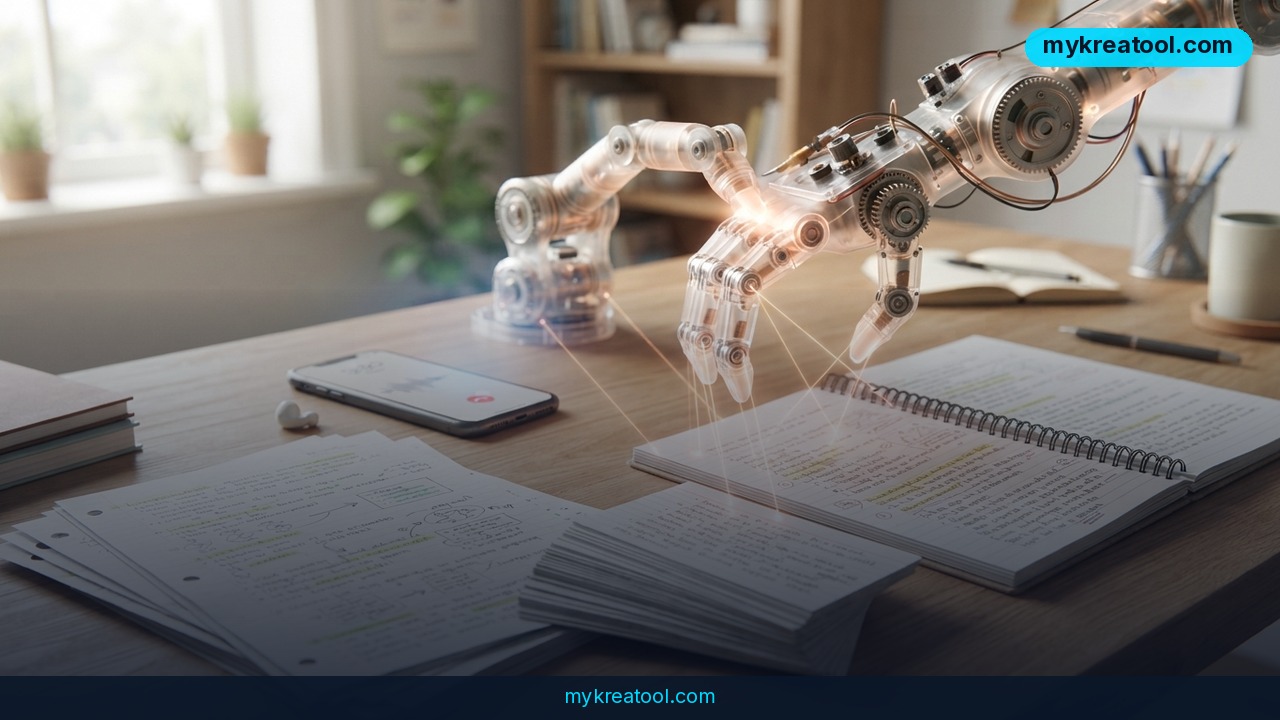
Turbo AI — often listed as TurboLearn AI — is an AI note taker with one clear job: it turns a lecture recording or a PDF into organized notes, flashcards and quiz questions, so you don't have to type everything by hand or rewatch a 90-minute video hunting for a single slide. For students, that's the difference between actually paying attention in class and playing stenographer.
What happened
Turbo AI isn't a brand-new launch. It's a tool that's been building a following, and it keeps resurfacing in AI newsletters because of how much it does in one place.
Most note apps stop at transcription. You get a wall of accurate text that reads like a court transcript — fine, technically, but not much help at 1 a.m. before an exam. Turbo AI goes a step further: it reads your recording or file, pulls out the structure, and hands back something closer to the notes a very organized classmate would have written. Then it reuses that exact material to build flashcards and quizzes.
How it works, in plain English
You give it one of two things. Option one: an audio or video recording of a lecture, a meeting or an interview. Option two: a PDF — a slide deck, a textbook chapter, a report.
The tool listens or reads, then reorganizes the content into headings, bullet points and key terms. From the same source, it also generates flashcards (a question on the front, the answer on the back) and short quiz questions. That closes the loop: first you get the notes, then you get a way to check whether any of it stuck.
What the free plan actually includes
Some roundups hedge and call the free limits "unclear." They're not unclear. The free tier covers 2 hours of lecture time, 5 quiz questions, 1 PDF upload, 10 chat messages a month, and a limited amount of flashcard creation.
That's a genuine test run — one lecture, one document — but it won't carry you through a semester. Independent write-ups such as this TurboLearn AI review and this breakdown from Fahim AI list the same caps, and Course Platforms Review covers the feature set. If those numbers ever shift, the official Turbo AI site is the source of truth.
What it means for you
At home
Maybe you're the family archivist, recording interviews with relatives. Maybe you sit through long webinars for a hobby that has nothing to do with work. Either way, you end up with audio files you'll never open twice. Upload one and you get a page of names, dates and main points you can actually revisit.
At work
Weekly meetings, training sessions, vendor briefings — record one, upload it, and ask for a summary with the decisions and the next steps. Instead of skimming a recording twice, you read a page and get on with your day.
For running a small business
Long PDFs are everywhere: supplier specs, contracts, compliance documents. Feed one in and turn it into a plain-English cheat sheet for staff who don't have an afternoon to read 40 pages. That's onboarding material in an hour instead of a week.
For studying
This is the obvious fit. Record a lecture where recording is allowed, upload the slides afterwards, and merge both into one set of notes. Then run the quiz to find the gaps before the real test does. While you're comparing options, mykreatool.com keeps a free directory of AI tools worth a look.
For creative work
Podcasters and writers: turn a 90-minute interview into structured notes, pull the quotes that actually land, and stop scrubbing through audio by hand. The spontaneous stuff — the throwaway line that turns out to be the best thing anyone said — finally becomes searchable.
As a side income
If you tutor, coach or run a small study-help service, prepping handouts and practice questions for each student gets dramatically faster. It's the admin work that normally eats your evenings, and it's the part nobody pays you for.
How to try it right now
Step 1: Start with the free plan
Go to Turbo AI and sign up for the free tier: 2 hours of lecture time, 1 PDF upload, 5 quiz questions and 10 chat messages a month. There's no reason to pay before you know whether the notes match the way you think.
Step 2: Grab something short
Don't start with your hardest course. Use a 10-minute voice memo of a lecture, or a PDF you already have sitting on your desktop.
Step 3: Upload it and run this exact prompt
"Turn this [lecture recording or PDF] into organized notes with key points."
Step 4: Turn the notes into a quiz
Ask for flashcards or quiz questions from the same material. Then answer them out loud. You'll find out fast which parts you merely recognize and which parts you actually know.
Step 5: Compare before you commit
Put the AI notes next to the ones you'd have written for that same lecture. If it's catching the things you'd have jotted down anyway, it's worth using. Once you hit the free caps, head back to the site to see what the paid plans cost.
Upsides and what changes
You get the boring part of your day back
Transcription and formatting are the parts of note-taking nobody enjoys. Handing those off means the hour after a lecture goes to studying instead of tidying up bullet points.
Study habits shift from rereading to testing
Flashcards and quizzes push you toward active recall — the simple idea that trying to remember something beats staring at it again. Rereading feels productive and mostly isn't. Answering questions feels uncomfortable and mostly works.
One upload, three outputs
Notes, cards and a quiz from a single file is the real selling point. Most tools do one of those three and leave you to stitch the rest together yourself.
It lowers the cost of showing up distracted
You can listen properly in a lecture and trust that the structure will be there when you get back to it, instead of frantically typing and absorbing nothing.
Limitations
The free tier is tight: 2 hours of lecture time, a single PDF upload and 10 chat messages a month runs out fast — one long lecture and a few follow-up questions and you're done. Beyond that, AI notes are only as good as the audio. A mumbler in a echoing hall, a recording with background noise, or slides where the meaning lives in a diagram will produce thin or slightly off output, so you still need to skim the results against the source before you trust them. Quizzes built from your own notes only test what's in those notes, which means gaps in the summary become gaps in your knowledge. And be sensible about what you upload: other people's lectures, paid course materials and confidential work documents all come with rules attached.
Conclusion
Turbo AI does one thing well: it takes the raw material of a lecture or a document and hands you back something you can study from in minutes, not hours. The 2-hour, 1-PDF free tier is enough to answer the only question that matters — does this fit how you learn? Your one action for today: record ten minutes of anything (a lecture, a meeting, a webinar) or open a PDF you've been avoiding, upload it to Turbo AI, and paste this prompt: "Turn this [lecture recording or PDF] into organized notes with key points." Judge the output against what you'd have written yourself, then decide.


Comments 0