What happened
ByteDance just showed off its new ByteDance world model — an AI system that takes a short written description and builds a 3D space you can actually move around inside.
Here's the plain-English version. In a normal video game, a level designer builds a room, places the furniture, and locks everything down before you ever hit play. A world model flips that. You type a sentence, the AI builds the space on the spot, and then it keeps that space consistent while you walk, fly, or crawl through it. It's less like loading a level and more like the game inventing the level around you as you go. The real breakthrough isn't prettier graphics — it's a world that answers back when you talk to it.
What the demo actually showed
The demo walked through a handful of things that are genuinely hard to fake:
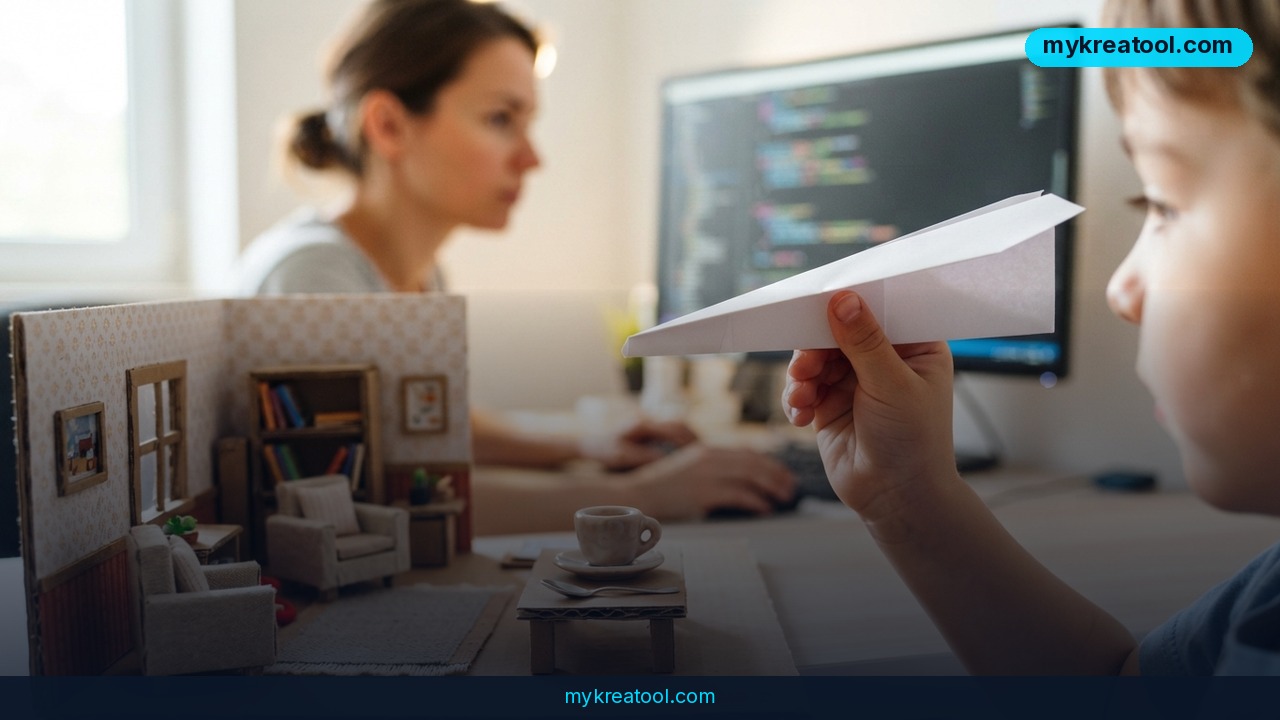
• A room, seen through someone's eyes, created from nothing but a text prompt.
• A character flying around that room on a paper airplane.
• Free camera movement — you can swing the view around and interact with whatever's there.
• A live edit. Typing "add a spoon next to the cup" dropped a brand-new object into the scene, and that spoon was solid enough to climb on.
• Portals linking completely different spaces together.
• Pre-visualization of film shots, using Stephen Chow's *King of Comedy* as the example for blocking out camera work inside the generated world.
That last one is the tell. This isn't being sold as a game engine. It's being sold as a place to shoot, storyboard, and experiment before anyone rents a camera or hires a crew.
The two research models you probably missed: ENUMA and ActWorld
ByteDance didn't start this last week. Back in September, a research model called ENUMA showed up in the WBench benchmark, where it took third place on navigation tasks with a score of 81.7.
That number matters more than it sounds. The accelerated autoregressive version of ENUMA — meaning the version that predicts the next chunk of the world rather than rendering everything at once — only needs four generation steps. Four. That's the difference between a world that takes a coffee break to load and a world that feels like it's keeping up with you.
In its own write-up, the ByteDance team says ENUMA merges camera control, text commands, and visual references into a single world model. Translation: you can steer, you can talk, and you can show it a picture instead of describing one.
There's also ActWorld, a second ByteDance project built with memory of actions and objects. Where ENUMA is about getting from A to B, ActWorld is about actually touching things — picking them up, moving them, remembering where they were.
Zhang Yiming is personally on the project
In September, Bloomberg reported that ByteDance founder Zhang Yiming is personally overseeing an interactive world model built on Seedance technology. The floated applications were games, interactive video, and Pico VR headsets — Pico being ByteDance's own VR brand.
When a founder that senior gets hands-on, it's usually a signal that the company sees this as a platform, not a feature. And the VR angle is the interesting one: a world that generates itself is one of the few things that would actually make a headset worth strapping to your face.
The timeline, and one naming mix-up worth clearing up
An intermediate Seedance 2.x model is expected before Seedance 3.0 arrives — this year, and possibly as soon as November. The world model is a separate thing that reportedly runs on Seedance tech, and independent reports point to a real-time 3D world model as early as October 2026.
So if you see people calling the world model "Seedance 3.0," that's slightly off. The world model is built on Seedance — it isn't a version of it. Either way, ByteDance is sprinting while most of the field is still jogging.
What it means for you
You don't need to be a game developer for any of this to matter. The skill this whole thing rewards is one you already have: describing a place out loud. And if you'd rather not wait around for ByteDance to open the doors, there's a whole shelf of free AI tools at mykreatool.com you can use today to sketch rooms, characters, and storyboards.
Here's what changes in practice.
At home: describe a room, get a room
Instead of hunting for reference photos of a kitchen renovation, you type one sentence and fly a camera through it. Want the island moved? Type it. Want to see it at eye level from the doorway? Move the camera. It's a mood board that responds to you in real time, and it costs nothing but a prompt.
At work: storyboards without a camera crew
This is the one that should worry production agencies a little. Pre-visualization — the rough animated sketches directors use before shooting — normally eats weeks and a chunk of the budget. If a world model can spin up a scene from Chow's King of Comedy from a prompt, you're looking at pitch decks that look like finished films. Marketing teams will feel this first.
For business: the demo your customer can walk through
The stale product demo — screenshots, arrows, a voiceover — has competition. A car dealership, a furniture brand, or a hotel could let customers wander through a generated version of the space and ask for changes live. "Add a second sofa." "Make the windows bigger." That's not a brochure anymore. That's a sales conversation.
For students: history you can step inside
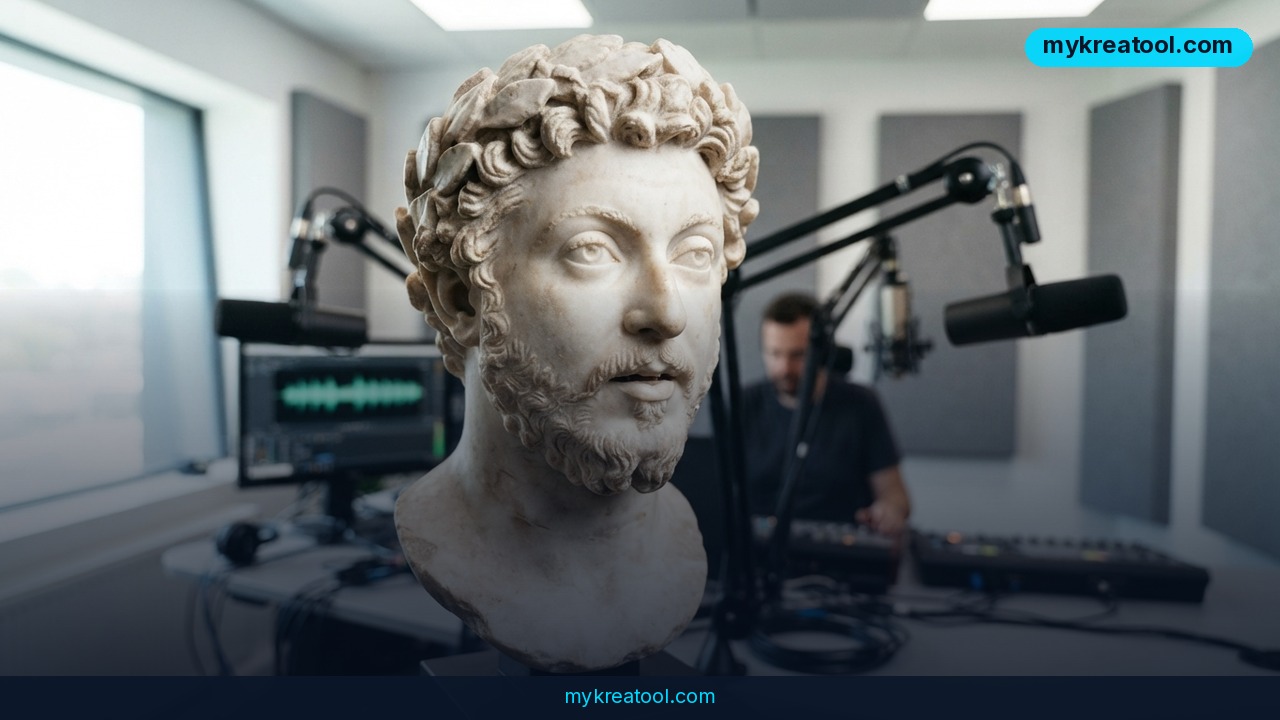
Textbooks describe the Roman Forum in three paragraphs. A world model can drop you in it and let you look up. Same goes for anatomy, geology, or chemistry — anywhere a flat diagram has been doing a 3D job badly. Teachers won't need to build anything; they'll need to write a good sentence.
For creators: a new income stream
The people who'll make money first aren't the ones building world models. They're the ones writing great prompts, building reusable environments, and selling the ability to turn a client's brief into a walkable space by Friday. Skill number one is still plain description — which means writers have an edge here for once.
How to try it right now
The world model itself isn't public yet — there's no signup page and no waiting list. But you can get much closer than you'd think, and almost all of it is free.
1. Watch the actual demo. Free, no account needed. Beijing TV ran a seven-minute segment on it. You can watch the segment here and judge the footage for yourself.
2. Sign up for Seed — free tier. The tool is called Seed, ByteDance's own AI platform and the technology stack the world model reportedly sits on. Create a free account, generate an image, then generate a short video from it. You won't get a walkable world, but you'll get a feel for how ByteDance's models interpret a prompt — which is the actual skill being tested here.
3. Read the benchmark yourself. Free. Head to WBench and find ENUMA's row. It sits third on navigation tasks at 81.7, using four generation steps in its accelerated autoregressive version. Watching a leaderboard is a cheap way to spot the next release before it's announced.
4. Read the independent coverage. Free. Tech-Insider and Relve both go deeper on what a real-time 3D world model means for spatial video and for competitors like Meta and Google.
5. Start practicing today. Free. Write one sentence that describes a room, then list three objects a person would notice on entering it. That's the entire input format. Do it ten times and you'll be ahead of everyone waiting for an invite code.
Upsides and what changes
The big win here is control. Most AI video tools give you a fixed shot — you get what you get, and if you want a different angle you regenerate and pray. This thing hands you the camera, the script, and the set all at once. Camera control, text commands, and visual references living inside one model is a genuinely different category of tool.
Speed is the second win. Four generation steps is fast enough that the world can respond while you're still moving through it. That's the line between a demo and something you'd actually use on a Tuesday afternoon.
And the memory layer matters more than it gets credit for. ActWorld remembering where objects are and what you did to them is what separates a world from a slideshow. You can leave a room, come back, and the spoon is still there.
The bigger shift: this moves AI from generating content to generating places. Content gets consumed. Places get inhabited — and that's a much stickier thing to build a business on.
Limitations
Let's keep this honest. None of this is available to the public yet, and the release window — October 2026 per independent reports — is a reported target, not a confirmed date. ByteDance hasn't published pricing, an API, or a signup page. The 81.7 score is a navigation result on one benchmark, not proof that the whole system is ready; benchmarks measure narrow tasks and companies naturally show their best footage in demos. Nobody outside ByteDance has stress-tested how long a generated world stays coherent, what happens when two people move through it at once, or how much compute it burns per minute. And the VR angle, however exciting, still depends on people wanting to wear a headset — a problem no world model has solved yet. Treat every date and every jaw-dropping clip as a preview, not a product.
Conclusion
ByteDance is building a world model that takes a sentence and hands you a place — and it's reportedly close enough that the timeline talk has moved from "someday" to a specific month. The tech is impressive. The part that should matter to you is smaller and more useful: the input is just description.
Your one action for today: open a note, write a single sentence describing a room you know well, and add three objects someone would notice walking in. That's the exact format this system runs on, and it's a skill you can build for free while you wait for the doors to open.
Comments 0