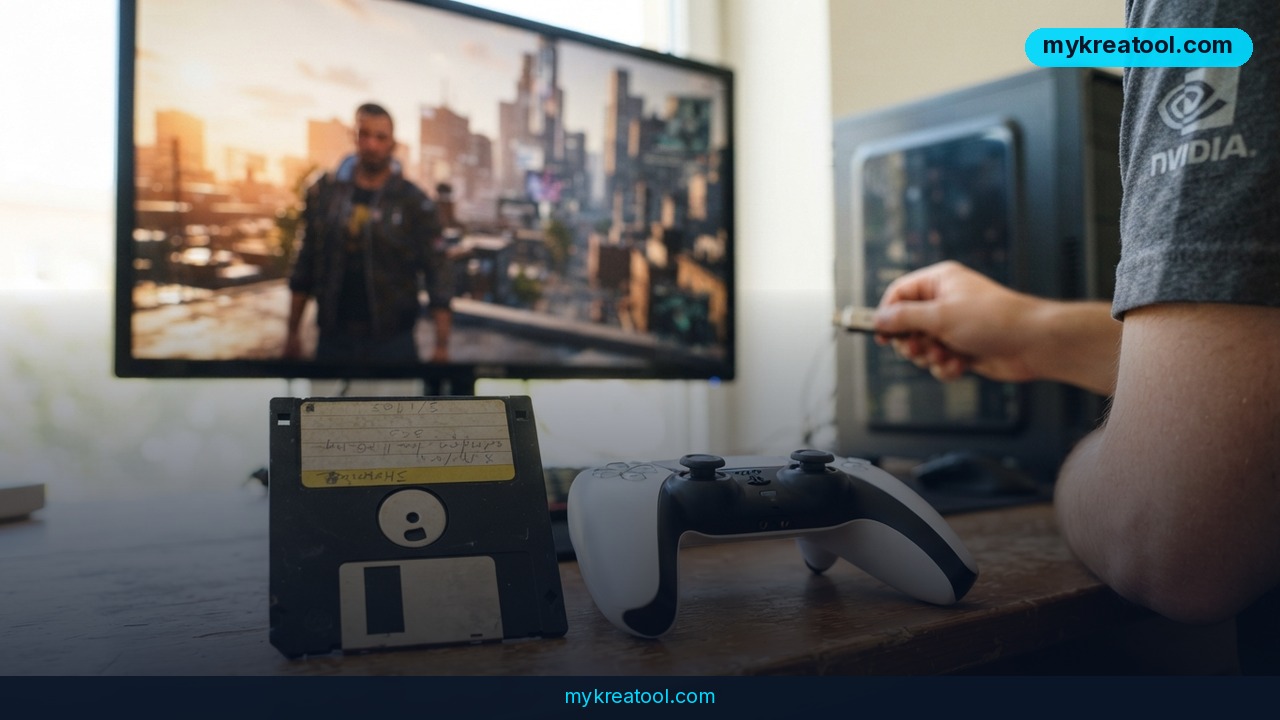
On August 27, 2026, modder Renan Manhero found a 158MB file named nvngx_dlssnr.dll — DLSS 5 Neural Rendering — hidden inside NBA 2K27's early-access build. Within a week, RenoDX modders had applied it to 30+ games, letting anyone with an RTX 40- or 50-series GPU try it today. Here's what changed, how it runs, and what it costs in frames.
What Is DLSS 5 Neural Rendering and Why It Leaked
On August 27, 2026, a Brazilian modder named Renan Manhero was digging through early-access files for NBA 2K27 and found something that wasn't supposed to be there: a 158MB library called nvngx_dlssnr.dll. The name gave it away immediately — DLSSNR, short for DLSS Neural Rendering, the internal codename for DLSS 5, the upgrade Nvidia's Jensen Huang teased back in March but hadn't planned to ship until fall 2026.
Manhero posted a screenshot to X, and outlets like VideoCardz confirmed the details fast. The file identifies itself internally as "NVIDIA DLSSNR," version 310.8.0.0, dated August 26, 2026. For comparison, a standard DLSS Super Resolution library runs 20-50MB. This one is roughly three times heavier than even the beefiest DLSS 4 components, which already switched to a transformer architecture — the same type of neural network behind ChatGPT, just processing pixels instead of text tokens. A file three times the size points to a substantially bigger model doing the work.
NBA 2K27 was never announced as a DLSS 5 title, and Nvidia never listed it in any roadmap. The most likely explanation: a build artifact nobody stripped out before shipping the early-access version.
Which Games Already Support the DLSS 5 Mod (Full List)
Modding group RenoDX, known for wiring Nvidia features into games that were never meant to support them (using the ReShade post-processing framework to hook into the render pipeline), grabbed the file within hours. Their first target was Control by Remedy — a natural pick, since the game already supports Ray Reconstruction natively and its Northlight engine's complex lighting makes rendering artifacts easy to spot. Modder speedlemur published a demo applying neural rendering to the character model of Jesse Faden, cycling through seven distinct processing styles, with the public clip showing one of the more conservative options.
By the next day, the mod had spread to Cyberpunk 2077, Red Dead Redemption 2, The Last of Us Part II Remastered, Assassin's Creed Black Flag Resynced, Hogwarts Legacy, and Black Myth: Wukong — plus a growing list that crossed 30 titles within roughly a week, including GTA San Andreas, a 20-year-old game never designed with any of this in mind.
DLSS 5 vs DLSS 4: What Actually Changed
Nvidia hadn't planned to hand developers fine-grained control — the ability to apply neural rendering selectively to specific scenes or objects — until the official fall 2026 rollout for RTX 50-series cards. Modders got there first, on an unofficial DLL, months ahead of schedule. That timeline gap is the real story: a feature Nvidia was still gating behind partner agreements and driver certification is already running, unsupervised, on hardware and games it was never tested against.
It also confirms the model itself. The jump from ~30MB to 158MB isn't cosmetic — it signals a genuinely larger neural network, consistent with rumors that DLSS 5 moves beyond frame generation and upscaling into full neural rendering of scene elements like skin, hair, and fabric. Early clips show visibly different subsurface light scattering on skin, which is the kind of detail earlier DLSS versions never touched.
Upscaling vs. Frame Generation vs. Neural Rendering: The Three DLSS Tiers
Standard upscaling (DLSS 1-3) reconstructs a full frame at higher resolution from fewer rendered pixels. DLSS 4 added a transformer-based model on top of that for higher-quality super resolution and frame generation, inserting AI-generated frames between rendered ones. DLSS 5 goes a step further: instead of processing the whole frame, it applies neural rendering to specific scene objects — skin, hair, fabric — which is why the leaked model is roughly three times larger than its DLSS 4 counterpart.
How to Try the DLSS 5 Mod Today on RTX 40 / 50 Series
Required: ReShade + nvngx_dlssnr.dll + RenoDX Preset
Anyone running an RTX 40 or 50-series card can try this now, at their own risk. The workflow modders are using: install ReShade, drop in the leaked nvngx_dlssnr.dll, and layer RenoDX's per-game presets on top — most of which are shared as free downloads on Discord and GitHub by the RenoDX community. Results vary heavily by title and by which of the seven processing styles is active; some look like a clear upgrade, others introduce visible artifacts on fast motion or complex hair.
DLSS 5 Performance Benchmark: Real FPS Numbers (RTX 5090)
Performance cost is real. Reviewer gabdeg tested the mod on an RTX 5090 paired with a Ryzen 7 9800X3D and saw frame rates in Control drop from 91 fps to 50 fps with DLSS 5 neural rendering enabled — a nearly 45% hit. That's before any official optimization pass from Nvidia, so treat current numbers as a worst-case baseline, not a preview of shipped performance.
Covering AI graphics stories like this DLSS 5 leak means processing benchmark clips, pulling reference footage, and building comparison content fast. MyKreaTool's paid plan handles that pipeline: download the demo clip in full quality, auto-caption it in seconds, and transcribe video commentary to text — no per-file limits, no watermarks. Built for reviewers and creators who need the workflow done before the next news cycle.
Start your MyKreaTool workflow →
Who Benefits from the DLSS 5 Leak
Modders and enthusiast communities get bragging rights and early access to Nvidia's next major graphics leap, months before any official SDK. Owners of older or less-supported titles benefit most directly — games publishers have no financial reason to patch, like a 20-year-old GTA San Andreas remaster, suddenly get a modern rendering upgrade nobody expected. Hardware reviewers and tech journalists get a rare real-world stress test of unreleased Nvidia technology, generating exactly the kind of buzz and comparison content that drives traffic before an official launch. Nvidia itself arguably benefits too: free, viral proof that DLSS 5 delivers a visible upgrade, months ahead of its marketing calendar.
Risks: Crashes, Anti-Cheat, and the Legal Question
This is an unofficial, unsigned, un-vetted DLL pulled from a pre-release game build — not a supported Nvidia driver component. Running it means accepting stability risks (crashes, corrupted saves in some titles), zero official support, and no guarantee it won't be blocked or bricked by a future driver update or anti-cheat system, which is a real concern for online multiplayer titles. There's also a legal and distribution question: the file is Nvidia intellectual property that leaked without authorization, and Nvidia could move to have mod repositories takedown the file at any point, the same way it has handled other unauthorized driver leaks in the past. Performance costs (that 45% frame-rate hit) also mean this is not remotely production-ready for anyone who isn't specifically testing or benchmarking.
Conclusion
A missed file in an NBA 2K27 build handed the modding community a working preview of DLSS 5 months before Nvidia's own fall 2026 launch window. In under a week, it went from a single screenshot on X to running on more than 30 games, with real, measurable trade-offs: sharper neural-rendered detail against a near-halved frame rate on today's hardware. It's not a finished product, and it's not something to run on anything you can't afford to reinstall — but it is the clearest evidence yet of what DLSS 5 will actually look like once Nvidia ships it properly. For more on what's next, compare AI tool features before committing to a paid stack, or follow the latest AI and GPU news on MyKreaTool as this story develops.



Comments 0