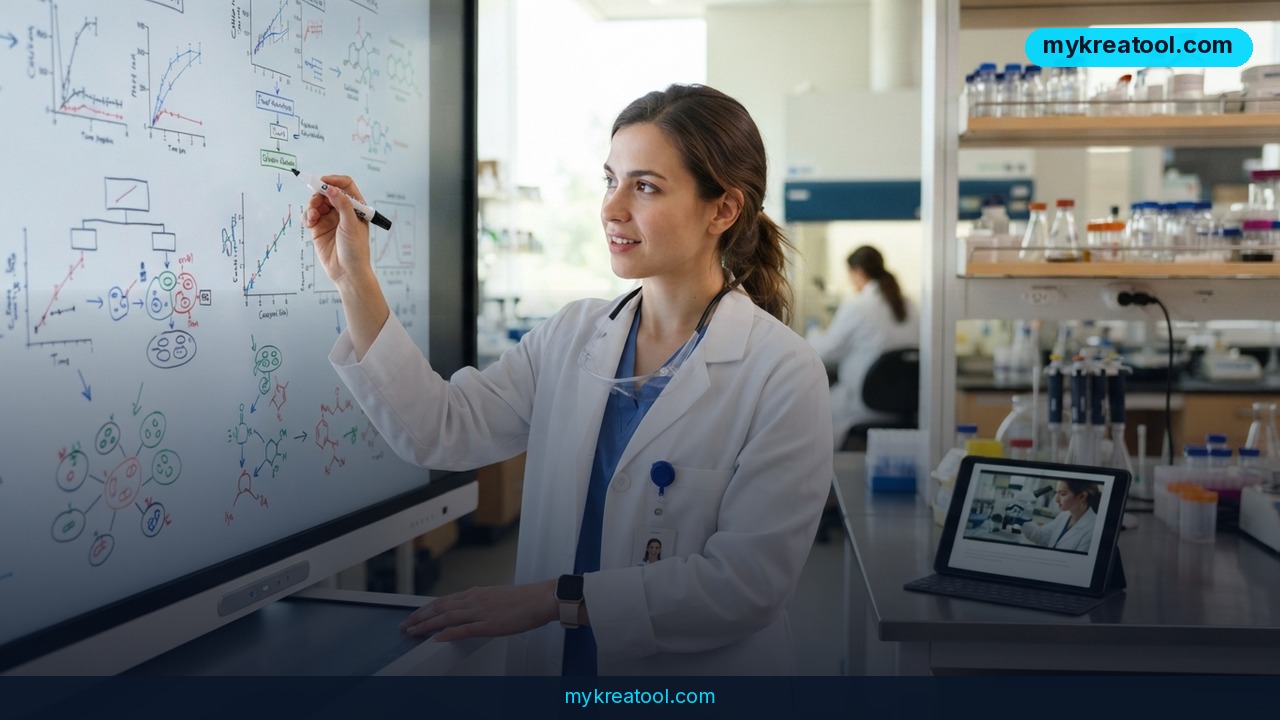
Elorian's first model is a bet that AI image reasoning has been broken all along. Glimpse, out Friday as a research preview, doesn't glance at a picture once and then talk about it from memory. It keeps going back to the pixels — cropping into the corner of a chart, pulling a single frame out of a video, or running a little code mid-thought to measure what it's actually looking at.
What happened
Palo Alto startup Elorian released Glimpse on Friday, according to TechCrunch. This is the same company that raised a $55 million seed round at a $300 million valuation before it had a product on the market, and it only came out of stealth six months ago. The round was co-led by Striker Venture Partners, Menlo Ventures and Altimeter Capital, with Nvidia and Google chief scientist Jeff Dean also taking part.
For now, Glimpse is a research preview with API access, and the chat interface is waitlist-only. So most people can't poke at it yet. What Elorian has published is a results table, a price list and an argument.
The argument: today's AI models can't really see
Here's the plain-English version. Most multimodal models — the ones that handle pictures as well as words — look at an image once. They chop it into tokens (small chunks of data, roughly like syllables for a machine), turn those chunks into text, and then reason in text. It's like glancing at a photo, writing down a description, and then answering every follow-up question from that description alone. If the description was off, everything after it is off too.
Glimpse does something different. Mid-reasoning, it can crop into a region of the image, pull specific frames from a video, or run code to measure and compare what it's looking at. Elorian calls this a "visual scratch space" — a working area where the model can double-check itself. Think of pinching to zoom on your phone because you're not sure what you just saw.
A board game started it
Elorian CEO Andrew Dai, a former Google DeepMind researcher, got his clearest proof of the problem on game night. He photographed a board game he'd just finished with friends and asked a frontier model who was winning. It couldn't say.
"Each have their own visual language, each have their own iconography, symbols," he told TechCrunch. "To an adult, it's quite easy to understand what's going on with minimal text, but these models aren't able to intuit what the symbols mean." He added: "Humans can look at Ikea diagrams, with no text, and assemble Ikea furniture, right? Why can't AI models?"
What it costs and how it scores
Glimpse is priced at $0.60 per million tokens coming in and $3 per million tokens going out. That's cheaper than mid-tier models like Sonnet and Sol, but pricier than lightweight ones like Haiku and Luna.
The approach itself isn't brand new — OpenAI added crop-and-zoom during reasoning to its o-series models back in 2025. Elorian's pitch is that it built an entire model around that one idea, and did it cheaply. The company says a small team trained Glimpse on a few hundred GPUs, and that it's substantially smaller than the frontier systems it's benchmarked against. On Elorian's own evaluations, Glimpse beats GPT-6 Astra on scientific chart reasoning and short-form video captioning, and posts competitive results on other visual reasoning tasks.
What it means for you
You don't need to care about token pricing or GPU counts to care about this. You just need to have ever taken a photo of something and asked an AI what it was looking at. That's where it gets interesting.
At home: settling the scoreboard argument
Board games, handwritten receipts, the cryptic settings screen on your router, the tiny print on the back of a medicine box — all of it is visual information with almost no helpful text. Dai's whole point is that a person can glance at a Scrabble board or a Monopoly board and instantly know who's ahead. If a model can zoom instead of squinting, that kind of everyday question stops being a dead end.
At work: charts that finally get read properly
If your job involves decks, dashboards, or a competitor's PDF report, this one's for you. Right now you often end up retyping numbers out of a chart by hand, because the model mixes up axis labels, legends and units. A model that crops into the axis labels and runs code to compare bars is a different animal. You'll spend less time being the human copyist. And while you're waiting for access, free AI tools like the ones at MyKreaTool can already take some of the grunt work off your plate.
In business: turning old video into answers
Elorian's first targets are companies sitting on piles of video: robotics firms, scientific labs, media and creative companies. If you run a small business with years of product footage, the promise is being able to ask questions about what's in that footage — what the presenter was holding, which logo was on screen at minute four — instead of scrubbing through timelines by hand.
For students: diagrams without the guesswork
Textbooks are full of unlabeled diagrams, and lab reports are full of readings you have to eyeball off a graph. A model that zooms in on a figure and reasons step by step is closer to a patient tutor than a search engine. The Ikea comparison matters here too: if humans assemble furniture from wordless diagrams, students should be able to get help reading wordless figures.
For creators: captions for short-form video
In Elorian's tests, Glimpse outperformed GPT-6 Astra on short-form video captioning. If you post Reels, Shorts or TikToks, captions and on-screen text eat a real chunk of your week. Worth watching — with the caveat that these are the company's own numbers, not an outside lab's.
For extra income: the chart-reading gig
Plenty of freelance work starts with a screenshot. A client drops in a blurry chart, a receipt, a dashboard export, and asks you to pull the numbers into a sheet. Anyone who gets faster at that has an edge. Treat it as a tool that shortens the boring first pass, not as something that replaces your judgment.
How to try it right now
Here's the honest sequence, cheapest first.
1. Start free today. Glimpse's chat is waitlist-only, so build the habit somewhere you can use right now — MyKreaTool is a free hub of AI tools with no cost and no waiting list. Upload a dense chart or a screenshot and practice asking precise questions like "what's the value of the second bar?" instead of "describe this."
2. Join the Glimpse chat waitlist. The chat interface is waitlist-only, so sign up through Elorian and get in line.
3. If you're technical, request API access. Glimpse is a research preview with API access at $0.60 per million input tokens and $3 per million output tokens.
4. Build a tiny test set. Three items are enough: a photo of a board game, a scientific chart, and a 30-second video clip. That's basically the pitch Elorian made.
5. Compare it against what you already pay for. Run the same three items through Glimpse and your current model, then judge with your own eyes.
Upsides and what changes
The upside is focus. Instead of one giant model that's decent at everything, you get a smaller one built around a single trick: look again, then look closer. A few hundred GPUs and a small team is a genuinely cheap way to get there, and the price per token sits in the middle of the market rather than at the top.
The bigger shift is the roadmap. Elorian wants to move from seeing to doing — building a model of a scene and using it to pick an action, including directly controlling robots. Next year, Dai says, the goal is to build "the world's best visual reasoning model," one that leads on every visual reasoning test. If that lands, image understanding stops being a party trick and becomes the front end for machines that act.
Limitations and what to watch
Be skeptical in the specific ways that matter. Glimpse is a research preview — the chat is waitlist-only, and there's no independent benchmark here, just a vendor's results table, so "beats GPT-6 Astra" means "beats it in Elorian's own tests." Crop-and-zoom during reasoning isn't new either; OpenAI shipped a version of it in the o-series back in 2025, so Elorian's edge is depth of implementation, not novelty. It's also not the cheapest option on the menu — Haiku and Luna cost less — and multi-step models tend to burn more tokens per answer than one-shot ones, so keep an eye on your bill. The robot plans are a stated ambition, not a product. And if your real question is "can I try it tonight," the answer is probably no until you're off the waitlist.
Conclusion
Glimpse is a reminder that most AI models have been describing pictures from memory, not actually looking at them twice. Elorian's fix — a visual scratch space where the model crops, pulls frames and runs code mid-thought — is simple enough that it's a little surprising it isn't standard everywhere yet.
One action for today: grab a photo of a board game, a scorecard or a dense chart, and ask the AI you already use a specific question about it. If it fumbles, you'll understand exactly why Glimpse exists — and you'll have your first comparison test ready for the day you get access.

Comments 0