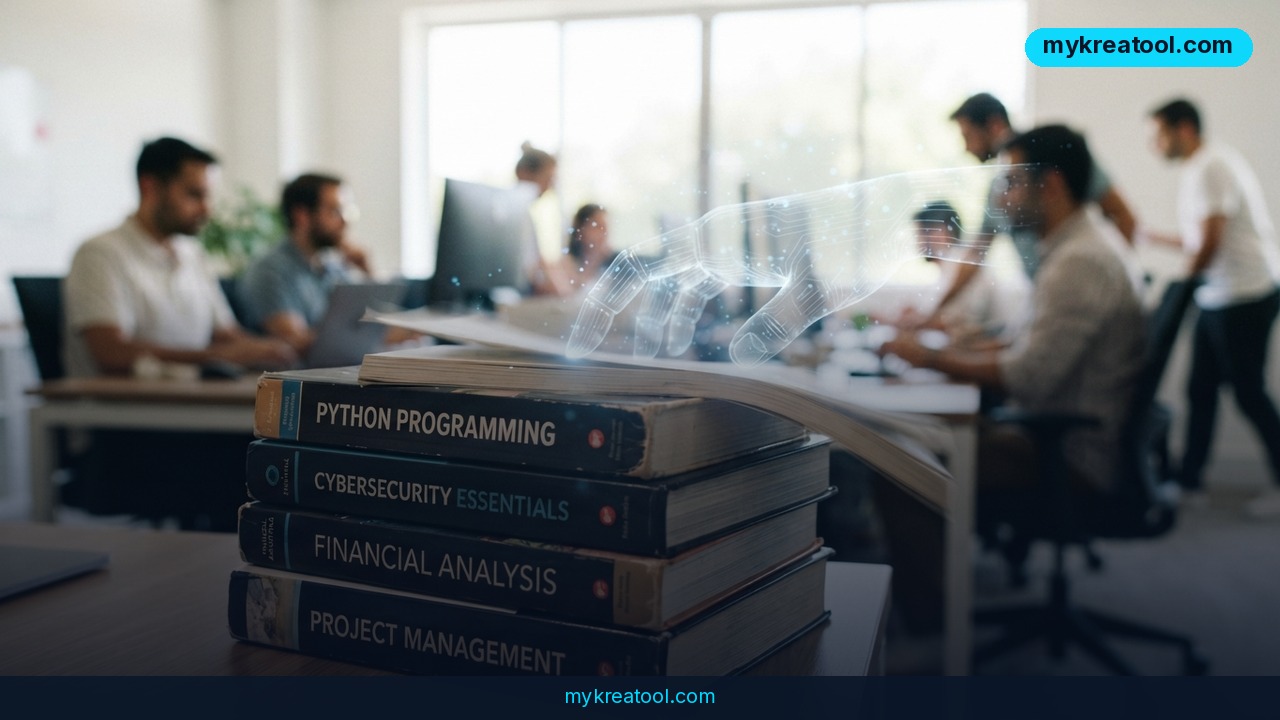
What happened
GPT-6 Astra is OpenAI's new flagship model, and the most interesting thing about it isn't a benchmark score — it's where it can work. OpenAI says Astra rolled out last week in ChatGPT Work, Codex, and the API, and calls it the most intelligent and aligned model it has ever shipped. "Aligned," in plain English, just means it's been trained to do the job you actually asked for and to stay inside the lines while doing it.
The launch post lists state-of-the-art results across computer use, browsing, professional work, software engineering, cybersecurity, and science. Fine. But the sentence that matters for anyone running a team is a different one: in ChatGPT Work and Codex, Astra can write code and work through the same applications people use every day — even when those applications don't have an API.
What "no API required" really means
An API is the drive-through window that lets one piece of software place an order with another. If an app has one, wiring AI into it is easy: you hand over the order and someone hands back the result. Trouble is, most of the tools a normal company actually runs on — the ancient invoicing system, the internal dashboard nobody documents, that creaky desktop app nobody's updated in years — don't have a window at all. Before now, that meant no AI, or a long integration project with a consultant attached.
Astra skips the window and walks in the front door. It uses the app the way a new hire would: it looks at the screen, moves the cursor, clicks, and types. OpenAI is blunt about why that matters — businesses can put AI to work inside their existing workflows from day one, without extensive preparation or engineering work.
What early customers are already doing
Within the first few days of rollout, OpenAI says customers were using Astra to optimize GPUs, to spot discrepancies in financial statements, and to produce more on-brand decks. None of that is glamorous. All of it is the kind of work that quietly eats a team's week.
The numbers OpenAI put on the record
OpenAI lined up partners to test the model at launch, and the results are specific enough to be worth repeating:
• Hebbia (George Sivulka, founder & CEO) says Astra produced the best decks it has tested, following the brief 17% more faithfully than the next-best model and sourcing its claims to the right document 19% more often.
• Box (Yashodha Bhavnani, VP of AI Products) reports Astra was more than 10% less likely to make confidently incorrect assertions — it was better at declining to assert conclusions the documents didn't support.
• Databricks (Ivan Zhou, staff research engineer) says Astra claims a new state of the art on its OfficeQA Pro and Pro V2 benchmarks using the Genie harness, with significantly better cost per task than GPT-5.6 Sol.
• Cognition (Silas Alberti, SVP Research) plugged Astra into Devin's harness on launch day and saw state-of-the-art performance on internal benchmarks.
• Figma (Loredana Crisan, Chief Design Officer) says Astra knows how to use Figma to get to your vision while you keep control of the creative direction.
• Thomson Reuters Labs (Omar Bari, VP Applied Research) points to stronger multi-agent coordination and a better grasp of the "quiet intent" behind a request — which matters in legal work.
OpenAI also ran Astra internally before launch. Its developer and marketing teams turned three hours of multicamera footage into the GPT-6 Astra Developer First Impressions video, which drew a big audience within days. Its engineering team used Astra to find and fix a memory-allocation bottleneck that was slowing down Codex sessions in a test environment.
What it means for you
You don't need to care about benchmarks. You do need to care about the one task you do every week that involves three browser tabs, one stubborn app, and fifteen minutes of copy-paste. That's the kind of work Astra was built for.
At home
Think about the apps that live only on your laptop: the utility portal that shows your usage, the school form system, the insurance claim tool that looks like it was built before anyone thought about user experience. None of them have an API. A computer-use model can sit in front of them, click through the same steps you would, and pull out what you need. The honest caveat: you still have to check the result, because it's your account, your money, and your liability.
At work
This is where the gap between "we have AI" and "AI does our work" usually lives. Sales teams live in a CRM, ops teams live in a ticketing tool, finance teams live in a portal that doesn't talk to anything. If Astra can drive those screens, a lot of "we'd need an integration for that" turns into "give me an afternoon." OpenAI's own examples — spotting discrepancies in financial statements, building on-brand decks — are exactly this kind of middling, repetitive, error-prone work.
Running a small business
Here's the scenario that made me sit up: you've got a supplier portal with no export button and a stack of invoices waiting to be reconciled by hand. Until now your options were a freelancer, a spreadsheet marathon, or an integration quote. With computer use, the model does the clicking, you do the approving. And if you're not ready to commit to anything yet, spend a week first with free AI tools like the ones at mykreatool.com to see how much of the thinking part can be offloaded before you touch the clicking part.
Studying
For students, the useful bit isn't "write my essay" — it's document understanding. Databricks called out a clear step up in data reasoning and document understanding for enterprises, and that same skill shows up in research work: read forty PDFs, pull the numbers, keep the citation attached to the claim. The Hebbia result (sourcing claims to the right document 19% more often) is the one to watch here. Citations you can check are worth more than confident paragraphs you can't.
Creative projects
Figma's team framed it well: Astra knows how to use the tool to reach your vision, while you stay in control of the creative direction. That's a healthier division of labor than "AI makes the design." For a solo creator, it means the tedious middle of a project — restyling forty slides, resizing variants, rebuilding a template — stops being the reason a project stalls.
Earning extra income
If you freelance, computer use changes your billable hours. Work that used to be "I'll have to do that manually" becomes a service you can offer at a fixed price. Cognition's Devin, which integrated Astra on launch day, is a direct example of agent-style tools going after exactly this kind of repeatable software and reporting work. Your edge isn't doing the clicking faster than the model. It's knowing which clicks are worth doing.
How to try it right now
1. Free first. Don't buy anything to test an idea. Write down the task and what "finished" looks like — one sentence each. If a free chat tool can't even describe the steps, a browser-driving model won't save you.
2. Pick the right door. Astra lives in three places: ChatGPT Work for general business tasks, Codex for software work, and the OpenAI API if you're building it into your own product. Use the one that matches the job, not the one that sounds most impressive.
3. Give it the screen, not the API. Set it up the same way you'd set up a new team member — same app, same account, permissions decided by whoever owns that account. That's the whole point of the launch.
4. Start with one recurring task. Not a migration. Pick something you do weekly, that touches no more than two or three apps, and that you can verify in five minutes.
5. Keep a human in the loop for the first month. Box's finding — more than 10% less likely to be confidently wrong — is an improvement, not a guarantee. Read the output before it leaves your desk.
6. Measure one thing. Time saved, or errors caught. If you can't name a number after two weeks, the task was the wrong pick.
Upsides and what changes
The biggest change is the order of operations. Most AI rollouts go: clean your data, redesign the workflow, build the integration, then get value. Astra flips it — value first, cleanup later, and only if it's still needed. That's a genuinely different deal for small teams with no engineering bench.
The second upside is judgement. Six partners signed off on this launch, and the recurring theme in their quotes isn't raw speed — it's knowing when to stop. Following a brief more faithfully, citing the right document, refusing to assert what the paperwork doesn't support: that's the difference between a demo and something you'd hand to a client.
Third, cost per task. Databricks specifically flagged better cost per task than GPT-5.6 Sol. If your unit economics are per-output, that number does more for you than any leaderboard.
Limitations
Let's be straight about the catch. Astra ships inside ChatGPT Work, Codex, and the API — workplace products, not a free consumer toy, and OpenAI's announcement doesn't describe a free tier, so check your plan or ask your workspace admin before you plan around it. Computer use means the model operates with the access you grant it, so permissions, logging, and "what happens if it clicks the wrong button" are your problem, not the model's. Every performance figure above comes from partner evaluations on partner benchmarks, plus OpenAI's own internal story — impressive, but not independent. "No API required" also doesn't mean "no setup": someone still has to decide which accounts it touches and which it never touches. And "more than 10% less likely to be confidently wrong" means it can still be confidently wrong. Treat it like a fast, tireless intern who has never seen your business before — because that's exactly what it is.
Conclusion
GPT-6 Astra matters less because of what it scores and more because of where it sits: in the ordinary apps that were never built to talk to AI. That removes the excuse most teams have been hiding behind — that their tools are too old, too custom, or too undocumented to automate.
One action for today: open your calendar or to-do list, find the single task you repeat every week that involves more than one app and no API, and write it down in three steps — what goes in, what the model would click, and how you'd check the result. That three-line note is your pilot. Hand it to whoever owns your ChatGPT Work or Codex access and ask for one test run this week.


Comments 0