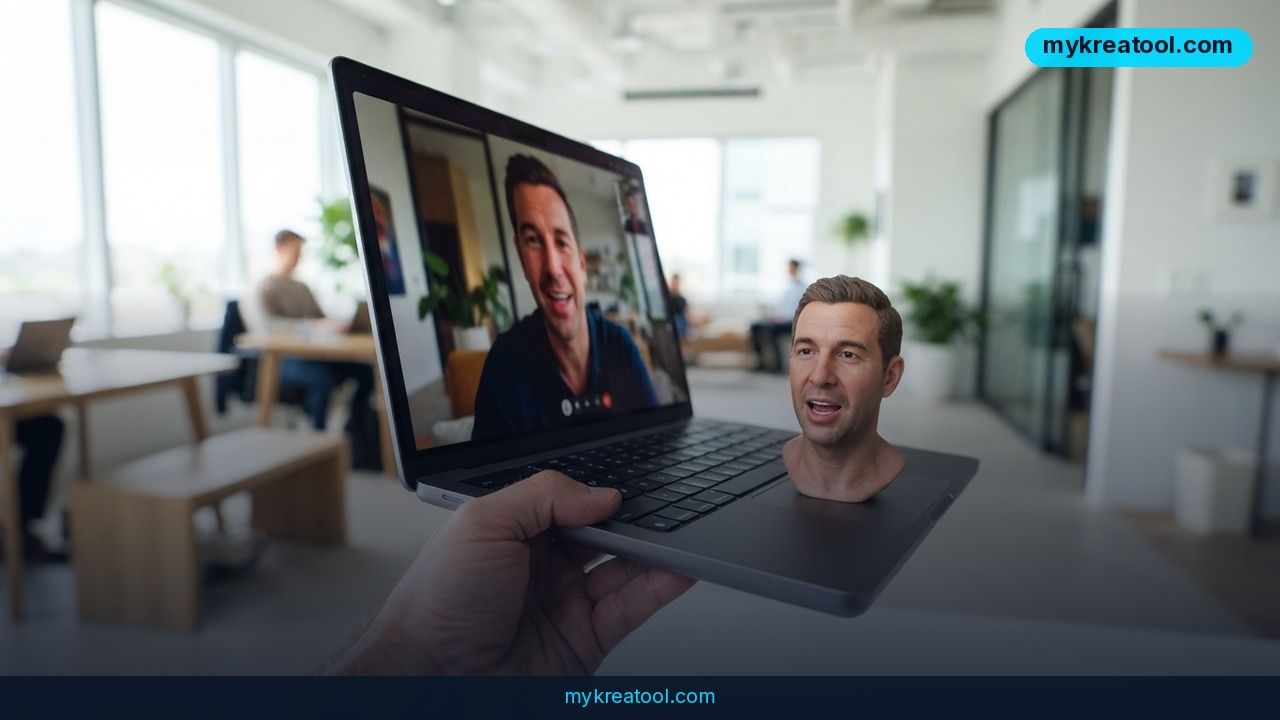
Imagine being on a call and hearing someone laugh, sigh, and lose their train of thought — then finding out it wasn't a person at all. That's the pitch behind Dessa, a new AI voice model from Jack Dorsey's Block. It sounds startlingly human, it runs on a laptop instead of a server farm, and as of right now, you can't have it.
Here's what Block actually announced, why it's different from the voice AI you've already heard, and what it could realistically mean for your work, your business, and your free time.
What happened: Block's Dessa speaks without a text middleman
On October 23, 2026, Block's research lab released Dessa, a speech model the company calls the most authentic full-duplex speech model ever built. TechCrunch's Ivan Mehta covered it the next morning. Two details stood out: Block says the model was trained entirely on human speech using a single NVIDIA GPU, and it runs locally — on a consumer machine like a MacBook M4 Max or better. No cloud. No meter ticking in the background.
Block also posted a batch of demo conversations. In one, the bot mentions it's tired from work, and it genuinely sounds tired. In another, it gets emotional and almost breaks down mid-sentence. In a third, a Block team member named Cara plays a guessing game with it; the model nails the first answer immediately and the second not long after.
What “full-duplex” actually means
Full-duplex is jargon for a simple thing: the model can talk and listen at the same time. A normal voice assistant works like a walkie-talkie — you finish, it starts, you wait your turn. Full-duplex is closer to a real conversation, where you can drop in an “mm-hmm” while the other person is still talking and nobody gets confused. OpenAI shipped something similar earlier this year with its GPT-Live model. Dessa sits in that same category.
Why most AI voices still sound off
Here's the problem Block is attacking. Most voice systems run your speech through a text middleman: your voice becomes text, a language model writes a text reply, and a third component reads that text out loud. Every stage throws away something a transcript can't carry — the catch in a voice, the half-second pause before someone says something hard.
Tools like ElevenLabs v4 and Fish Audio Drama 3 work around this by using voice tags to steer emotion. Block claims Dessa doesn't need that crutch, because the emotion is baked into the model itself. “Interacting with current voice AI can just plain suck,” the company wrote in a blog post. “It turns your voice into text and throws away an incredible amount of information text alone can't carry. The most powerful AIs in the world can't hear how you feel.”
What it means for you
Dessa isn't public yet, so treat everything below as what's coming rather than what you can book today. Still, the shape of it matters — a voice model that runs on your own laptop changes who gets to build with it.
At home
A voice assistant that catches tone could tell the difference between “I'm fine” said flatly and “I'm fine” said through gritted teeth. That's the gap Block is pointing at: today's assistants hear words, not feelings.
At work
Calls, voicemails and meeting notes are the obvious first target. On-device processing means your audio doesn't have to leave your machine at all, which is a real selling point for anyone handling confidential conversations.
In business
Block is a finance company that sells to small businesses, and Square already uses voice AI to take orders. Owning a model that runs on local hardware instead of racking up cloud bills could let Block put voice into far more products at a lower cost. That's the commercial logic underneath the demo videos.
For studying
A tutor that sounds tired, curious or encouraging is a very different experience from one that reads like a manual. Language practice gains the most — hearing where a native speaker pauses is half the lesson.
For creative work
Voiceover, audiobooks, indie games, podcasts. A model that laughs and cries on cue without you tagging every line saves hours of retakes, and it means a solo creator can cast characters instead of just narrating them.
As an income stream
If Dessa-class voices run locally, the barrier to launching a voice product drops to the price of a laptop. Expect a wave of small shops selling AI voiceover, phone agents and audio branding — and expect the honest labels to matter more than ever.
If you want to play with what's already out there, mykreatool.com keeps a free directory of AI tools, including voice generators you can test before spending anything.
How to try it right now
Straight answer: you can't use Dessa today. Block hasn't opened public access, and there's no waitlist or price list. Here's the honest path, free options first.
1. Test a public model for free where you can. ElevenLabs v4 and Fish Audio Drama 3 are the two names Block itself calls out as tag-driven alternatives. Check what each lets you try before you pay a cent.
2. Run the “tired test.” Write two lines where the speaker is wiped out after a long day, then listen for whether the pauses land in the right places. That's the exact demo Block used to show off Dessa.
3. Try the interruption test. Start talking over the voice mid-sentence. If it stops dead and waits, you're on a walkie-talkie. If it adjusts, you've hit full-duplex territory.
4. Check your hardware. Block says Dessa needs a MacBook M4 Max or better to run locally. Anything below that and you're back in the cloud, with the latency and privacy trade-offs that come with it.
5. If you're a safety researcher, raise your hand. Block put out an open call for safety researchers to test the model, including cases where a voice agent might trick the person on the other end of the line. That's the channel if you want in early.
Upsides and what changes
Three things stand out. First, cost: a model that runs on a laptop doesn't charge per minute, so voice features stop being a line item and start being a default. Second, privacy: audio that never leaves your device is a much easier sell to customers who don't want their calls sitting on someone else's server. Third, realism: dropping the text middleman is the right instinct, because the thing that makes a voice feel human isn't the words — it's the timing between them.
And if a single NVIDIA GPU really is enough to train a model this expressive, the moat around big voice labs just got a lot shallower. Ragavan Thurairatnam, one of the people behind it, called it “a GPT3 moment for speech.” That's hype, sure, but it's the kind of hype that tends to pull the whole market forward.
Limitations
Let's be clear about what we don't know. Dessa has no public access, no release date and no price, and Block's claims about built-in emotion are the company's own words — outside researchers haven't verified them, and it's not even clear whether some hidden tagging is still steering that emotion. The model's knowledge comes from its conversational training data rather than a paired language model, so don't expect it to be a walking encyclopedia. The MacBook M4 Max requirement rules out most people's current laptops. And the realism is exactly what makes this risky: a voice that pauses, cracks and cries is a voice that can fool your parents on the phone. Block's safety call-out exists for that reason.
Conclusion
Dessa is a genuine step change: a speech model trained on a single GPU that laughs, pauses and runs on a MacBook — and it's the clearest signal yet that natural-sounding voice is about to become cheap and local. It's also not something you can use this week. So don't wait for it.
Your one action for today: open a free voice tool and run the tired test on a two-line script. Ten minutes of listening for where the pauses fall will teach you more about voice AI than any announcement will.


Comments 0