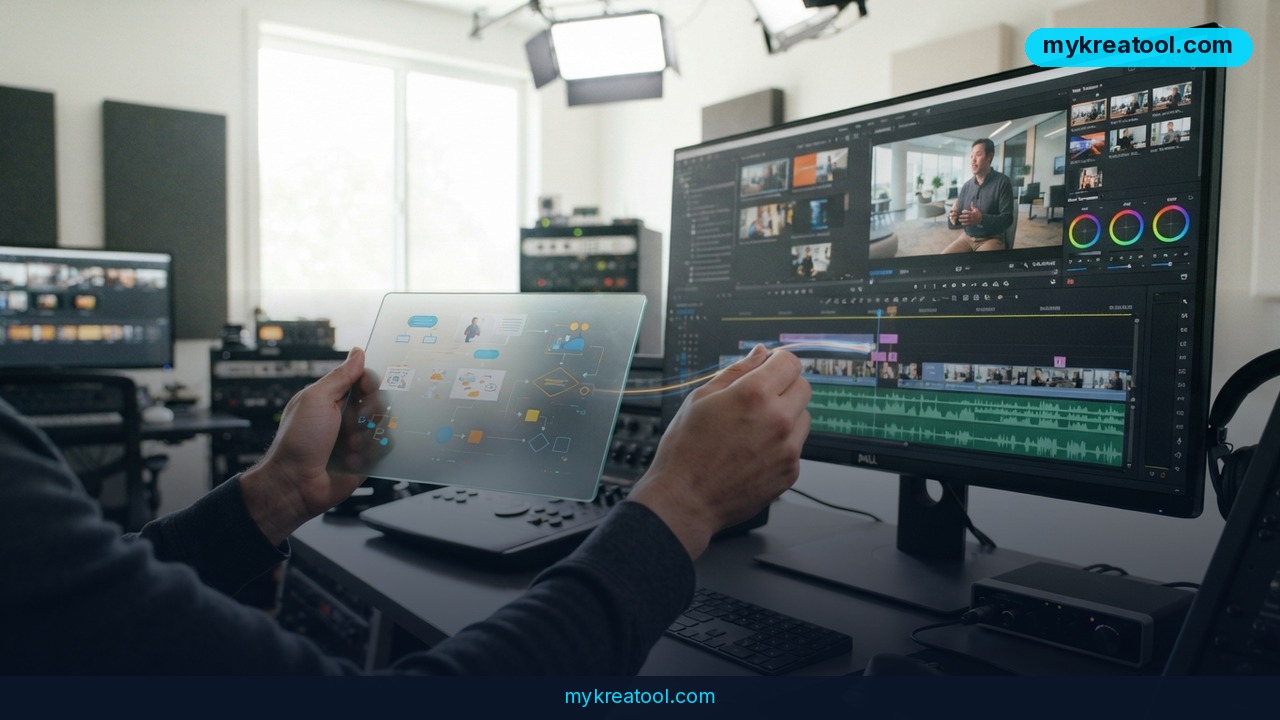
If you've ever typed a prompt into an AI chatbot and thought, “that would make a decent little video,” the gap between those two things just got a lot narrower. Luma announced that Claude Motion animations now open directly inside Luma, where they get finished as real video files in whatever format you need. It's a quiet handshake between two tools — and it's the clearest sign yet that AI text-to-video is turning into something you'd actually use on a random Tuesday afternoon.
The whole idea fits in one line: you start the motion in Claude Motion, and you finish the video in Luma. Everything below is just the detail.
What happened
Luma, the San Francisco company behind the Ray and Uni video generation models, said that Claude Motion animations now open directly in Luma, ready for creators to expand, refine, and reframe into any asset output. Anthropic's announcement made the same point from the other side: any customer can take a Claude Motion animation further in Luma to create the look, the shots, and expanded versions that play on every screen.
Claude Motion is currently in beta on Claude Team and Enterprise plans. It works by writing code that animates text, charts, shapes, and the images you put into it, so the result plays like a short video. This isn't footage editing. There's no camera and no timeline full of clips to trim. Think of it more like a flipbook: Claude writes the instructions that tell a bar chart to grow, or a headline to slide in from the side.
Then Luma takes the baton. Because the animation lands in Luma as a project rather than a locked-down file, you can restyle the look while the motion holds steady, reframe the whole thing to 9:16, 1:1, 4:3, or 21:9, and ask the Luma agent to build extra versions for you.
What “MCP,” “agent,” and “reframe” actually mean
Three pieces of jargon show up in the announcement, and none of them are scary:
• MCP (Model Context Protocol) is just a connector. You add the Luma connector inside Claude once, and from then on the two apps can hand files back and forth. It's like pairing a printer to your laptop — you do it once, then you just hit print.
• Agent means you describe what you want in plain English and the software does the clicking. “Make me a square version too” is a valid instruction.
• Reframe means the same video in a different shape. 9:16 is the tall phone format, 1:1 is the square feed format, and 4:3 and 21:9 cover the wider stuff.
What it means for you
At home
Birthday videos, moving-house announcements, a quick explainer for the family group chat about how the new thermostat works. You type a few lines, drop in a photo or two, and you've got motion — not a slideshow, actual movement.
At work
This is where animated explainers earn their keep. A quarterly number that used to be a sad bullet point becomes a growing bar chart with a caption, finished in Luma, exported at the size your internal deck needs. No motion designer in the loop, no three-day turnaround.
In business
Small teams live and die by how fast they can ship content. One idea in Claude Motion can come out of Luma as a vertical clip for social, a square for the feed, and a widescreen cut for the website — same motion, three formats, one afternoon. If you want to see what else is out there before you commit to a stack, MyKreaTool keeps a handy pile of free AI tools in one place.
While studying
Turning a dense concept into something that moves is genuinely one of the better ways to learn it. You explain photosynthesis or compound interest in a prompt, Claude Motion animates it, and Luma turns it into a clip you can rewatch before an exam instead of rereading the same paragraph.
For creators
Restyling matters more than people admit. You can keep the exact timing and rhythm you built in Claude, then let Luma change the look so it matches your channel instead of looking like every other AI clip. Same motion, your visual voice.
For extra income
Freelance video work is full of “we need this in six sizes” jobs. This workflow eats that kind of request for breakfast: build the animation once, export the aspect ratios your client asks for, and spend the time you saved on the story.
How to try it right now
Free-ish option first. Claude Motion is in beta on Claude Team and Enterprise plans, so a plain personal Claude account won't show it yet. Before you upgrade anything, go poke at the Luma side and see whether the output is good enough to be worth it for you. Plan limits shift, so check the current details on the site rather than trusting an old blog post.
1. Check your plan. If you're on Claude Team or Enterprise, you're in. If you're not, decide whether this specific feature justifies it.
2. Build the animation in Claude Motion. Prompt it with your own text, charts, and images. Keep it short — one idea per animation works far better than five.
3. Add the Luma connector in Claude. This is the MCP step. You do it once.
4. Open it in Luma. Your Claude Motion animation shows up in Luma as a video, so you pick up exactly where you left off.
5. Restyle and reframe. Change the look while the motion holds, then set the frame to 9:16, 1:1, 4:3, or 21:9 depending on where it's going.
6. Ask for extra versions. Tell the Luma agent you want additional cuts and let it do the repetitive work.
7. Export the final file. Luma's Ray and Uni models handle that last stretch.
Upsides and what changes
The big shift is that “make it fit everywhere” stops being a separate project. One animation leaves Luma as a vertical clip, a square post, and a widescreen cut, all moved by the same underlying motion. Nobody has to rebuild the thing from scratch.
Second, because Claude Motion writes code, the movement is precise. You're not nudging keyframes with a mouse and hoping it lands; you're describing the motion and getting it back. And third, the handoff closes the loop that usually kills small projects — the moment you finish something clever and then can't export it anywhere useful.
Limitations
Be clear-eyed about this. Claude Motion is in beta and only on Claude Team and Enterprise plans, so most individuals can't touch it today, and you'll still need a Luma account for the video half. Setting up the connector takes a minute of fiddling the first time. It also isn't a film crew: the whole point is text, charts, shapes, and images in motion, not actors, live footage, or cinematic camera work. Your charts and numbers come from you, so if you feed it something wrong, it will animate your mistake beautifully — review before you publish. And restyling changes how it looks, not whether the story is any good; a boring 30 seconds stays boring in 21:9.
Conclusion
The news here isn't a flashy new model. It's a bridge: Claude Motion gets an idea moving, Luma turns that movement into a finished video in whatever format you need, and the awkward middle step — where good ideas usually die — is simply gone.
One action for today: if you're on a Claude Team or Enterprise plan, open a chat, prompt a single simple animation, and add the Luma connector. Ten minutes tells you whether this belongs in your workflow.

Comments 0