On October 30, Subvocal — a Y Combinator-backed startup — announced a $1.3 million funding round led by Y Combinator and Afore Capital. The product: a pair of smart glasses that turns silent speech to text by reading the tiny muscle movements in your face while you mouth words without making a sound. The company says it handles more than 200 words per minute.
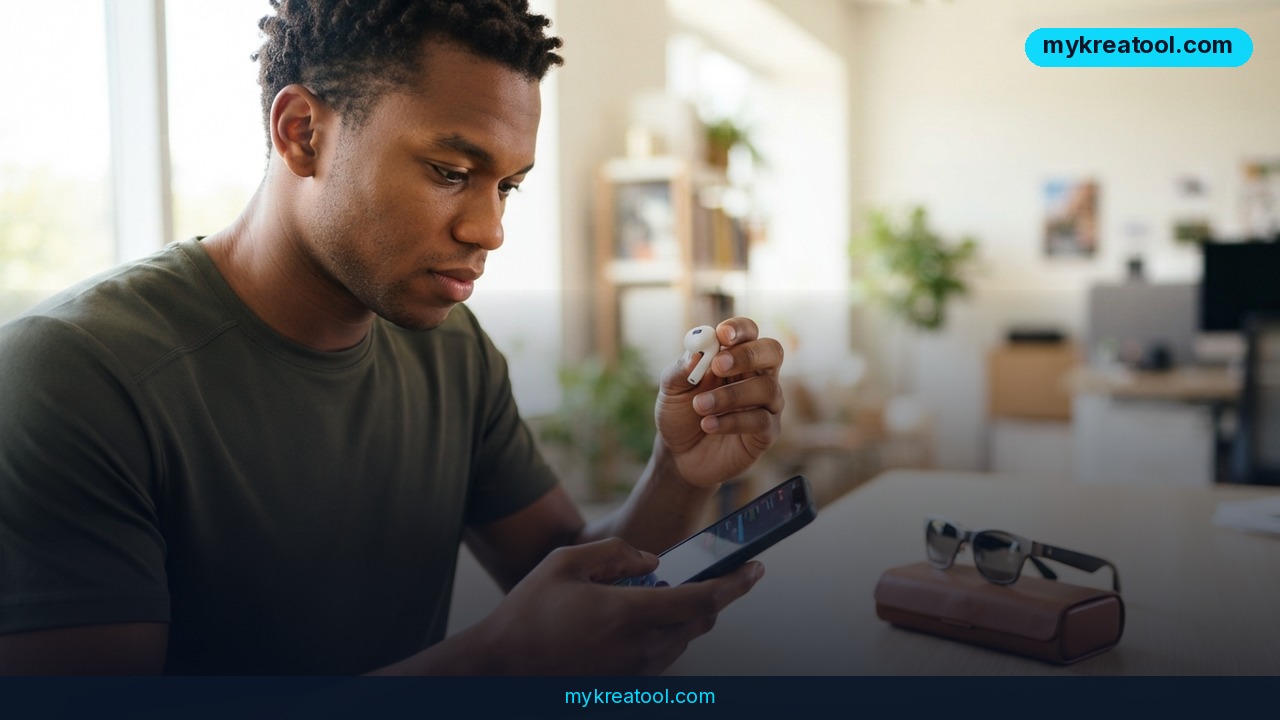
One day later, a developer named Joe Blau posted a demo that made the price tag look a little less magical. He'd built an experimental app for AirPods Pro 3 that tries a rough version of the same trick using the accelerometer and gyroscope already sitting inside the earbuds. His software samples those signals around 25 times per second. And he says the whole thing took him 9 minutes, thanks to AI-assisted coding — "vibecoding," in current slang.
So you've got a $1.3 million startup on one side, and a guy with earbuds and nine minutes on the other. Startup Fortune covered the contrast, and it's the kind of story that tells you something real about how fast software gets built in 2026.
What happened
Let's untangle the two halves, because they're not doing the same thing — even if the headlines make them sound like twins.
The startup side: glasses that read your face
Subvocal raised $1.3 million from Y Combinator and Afore Capital for smart glasses built around subvocalization — the silent rehearsal your mouth does when you read or think in words. Even when no sound comes out, your facial muscles still fire in tiny, repeatable patterns. Subvocal's glasses pick those up and turn them into text.
The company claims 200+ words per minute, which is roughly three times a fast typist. The Hindustan Times reported on the founders and the round; the company profile lives at The Venture Codex. This is dedicated hardware, custom sensors, and years of signal processing.
The developer side: earbuds that watch your head
Blau went a cheaper route. Your AirPods Pro 3 contain an accelerometer (the sensor that knows which way your phone is tilting) and a gyroscope (the one that tracks rotation). His app watches motion — around 25 readings a second — and tries to match patterns to words it's already been trained on.
Here's the honest part: it's not reading your face. It's closer to a gesture shortcut. Move your head a certain way, and the software guesses which word you meant. A nine-minute prototype isn't going to replace a $1.3 million hardware bet, and nobody's claiming it does. But it's a striking demo of how low the barrier to experimenting has gotten.
What it means for you
You don't have to code to feel this shift. The real story isn't "glasses versus earbuds" — it's that the gap between an idea and a working demo keeps shrinking. Here's what that looks like in ordinary life.
At home
Picture a sleeping baby, a partner already in bed, and you need to add milk, batteries and a birthday card to the shopping list. Typing wakes people up. Whispering barely works. Silent speech would let you just think the words and watch them land in your notes app. Today you'd use dictation and talk quietly. Tomorrow you might not talk at all.
At work
The open-plan office is a noise crime scene. Whole teams of people would happily mouth replies into Slack instead of typing them, especially during calls when they want to answer a colleague without unmuting. Faster than typing, quieter than talking — that's the pitch, and it's why $1.3 million showed up.
Running a small business
Hands-busy work is where this gets practical. A warehouse worker scanning boxes, a mechanic under a car, a baker with dough on both hands, a barista taking a custom order during a rush. Right now those people stop, wipe their hands, and type. A device that captures a sentence without speech would remove a genuine bottleneck — not a flashy one, just a daily one.
Studying
Libraries are silent for a reason. Students mouth definitions to themselves all the time; capturing those notes without saying them out loud is a real upgrade. Same for lectures where you want to jot down a thought without breaking eye contact with the slides.
Creativity
Most good lines arrive when your hands are busy — walking, showering, driving. Writers and creators lose more ideas to "I'll type it later" than to bad taste. Voice notes help, but only when you can talk. Silent capture means you can grab the sentence the moment it shows up.
Extra income
Transcription and captions are a real freelance market, and speed is the whole game. Anything that pushes your words-per-minute up without adding errors is money. That's before you get to the obvious one: if a 9-minute prototype is now possible, so is a small paid tool that solves your niche's problem. That's where free AI tools like the ones at mykreatool come in handy — you can test three or four ideas on a lunch break and keep the one that clicks.
How to try it right now
You can't install Blau's app today — it's an experiment, not a product. But you can get a feel for the underlying shift in about fifteen minutes. Free option first.
1. Start with Apple Dictation (free, already on your phone). Open Settings → General → Keyboard → Enable Dictation on your iPhone, pair your AirPods, then tap the microphone in any text field and speak normally. It's not silent speech, but it's the closest thing you own, it costs nothing, and it shows you how much of your writing is really just talking.
2. Feel what vibecoding is actually like — free. Open Google AI Studio (free tier) and type a prompt like: "Write a small web app that reads motion sensor data from a phone and matches patterns to three words: yes, no, later." You'll get working starter code in seconds. That's the same loop Blau used, just pointed at a sillier problem.
3. Check the real product's status. Subvocal's glasses are the shipping version of this idea — read the company profile before you plan your workflow around it. Hardware timelines slip.
4. Write down one task you'd hand to silent speech. One sentence. Keep it somewhere you'll see it. When the tech lands, you'll already know what you want from it.
5. Test the workflow with ordinary dictation this week. Pick one repetitive task — notes, emails, a to-do list — and do it by voice instead of thumbs. If it saves you ten minutes, silent speech will save you more.
Upsides and what changes
The upside isn't just speed. It's the contexts where speed becomes possible. Typing needs a surface, a screen and two free hands. Talking needs privacy and a tolerant audience. Silent speech needs neither, which quietly unlocks the gym, the factory floor, the bus, the shared bedroom.
Second upside: the demo-to-prototype pipeline is now genuinely fast. Nine minutes is a stunt, but a day for a scrappy working version is not, and a week for something you could charge for is not either. Small businesses can now test an idea before committing money to it — that's the actual economic shift here, and it's bigger than the glasses.
Third: competition gets weird and it gets fast. When a hobbyist can poke at a funded category overnight, the funded companies can't coast. That pressure usually ends with better, cheaper products.
Limitations
Let's be straight about what a 9-minute AirPods app isn't. It doesn't read your facial muscles — it matches head motion to a small set of trained words, which means a limited vocabulary, a decent amount of retraining when you move differently, and plenty of false triggers when you nod along in a meeting or turn to look at something. Accelerometers also pick up a lot of noise: chewing, walking, a bumpy bus ride. Subvocal's glasses avoid most of that only because they use dedicated sensors sitting on your face, plus real research money behind the signal processing — and even that product is still a promise, not a proven daily tool. Nothing here replaces a keyboard today. Treat both stories as a direction of travel, not a shipping feature.
Conclusion
The headline writes itself: a $1.3 million startup versus a developer with earbuds and nine minutes of AI-assisted coding. But the takeaway isn't that funded startups are pointless — it's that the tools for testing an idea have become cheap enough that almost anyone can join in. That changes who gets to experiment, and eventually who gets to build the thing that wins.
Your one action for today: open Settings on your phone, turn on Dictation, and write your next three messages by voice instead of your thumbs. You'll learn more about where this technology helps and where it frustrates you in five minutes than in a week of reading about it.
Comments 0